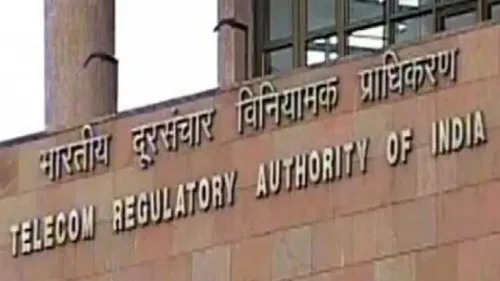
TRAI revamps telecom complaint rules: 24/7 support, PwD access, stricter oversight

Synopsis
TRAI has rewritten the rules for telecom consumer complaints — ISPs must now offer round-the-clock support, mobile-app complaint filing, and dedicated helplines for Persons with Disabilities, or face financial penalties. The Fourth Amendment scraps the ₹5 crore turnover threshold, closing a loophole that let many ISPs sidestep the framework entirely.
Key Takeaways
TRAI notified the Telecom Consumers Complaint Redressal (Fourth Amendment) Regulations, 2026 on 2 November 2026 .
Complaint Centre availability extended from 16 hours to 24/7 , supported by human agents, automated systems, or AI agents .
Consumers can now file complaints via the service provider's mobile app , in addition to existing web and phone channels.
Applies to ISPs with over 10,000 subscribers ; the earlier ₹5 crore annual turnover threshold has been removed.
Dedicated PwD-accessible desks or helplines are now mandatory at all Complaint Centres.
Financial disincentives introduced for providers that fail to comply with the revised framework.
The Telecom Regulatory Authority of India (TRAI) on Monday, 2 November 2026, notified the Telecom Consumers Complaint Redressal (Fourth Amendment) Regulations, 2026, overhauling the consumer grievance framework for telecom and internet service providers. The revised rules mandate round-the-clock complaint support, faster resolution timelines, dedicated accessibility for Persons with Disabilities (PwDs), and tougher financial penalties for non-compliance.
Scope and Applicability
The amended regulations apply to Internet Service Providers (ISPs) with more than 10,000 subscribers as on the last day of the preceding financial year. Notably, the earlier alternative threshold — an annual financial turnover exceeding ₹5 crore — has been removed, simplifying the applicability clause and bringing more providers under a single, subscriber-count criterion.
Round-the-Clock Consumer Support
One of the most significant changes is the extension of Complaint Centre availability from an existing 16-hour window to 24 hours a day, seven days a week. Service providers may fulfil this requirement through human representatives, automated systems, AI agents, or a combination of these — provided that all technology-based solutions operate with appropriate human oversight. This gives providers operational flexibility while ensuring consumers are never left without a recourse channel.
In addition to existing channels such as Complaint Centres, websites, and web portals, consumers can now register complaints, file appeals, raise service requests, and submit service-related queries through the service provider's mobile application.
Accessibility for Persons with Disabilities
The regulations introduce a dedicated accessibility mandate. According to the official statement, 'every service provider shall equip dedicated desks or helplines in their Complaint Centre or Consumer support centres, with personnel or assistive technology capable of receiving calls from persons with disabilities.' Service providers must also ensure that their mobile apps, websites, and portals conform to accessibility guidelines or standards issued by the Central government for PwDs.
Stronger Oversight and Financial Disincentives
Beyond the consumer-facing changes, TRAI has reinforced oversight mechanisms and introduced financial disincentives for providers that fail to comply with the revised framework. The regulator has not yet published the precise penalty schedule in the public statement, but the intent is to deter systemic non-compliance that has historically resulted in unresolved grievances piling up without consequence.
This comes amid growing consumer frustration with telecom service quality in India, where complaint disposal rates and response times have drawn repeated scrutiny. The Fourth Amendment is TRAI's most comprehensive revision to the consumer redressal framework in recent years, building on three earlier rounds of regulatory updates.
What Comes Next
Service providers will need to upgrade their complaint infrastructure — both technological and human — to meet the new standards. Industry bodies and ISP associations are expected to engage with TRAI on implementation timelines. Consumers, particularly PwDs and those in areas with limited internet access, stand to benefit most directly from the enhanced support and accessibility mandates.
Point of View
But the real test will be enforcement. Earlier iterations of the consumer redressal framework have been weakened by the absence of swift, publicised penalty action against non-compliant ISPs. The removal of the ₹5 crore turnover loophole is a genuine tightening, yet the subscriber threshold of 10,000 still leaves smaller ISPs — who collectively serve millions in smaller cities and rural areas — outside the regulatory perimeter. Until TRAI publishes a transparent penalty register and tracks complaint disposal rates publicly, the amended rules risk becoming aspirational paperwork rather than operational accountability.
NationPress
2 Nov 2026
Frequently Asked Questions
What are the TRAI Telecom Consumers Complaint Redressal (Fourth Amendment) Regulations, 2026?
They are updated rules issued by TRAI on 2 November 2026 that overhaul the consumer grievance framework for telecom and internet service providers. Key changes include 24/7 complaint centre availability, mobile app filing, dedicated PwD accessibility, and financial penalties for non-compliance.
Who does the TRAI Fourth Amendment apply to?
The regulations apply to Internet Service Providers with more than 10,000 subscribers as on the last day of the preceding financial year. The earlier alternative criterion based on annual financial turnover exceeding ₹5 crore has been removed.
What changes for consumers under the new TRAI rules?
Consumers can now register complaints and appeals around the clock — up from a 16-hour window — and can use a service provider's mobile app alongside existing channels. Dedicated helplines and assistive technology for Persons with Disabilities are also now mandatory.
How does TRAI address accessibility for Persons with Disabilities?
Service providers must now equip dedicated desks or helplines capable of receiving calls from Persons with Disabilities, staffed by trained personnel or assistive technology. Mobile apps, websites, and portals must also conform to Central government accessibility standards for PwDs.
What penalties exist for service providers that do not comply?
The Fourth Amendment introduces financial disincentives for non-compliance, according to TRAI's official statement. The precise penalty schedule has not been publicly detailed yet, but the intent is to deter systemic failures in consumer grievance resolution.