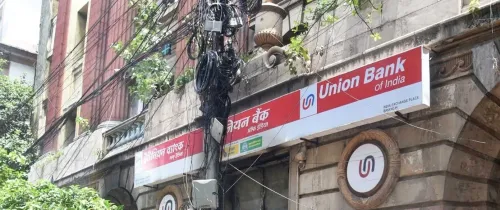
Union Bank of India approves ₹8,000 crore capital raise via equity and bonds

Synopsis
Union Bank of India's board has cleared a ₹8,000 crore capital raise — split between ₹5,000 crore in Basel III bonds and ₹3,000 crore in equity. It is a textbook capital-stack move for a public sector lender eyeing loan book growth, but the equity tranche means dilution is coming — and the government's approval will determine how fast.
Key Takeaways
Union Bank of India approved a ₹8,000 crore capital raise at its board meeting on 26 May 2026 .
Up to ₹5,000 crore will be raised via Basel III-compliant AT1 and/or Tier 2 bonds , including foreign currency instruments.
Up to ₹3,000 crore will be raised through equity via FPO, rights issue, QIP, private placement, or preferential allotment.
The equity fundraise requires approval from the government, regulators, and shareholders .
Shares of Union Bank closed at ₹167.25 on the BSE , down 1.01% on the day of the announcement.
Union Bank of India on Tuesday, 26 May 2026, approved a plan to raise up to ₹8,000 crore through a combination of equity and debt instruments, aimed at bolstering its capital adequacy and fuelling loan book expansion amid rising credit demand across the banking sector.
Board Decision and Capital Plan
The bank's board of directors, meeting on 26 May 2026, cleared the capital-raising proposal and disclosed it through a regulatory filing to the Bombay Stock Exchange (BSE). In its filing, the public sector lender stated that the board had 'considered and approved: Capital plan of the bank to raise capital by an amount not exceeding ₹8,000 crore.'
The proposal sets a clear two-track fundraising structure — one through bonds and one through equity — with separate sub-limits for each instrument type.
Breakdown: Bonds and Equity
The larger portion — up to ₹5,000 crore — will be raised through Basel III-compliant Additional Tier 1 (AT1) bonds and/or Tier 2 bonds, including foreign currency-denominated instruments. AT1 and Tier 2 bonds are a standard tool for Indian public sector banks to shore up regulatory capital without diluting government equity.
The remaining up to ₹3,000 crore will come through equity capital, to be raised in one or more tranches. Eligible routes include a further public offer (FPO), rights issue, private placement, qualified institutional placement (QIP), and/or preferential allotment. The equity fundraise is subject to approval from the government, relevant regulatory authorities, and the bank's shareholders.
Why the Capital Raise Matters
The move reflects a broader trend among Indian public sector banks to proactively strengthen their capital buffers as credit growth accelerates. Improved capital adequacy ratios allow banks to expand their loan books without breaching regulatory thresholds set by the Reserve Bank of India (RBI).
Notably, this is not an isolated move — several state-owned lenders have tapped bond and equity markets in recent quarters to meet growing demand for retail, MSME, and infrastructure credit. For Union Bank of India, the capital infusion is expected to support sustained loan growth while maintaining compliance with Basel III norms.
Market Reaction
Shares of Union Bank of India were trading at ₹167.25 on the BSE on Tuesday, down 1.01% from the previous close, suggesting the market had partially priced in the dilution risk associated with the equity component. Investor focus is likely to shift to the sequencing and pricing of each tranche as details emerge.
What Comes Next
The bank will now seek shareholder and government approvals before activating either tranche. The timeline for the FPO or QIP has not been disclosed. Market watchers will track whether Union Bank opts for the equity route early — which would signal confidence in current valuations — or leans on the bond market first to defer dilution.
Point of View
000 crore capital plan is structurally sound but the equity component is the one to watch. AT1 and Tier 2 bonds are relatively low-friction for a public sector bank — the government does not need to write a cheque. The equity tranche, however, requires government approval and shareholder sign-off, which adds execution uncertainty. With the stock already down over 1% on announcement day, the market is flagging dilution concern. The real test is whether Union Bank can sequence the raise to minimise discount pressure — and whether the loan growth it is banking on actually materialises at the margins promised.
NationPress
25 Sept 2026
Frequently Asked Questions
What is Union Bank of India's ₹8,000 crore capital raise plan?
Union Bank of India's board approved a plan on 26 May 2026 to raise up to ₹8,000 crore through a mix of Basel III-compliant bonds (up to ₹5,000 crore) and equity instruments (up to ₹3,000 crore). The capital will be used to strengthen the bank's capital adequacy and support loan book growth.
How will Union Bank raise the ₹5,000 crore through bonds?
The bank will issue Basel III-compliant Additional Tier 1 (AT1) bonds and/or Tier 2 bonds, including foreign currency-denominated instruments. These bonds count toward regulatory capital under RBI's Basel III framework.
What equity routes has Union Bank approved for the ₹3,000 crore raise?
The bank can raise equity through a further public offer (FPO), rights issue, private placement, qualified institutional placement (QIP), preferential allotment, or a combination of these, subject to government and shareholder approval.
Why is Union Bank of India raising capital now?
The capital raise is aimed at improving the bank's capital adequacy ratio and supporting loan growth as credit demand rises across the Indian banking sector. Stronger capital buffers allow the bank to expand its loan book while staying within RBI's Basel III regulatory limits.
How did Union Bank of India's shares react to the announcement?
Shares of Union Bank of India were trading at ₹167.25 on the BSE on Tuesday, down 1.01% from the previous close, reflecting market concern about potential equity dilution from the fundraise.