Is the Union Budget 2026-27 Truly Pragmatic with a Focus on Capex?
Synopsis
The Union Budget 2026-27 adopts a pragmatic approach, focusing on long-term growth without immediate equity catalysts. With increased capital expenditure, particularly in defense and technology, it sets a stable stage for future economic development. Discover how this budget could impact various sectors, from construction to digital payments.
Key Takeaways
Pragmatic strategy with no dramatic announcements.
Increased capital expenditure in defense and technology.
Focus on long-term export competitiveness .
Potential gains for electronics and real estate sectors.
Significant disinvestment budget planned.
New Delhi, Feb 2 (NationPress) The Union Budget for 2026-27 reflects a pragmatic strategy devoid of dramatic announcements, establishing a foundation for a steady medium-term growth landscape without an emphasis on immediate drivers for equity markets, according to a report.
Global brokerage firm Jefferies India praised the renewed focus on capital expenditure, especially in the defense sector, made possible by a slower pace of fiscal consolidation.
The brokerage also expressed approval for the support extended to data centers and electronics component manufacturing, highlighting the government's commitment to fortifying the domestic technology and manufacturing landscape.
Moreover, it noted that the government's approach aligns with long-term export competitiveness, maintaining an emphasis on boosting exports.
Jefferies pointed out that rising bond yields could impact rate-sensitive sectors. The brokerage mentioned that the hike in the securities transaction tax (STT) reflects the government's unease with high volumes of derivatives trading; however, this could negatively influence capital market stocks and brokerage firms.
The report indicated that the Budget is advantageous for cement and defense companies due to increased infrastructure capital expenditure, and electronics manufacturers stand to benefit from enhanced allocations under the electronic manufacturing production linked incentive (PLI) scheme. It also mentioned potential gains for select real estate and digital payments stocks due to triggers related to data centers and incentives for digital transactions included in the Budget.
Additionally, the report emphasized a significant disinvestment budget, mentioning that the planned divestiture of IDBI Bank is expected to conclude in FY27.
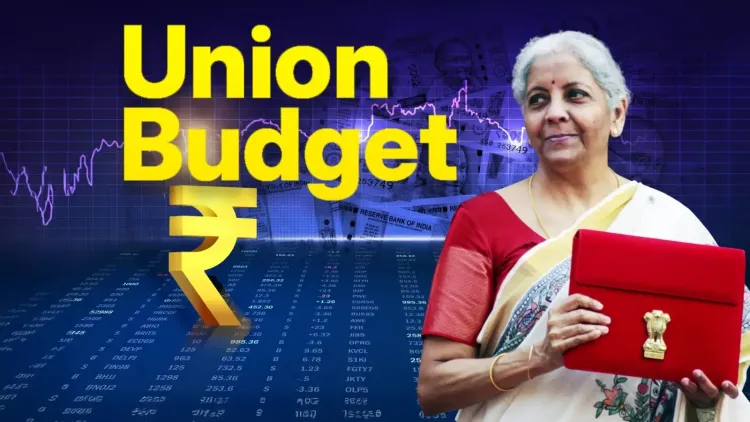
Finance Minister Nirmala Sitharaman introduced the Budget 2026-27 with total planned expenditure set at Rs 53.47 lakh crore, while aiming for a fiscal deficit of 4.3 percent of GDP, an improvement from the revised estimate of 4.4 percent for 2025-26.
Capital expenditure has increased by 9 percent, reaching Rs 12.2 lakh crore in 2026-27, marking one of the largest allocations in recent history, equivalent to 4.4 percent of GDP.
Among the most substantial increases, the defense sector received Rs 7.85 lakh crore overall, with Rs 2.31 lakh crore earmarked for capital spending.
Point of View
I believe the Union Budget 2026-27 reflects a necessary shift towards sustainable growth. By prioritizing capital expenditure and focusing on long-term initiatives, this budget aligns with national interests while addressing immediate economic challenges. Engaging in such pragmatic governance is essential for fostering resilience in our economy.
NationPress
19 Sept 2026
Frequently Asked Questions
What is the focus of the Union Budget 2026-27?
The Union Budget 2026-27 emphasizes a pragmatic approach with a focus on capital expenditure and long-term growth strategies, particularly in defense and technology.
How does the budget impact the defense sector?
The budget allocates a substantial Rs 7.85 lakh crore to the defense sector, with specific funds earmarked for capital spending, enhancing national security and defense capabilities.
What are the expected benefits for electronics manufacturers?
Electronics manufacturers are set to benefit from increased allocations under the electronic manufacturing production linked incentive (PLI) scheme, fostering domestic production.
What does the budget mean for the real estate sector?
The budget presents potential opportunities for select real estate stocks due to incentives linked to data centers and infrastructure development.