UPI MDR framework: PhonePe CEO says customers will never be charged
Synopsis
PhonePe CEO Sameer Nigam has put a definitive end to consumer anxiety: UPI will remain free for all users even as a new MDR regime kicks in for merchants. The 0.4% charge on transactions above ₹2,000 — with a strict no-pass-through rule — is the industry's first structured bet at making a ₹10,000–12,000 crore annual infrastructure bill financially sustainable without taxing the 50–55 crore users who now rely on UPI every day.
Key Takeaways
PhonePe CEO Sameer Nigam confirmed on 16 September 2026 that UPI customers will never be charged under the new MDR framework.
A 0.4% MDR will apply only to merchants on UPI transactions above ₹2,000 ; transactions below that threshold remain free.
Merchants with annual turnover below ₹1 lakh are fully exempt from the MDR regime.
96% of all UPI transactions — those under ₹2,000 — will attract no charge for either party.
The UPI industry spends an estimated ₹10,000–12,000 crore annually on infrastructure; MDR revenue is intended to cover this cost.
UPI user base has grown from 20 crore in 2020 to approximately 50–55 crore today, intensifying the need for a sustainable revenue model.
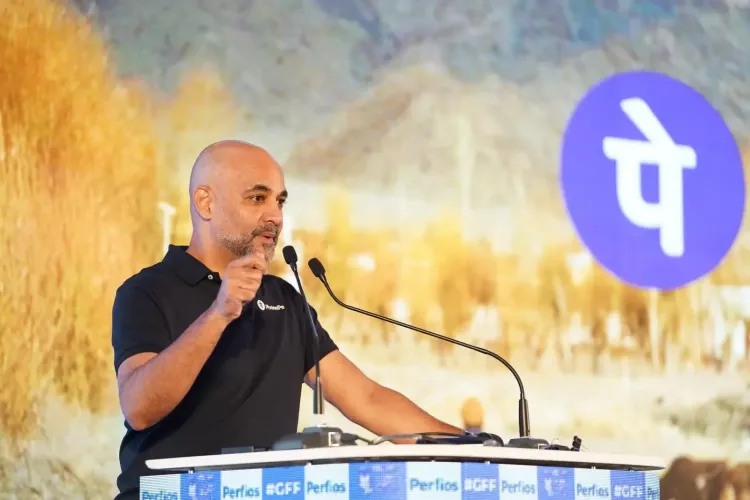
PhonePe CEO Sameer Nigam on Wednesday, 16 September 2026, categorically stated that the new Merchant Discount Rate (MDR) framework for UPI transactions will not impose any charges on customers, calling the move essential to put India's digital payments ecosystem on a financially sustainable footing.
What the MDR Framework Actually Changes
Under the new structure, customers will continue to use UPI at zero cost — for both person-to-person and person-to-merchant transactions. Nigam confirmed that small merchants with an annual turnover below ₹1 lakh will remain entirely outside the MDR regime.
'No, there are no fees for customers on UPI at all. Customers have never been charged for using UPI, nor will they be charged in the future,' Nigam said.
For larger merchants, 96% of all UPI transactions — specifically those below ₹2,000 — will attract no charge whatsoever. A 0.4% MDR will apply only to transactions above ₹2,000, and this cost falls squarely on merchants, not end users. Crucially, merchants will not be permitted to pass this charge on to customers.
Why the Industry Says MDR Is Necessary
Nigam pointed to the significant operational burden carried by companies and banks powering the UPI stack. According to him, the industry spends roughly ₹10,000 crore to ₹12,000 crore annually just on keeping UPI infrastructure operational — a figure that does not account for KYC compliance, cybersecurity, risk and fraud mitigation, merchant chargebacks, or capital expenditure.
'We needed a way to get that revenue back into the industry so that UPI grows in a sustainable manner,' Nigam said. The MDR-generated revenue is expected to fund ongoing infrastructure investment and incentivise private fintech firms to channel more resources into marketing, innovation, and research and development.
UPI's Growth Trajectory
The MDR debate unfolds against the backdrop of explosive UPI adoption. According to Nigam, UPI had approximately 20 crore users as of 2020; that figure has since climbed to roughly 50–55 crore users — a near-tripling in under six years. This growth has strained infrastructure investment cycles, making the revenue model question increasingly urgent for ecosystem participants.
This comes amid longstanding industry lobbying for a viable UPI monetisation path, after the government eliminated MDR on UPI in 2020 to accelerate adoption. The new framework marks the first structured attempt to reintroduce a revenue channel without burdening the end user.
Impact on Consumers and Small Merchants
For the vast majority of users, day-to-day UPI payments will remain free. The framework is designed so that the financial burden falls on larger commercial establishments, which benefit from higher-value digital transaction volumes. Nigam stressed that businesses need 'a way to make fair money' to sustain innovation in the sector.
As the framework moves toward implementation, attention will turn to how regulators define merchant categories, enforce the no-pass-through rule, and monitor compliance — with fintech firms and banking partners all watching closely.
Point of View
Transaction-capped form — is a significant policy reversal that the industry has sought since 2020, and Nigam's media offensive signals that PhonePe is determined to shape the narrative before regulatory pushback materialises. The consumer-protection framing is deliberately reassuring, but the deeper question is whether a 0.4% charge on sub-₹2,000 transactions being exempted actually makes the model viable: the bulk of UPI volume by count sits precisely in that sub-₹2,000 band, meaning revenue accretion may be slower than projected. Small merchants currently exempt today could find themselves inside the regime as turnover thresholds are revised in future iterations — a risk that deserves scrutiny. And with no independent audit mechanism announced yet, the commitment that merchants cannot pass the charge to consumers remains, for now, unenforceable in practice.
NationPress
16 Sept 2026
Frequently Asked Questions
Will UPI customers be charged under the new MDR framework?
No. PhonePe CEO Sameer Nigam confirmed on 16 September 2026 that customers will not be charged for UPI transactions — neither person-to-person nor person-to-merchant payments will attract any fee. Merchants are also prohibited from passing the MDR cost on to customers.
What is the new UPI MDR rate and who pays it?
A 0.4% MDR will be levied on merchants — not customers — for UPI transactions above ₹2,000. Transactions below ₹2,000, which account for 96% of all UPI payments, will remain charge-free for all parties.
Which merchants are exempt from the UPI MDR?
Small merchants with an annual turnover of less than ₹1 lakh are fully exempt from the MDR regime. The charge applies only to larger commercial establishments processing higher-value transactions.
Why is the MDR framework being introduced for UPI?
The UPI ecosystem currently costs the industry an estimated ₹10,000–12,000 crore per year in infrastructure alone, with additional expenses for KYC, cybersecurity, fraud mitigation, and capital expenditure. MDR revenue is intended to make this investment financially sustainable and fund further innovation.
How many people use UPI in India today?
According to PhonePe CEO Sameer Nigam, UPI had approximately 20 crore users in 2020, and that number has since grown to around 50–55 crore users — a near-tripling in under six years, underscoring the scale of the ecosystem that the new framework must support.