US 100% tariff threat on Russian oil buyers: India urged to seek calibrated response
Synopsis
A new US law giving President Trump the power to impose 100% tariffs on countries buying Russian oil has put India — one of the world's largest buyers of Russian crude — squarely in the crosshairs. Experts say New Delhi's best move is not confrontation but calibration: seek waivers, negotiate product exclusions, and use the diplomatic space the law itself provides, before that window closes.
Key Takeaways
A new US law grants President Donald Trump discretionary authority to impose up to 100% tariffs on countries purchasing Russian oil and gas .
The law does not impose immediate tariffs on India but could be used as geopolitical leverage, given India is among the world's largest buyers of Russian crude .
Manoranjan Sharma of Infomerics Ratings recommends India seek product-specific exclusions, tariff-rate quotas, and transition periods through the law's waiver provisions.
India exported goods worth $87.3 billion to the US in FY2025–26 ; its goods-trade surplus stands at roughly $33.8 billion .
Experts also call for domestic support measures — interest subvention, export-credit insurance, faster duty refunds — for affected firms and labour-intensive clusters.
Trade diversification with the EU , UK , Canada , and Gulf economies must move beyond low-margin products into technology-intensive goods, experts say.
India should pursue a carefully calibrated diplomatic and economic response to the new United States law that empowers the President to impose tariffs of up to 100 per cent on countries purchasing Russian oil and gas, experts said on Saturday, 19 September 2026. The law does not automatically impose duties on Indian exports but equips US President Donald Trump with discretionary authority, subject to specified conditions and waiver provisions.
What Experts Are Recommending
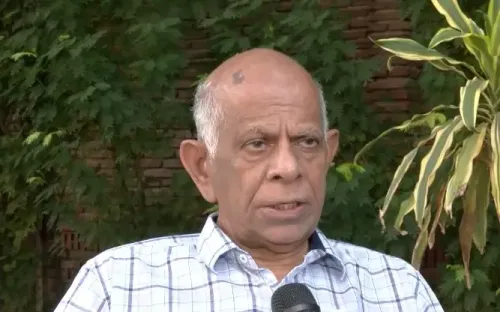
Dr. Manoranjan Sharma, Chief Economist at Infomerics Ratings, said New Delhi should primarily seek product-specific exclusions, tariff-rate quotas, transition periods, a phased reduction in Russian crude purchases, and a clear ceiling well below the statutory 100 per cent maximum. 'The waiver provision in the US law creates diplomatic space; India should use it,' Sharma said.
He also urged India to negotiate long-term energy supply arrangements with the US, alongside greater market access for Indian pharmaceuticals, engineering goods, and gems and jewellery — sectors where American supply chains depend significantly on Indian inputs.
'If the US government expects India to diversify its oil basket, it should help make that transition economically feasible,' Sharma said.
Domestic Support Measures Suggested
On the home front, Sharma recommended targeted relief for firms and labour-intensive clusters most exposed to US measures. Proposed instruments include temporary interest subvention, enhanced export-credit insurance, faster duty refunds, logistics support, and working-capital assistance. These measures, he argued, should be directed at demonstrably affected industries rather than applied broadly.
Trade Diversification Must Go Beyond Markets
India should also urgently convert ongoing trade diplomacy with the European Union, United Kingdom, Canada, Gulf economies, and other partners into commercially meaningful market access, Sharma said. Notably, he cautioned that diversification must mean more than simply redirecting existing low-margin products to new destinations. 'It requires higher quality, design capability, trusted standards, local distribution networks and movement into technology-intensive goods,' he added.
India's Trade Exposure to the US
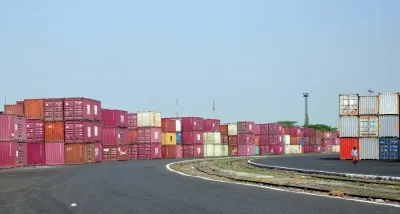
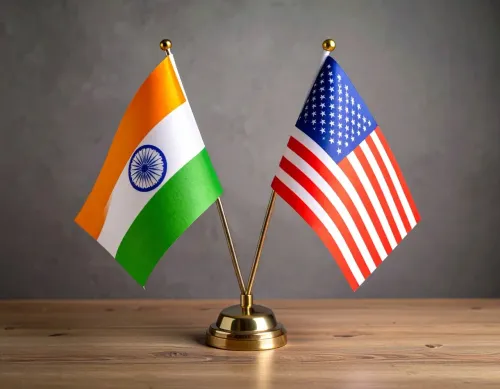
The stakes are significant. The United States is India's largest merchandise-export market, with India exporting goods worth approximately $87.3 billion to the US in FY2025–26, up from $86.5 billion in FY2024–25. Imports from the US stood at $53.5 billion, leaving India with a goods-trade surplus of roughly $33.8 billion. As one of the largest buyers of Russian crude globally, India is particularly exposed to this law being used as an instrument of economic and geopolitical pressure.
The Law's Scope and India's Position
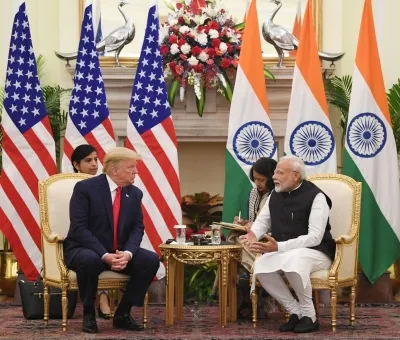
The new American legislation, at this stage, does not translate into an immediate blanket tariff on Indian exports. The law grants the US President discretionary authority, exercisable under specified conditions, with waiver provisions that experts say India must engage proactively. This comes amid broader India-US trade negotiations, where both sides have been working toward a bilateral trade deal. Whether Washington exercises this authority against New Delhi will depend significantly on the pace and scale of India's own energy diversification and the outcome of ongoing diplomatic engagement.
Point of View
Not episodic: years of deepening Russian crude dependency — accelerated sharply after 2022 — have created a vulnerability that a single diplomatic engagement cannot fix. The waiver provision in the US law is a real opening, but it is also a pressure lever; Washington will not grant it for free. New Delhi's leverage lies in its trade surplus and the fact that US companies depend on Indian pharmaceutical and engineering inputs — but that leverage erodes if India is seen as foot-dragging on energy diversification. The harder question mainstream coverage is not asking: is India's current oil basket shift fast enough to satisfy US thresholds before the discretionary authority is actually exercised? The answer, given the pace of infrastructure development for alternative energy imports, is far from certain.
NationPress
19 Sept 2026
Frequently Asked Questions
What does the new US law on Russian oil tariffs mean for India?
The new US law gives President Donald Trump the authority to impose tariffs of up to 100% on countries that buy Russian oil and gas. India, as one of the largest buyers of Russian crude, is potentially exposed to this law being used as economic or geopolitical pressure, though no tariffs have been imposed on India yet.
Why is India particularly vulnerable to this US law?
India has significantly increased its purchases of Russian crude since 2022, making it one of Russia's largest oil customers. The US could invoke the law to pressure New Delhi into reducing those purchases, particularly as US-India trade relations involve a $33.8 billion goods surplus in India's favour.
What response are experts recommending for India?
Experts, including Dr. Manoranjan Sharma of Infomerics Ratings, recommend that India seek product-specific tariff exclusions, tariff-rate quotas, transition periods, and a phased reduction in Russian crude purchases. They also urge New Delhi to use the waiver provisions in the US law through active diplomacy.
How big is India's trade relationship with the United States?
The United States is India's largest merchandise-export market. India exported goods worth approximately $87.3 billion to the US in FY2025–26, against imports of $53.5 billion, leaving a goods-trade surplus of roughly $33.8 billion in India's favour.
What domestic measures have experts suggested to cushion Indian industries?
Experts have recommended temporary interest subvention, enhanced export-credit insurance, faster duty refunds, logistics support, and working-capital assistance, targeted at firms and labour-intensive clusters demonstrably affected by US tariff measures.