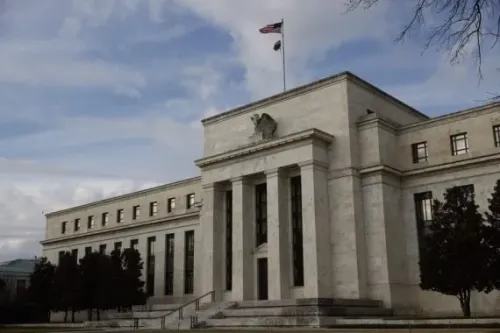
Is the US Fed Adopting a More Cautious Policy Stance?
Synopsis
The Federal Reserve's recent decision to cut interest rates signals a shift towards a more cautious monetary policy. With ongoing economic uncertainties and external risks, market participants are urged to stay alert. Discover the implications of this shift and what it means for global markets in this insightful analysis.
Key Takeaways
The Fed's recent rate cut aligns with market forecasts.
A cautious policy stance is expected moving forward.
External risks include potential rate hikes by Japan and policy shifts in the EU.
The interest rate gap between South Korea and the U.S. has narrowed significantly.
Authorities are committed to continuous market monitoring.
Seoul, Dec 11 (NationPress) The Federal Reserve's recent interest rate reduction aligns broadly with market predictions, yet a senior official from the Bank of Korea indicated on Thursday that a more cautious monetary policy is anticipated moving forward.
On Wednesday (U.S. time), the Fed decreased its benchmark lending rate by a quarter percentage point for the third consecutive meeting, bringing it to the 3.5-3.75 percent range amid ongoing economic uncertainties. Policymakers expressed mixed views on this decision, influenced by persistent inflationary pressures and a declining labor market, according to reports from Yonhap news agency.
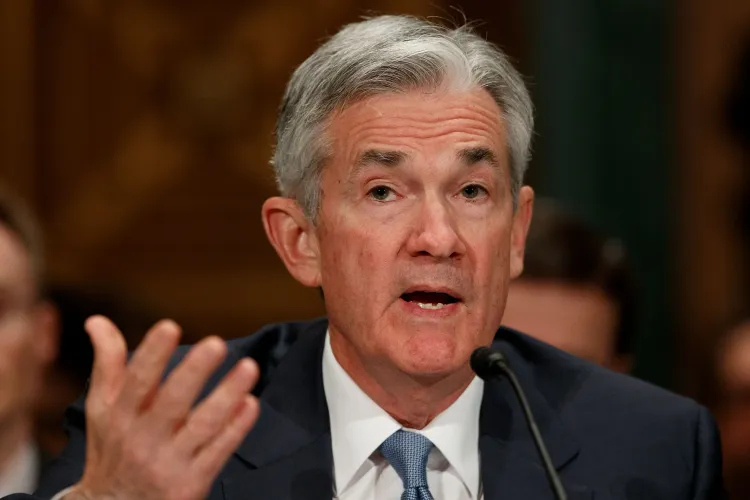
Bank of Korea (BOK) Deputy Governor Park Jong-woo, while leading a market assessment meeting, stated, "While the decision was expected by the market, the increasing divergence of opinions within the Fed, along with Chair Jerome Powell's comments, suggest that U.S. monetary policy will likely be more cautious in the future."
Following the rate-setting meeting, Powell remarked that the Fed is "well positioned to wait to see how the economy evolves," indicating that future policy adjustments will depend on data, although a rate hike is not currently considered a base case.
Park highlighted multiple external risk factors, including a potential rate hike from Japan, policy changes in the European Union and Australia, concerns over fiscal health in major economies, and ongoing uncertainties in U.S.-China trade talks.
"We are vigilant and actively monitoring market conditions, as external risks persist," he added.
The third U.S. rate cut since September has narrowed the interest rate spread between South Korea and the United States to as low as 1.25 percentage points, with the BOK maintaining its benchmark rate at 2.5 percent during its recent meeting to ensure financial stability.
In a separate gathering, officials from the finance ministry, BOK, Financial Services Commission, and Financial Supervisory Service committed to ongoing market monitoring, citing diverging monetary policies among major economies and widening rate differentials as factors that could increase volatility.
The finance ministry indicated, "The U.S. is expected to continue its monetary easing cycle, while Japan is anticipated to raise its policy rate soon, contributing to uncertainty in global markets."
"Authorities will uphold a 24-hour joint monitoring framework for financial and foreign exchange markets, ready to react promptly when needed through close interagency coordination," the statement concluded.
Point of View
Vigilance is crucial in navigating the uncertain waters of international markets. The NationPress advocates for continuous monitoring and adaptive strategies in response to evolving economic conditions.
NationPress
1 Oct 2026
Frequently Asked Questions
What did the Federal Reserve decide regarding interest rates?
The Federal Reserve cut its benchmark lending rate by a quarter percentage point, marking the third consecutive reduction amidst economic uncertainties.
What is the expected future approach of the Federal Reserve?
The Federal Reserve is anticipated to adopt a more cautious policy stance, influenced by diverging views among policymakers and external economic risks.
How does the interest rate gap between South Korea and the U.S. impact the economy?
The narrowing interest rate gap, now at 1.25 percentage points, may influence capital flows and economic stability in South Korea as it aligns more closely with U.S. monetary policy.