VB-G RAM G scheme: 10.88 crore workers enrolled, 31.69 crore person-days generated
Synopsis
India's new rural employment guarantee scheme VB-G RAM G — successor to Mahatma Gandhi NREGA — has enrolled 10.88 crore workers and generated over 31.69 crore person-days in just three months. With women making up 61.65% of the workforce and ₹93,841 crore allocated for FY 2026-27, the Centre's flagship rural jobs overhaul is off to a fast start.
Key Takeaways
VB-G RAM G has enrolled 10.88 crore active workers since its launch on 1 July 2026 .
More than 31.69 crore person-days of employment generated as of 24 September 2026 .
Women account for 61.65% of the workforce under the scheme.
Average daily wage stands at ₹283.24 per person ; 3.76 crore DBTs completed in three months.
Centre has allocated ₹93,841 crore to states and UTs for FY 2026-27 ; first instalment of ₹25,880 crore released.
Scheme guarantees 125 days of wage employment per rural household annually, up from previous NREGA norms.
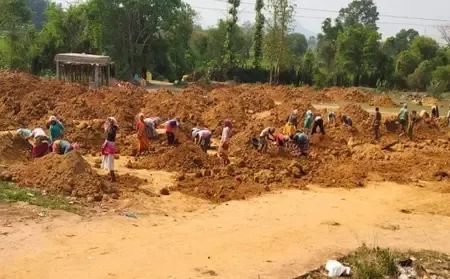
The Centre's new rural employment guarantee scheme, VB-G RAM G, has enrolled 10.88 crore active workers and generated more than 31.69 crore person-days of employment since its launch on 1 July 2026, according to an official government factsheet released on Tuesday, 29 September. The data, compiled as of 24 September 2026, underscores a rapid ramp-up in the scheme's first three months.
Key Numbers at a Glance
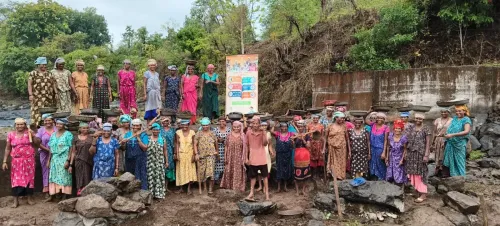
Women account for 61.65% of the scheme's workforce — a figure the government has highlighted as evidence of inclusive outreach. Works currently under execution have touched 97.17 lakh, while approved works stand ready to absorb demand from an additional 73.24 lakh prospective workers. Close to 2.31 lakh Gram Panchayats are actively executing projects across the country.
An average daily wage of ₹283.24 per person is being paid, and 3.76 crore direct benefit transfers (DBT) into workers' bank accounts have already been completed in the first three months — a metric the Centre has cited to demonstrate payment efficiency under the revamped digital architecture.
Financial Allocation and Disbursements
A total of ₹93,841 crore has been allocated to states and Union Territories as an interim allocation for FY 2026-27. Of this, a Mother Sanction of ₹25,880 crore has been released as the first instalment to states and UTs. The factsheet describes the transition from Mahatma Gandhi NREGA to VB-G RAM G as 'seamless and disruption-free', with all digital systems operational from day one of the new framework.
What the Scheme Guarantees
VB-G RAM G provides a statutory guarantee of 125 days of wage employment per rural household every financial year, an increase over the previous NREGA entitlement. The guarantee covers every rural household whose adult members volunteer for unskilled manual work. The scheme focuses on four thematic priorities: water security, core rural infrastructure, livelihood-related infrastructure, and mitigation of extreme weather events.
Viksit Gram Panchayat Plans: The Institutional Reform
A defining structural change under VB-G RAM G is the introduction of Viksit Gram Panchayat Plans (VGPPs) — integrated, evidence-based development blueprints prepared at the grassroots level. These plans are developed with the active participation of the Gram Sabha and Gram Panchayat, enabling villages to map their actual development gaps, catalogue existing assets, and prioritise works accordingly. The Centre describes this as institutionalising a 'Whole-of-Government' approach through convergence-driven and saturation-oriented planning.
With the scheme barely three months old, all eyes will be on whether the pace of worker enrolment, project execution, and timely wage disbursement is sustained as demand peaks in the lean agricultural season.
Point of View
But the real test of VB-G RAM G lies in two areas the factsheet does not address: wage payment timeliness and work quality. NREGA's persistent pain points were delayed wages and asset creation that did not survive a monsoon. The shift to DBT and the 125-day guarantee are genuine upgrades, but the introduction of VGPPs — however participatory in design — adds planning overhead at the Gram Panchayat level that could slow execution in low-capacity states. The 61.65% women's participation figure deserves scrutiny too: high female enrolment has historically masked lower actual workdays for women relative to men in earlier iterations of the programme.
NationPress
29 Sept 2026
Frequently Asked Questions
What is the VB-G RAM G scheme?
VB-G RAM G is India's new rural employment guarantee scheme that replaced Mahatma Gandhi NREGA from 1 July 2026. It provides a statutory guarantee of 125 days of wage employment per rural household annually and focuses on water security, rural infrastructure, livelihood assets, and extreme weather resilience.
How many workers have enrolled under VB-G RAM G so far?
As of 24 September 2026, the scheme has enrolled 10.88 crore active workers and generated more than 31.69 crore person-days of employment in roughly three months since launch. An average daily wage of ₹283.24 is being paid.
How is VB-G RAM G different from NREGA?
VB-G RAM G guarantees 125 days of employment per rural household per year, compared to 100 days under Mahatma Gandhi NREGA. It also introduces Viksit Gram Panchayat Plans (VGPPs) for evidence-based grassroots planning and emphasises a 'Whole-of-Government' convergence approach, with all digital systems operational from day one.
How much funding has been allocated to states under VB-G RAM G for FY 2026-27?
The Centre has allocated ₹93,841 crore to states and Union Territories as an interim allocation for FY 2026-27. A Mother Sanction of ₹25,880 crore has been released as the first instalment.
What are Viksit Gram Panchayat Plans under VB-G RAM G?
Viksit Gram Panchayat Plans (VGPPs) are integrated development blueprints prepared at the village level with the participation of the Gram Sabha and Gram Panchayat. They enable villages to identify development gaps, map existing assets, and prioritise works, forming the planning backbone of VB-G RAM G.