VB-G RAM G replaces MGNREGA from July 1; Rajasthan gets ₹11,581 crore
Synopsis
India's flagship rural jobs guarantee gets its biggest overhaul since MGNREGA's launch. From 1 July, VB-G RAM G raises guaranteed employment to 125 days, shifts to weekly DBT wages, and backs it with a record ₹95,692 crore Central outlay. Rajasthan alone gets over ₹11,581 crore — setting the stage for a high-stakes test of whether the redesign actually delivers more to rural workers.
Key Takeaways
VB-G RAM G replaces MGNREGA nationwide from 1 July 2026 under the VB-G RAM G Act, 2025 .
The Centre has allocated a record ₹95,692 crore for the scheme in 2026-27 ; total national outlay including states exceeds ₹1.51 lakh crore .
Rajasthan receives more than ₹11,581 crore — ₹7,581 crore from the Centre and ₹4,000 crore from the state government.
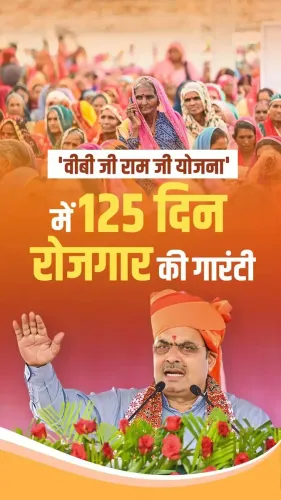
Guaranteed employment rises from 100 days to 125 days per rural household per year.
Wages will now be paid weekly via DBT , replacing the earlier 15-day payment cycle.
Existing MGNREGA job cards remain valid for e-KYC-verified holders until new Rural Employment Guarantee Cards are issued.
The Viksit Bharat Guarantee for Rozgar and Aajeevika Mission (Rural), or VB-G RAM G, will be rolled out across India from 1 July, replacing the long-running MGNREGA programme. Rajasthan stands to receive a combined allocation of more than ₹11,581 crore for the scheme's first year of implementation, the largest-ever outlay for a rural employment guarantee programme in the state.
National Outlay and Funding Structure
For financial year 2026-27, the Centre has earmarked ₹95,692 crore for VB-G RAM G — the highest-ever Central allocation for any rural employment programme in India's history. When states' contributions are factored in, the combined national outlay is expected to surpass ₹1.51 lakh crore.
Rajasthan's share includes an interim Central allocation of more than ₹7,581 crore, supplemented by a state government contribution of ₹4,000 crore, which may be revised upward based on demand and on-ground requirements.
Key Changes from MGNREGA
The new Act introduces several structural upgrades over its predecessor. Guaranteed employment for eligible rural households rises from 100 days to 125 days per financial year. Weekly wage payments replace the earlier 15-day disbursement cycle, with all wages transferred directly to beneficiaries' bank or post office accounts via Direct Benefit Transfer (DBT).
The legislation also mandates payment of an unemployment allowance if work is not provided within the prescribed period, and provides statutory compensation for delays in wage disbursement — provisions that critics of MGNREGA had long demanded.
Asset Quality and Convergence
Beyond employment numbers, the Act seeks to ensure better quality of rural assets created under the programme and mandates convergence of resources across various government schemes to prevent duplication of work. This marks a deliberate shift from volume-driven to outcome-driven rural infrastructure creation.
Transition for Existing Beneficiaries
Current MGNREGA job card holders who have completed the e-KYC process will retain their cards until new Rural Employment Guarantee Cards are issued under the VB-G RAM G Act, 2025. The transition is designed to ensure continuity of benefits without disruption to existing workers.
Implementation in Rajasthan
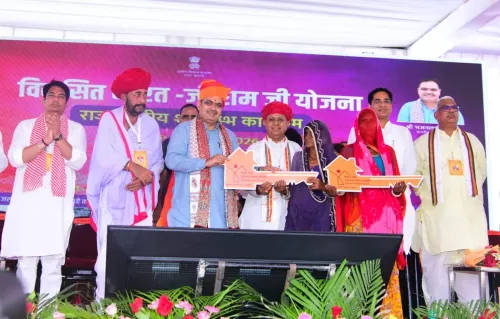
Under Chief Minister Bhajanlal Sharma, the Rajasthan government has committed to ensuring effective on-ground rollout so that every eligible rural household in the state benefits from the scheme's provisions. Officials say the ₹11,581 crore combined allocation positions Rajasthan as one of the largest beneficiaries in the country during the scheme's inaugural year.
The full impact of the transition will become clearer as sectoral and state-level guidelines are operationalised ahead of the 1 July launch date.
Point of View
If enforced, address two of the most persistent complaints against the old scheme: inadequate workdays and delayed wages. The real question is implementation fidelity. MGNREGA's own record showed that guaranteed days on paper rarely translated into guaranteed days on the ground, particularly in states with weak administrative capacity. Rajasthan's ₹11,581 crore allocation is the largest in the state's history, but the true measure will be how many rural households actually receive 125 days of work — and how quickly wages land in their accounts after the weekly cycle kicks in. The unemployment allowance provision is a meaningful accountability clause, but only if the state machinery is equipped and incentivised to enforce it.
NationPress
22 Sept 2026
Frequently Asked Questions
What is VB-G RAM G and how does it differ from MGNREGA?
VB-G RAM G (Viksit Bharat Guarantee for Rozgar and Aajeevika Mission — Rural) is a new rural employment guarantee scheme that replaces MGNREGA from 1 July 2026. Key differences include an increase in guaranteed employment from 100 to 125 days per year, a shift to weekly wage payments via DBT, and a statutory unemployment allowance if work is not provided on time.
How much funding has Rajasthan been allocated under VB-G RAM G?
Rajasthan has been allocated more than ₹11,581 crore for the scheme's first year — comprising an interim Central allocation of over ₹7,581 crore and a state government contribution of ₹4,000 crore, which may be enhanced based on demand.
What is the national outlay for VB-G RAM G in 2026-27?
The Centre has earmarked ₹95,692 crore for VB-G RAM G in financial year 2026-27, the highest-ever Central allocation for any rural employment programme. Including states' contributions, the total national outlay is expected to exceed ₹1.51 lakh crore.
What happens to existing MGNREGA job cards after the transition?
MGNREGA job cards held by beneficiaries who have completed the e-KYC process will remain valid until new Rural Employment Guarantee Cards are issued under the VB-G RAM G Act, 2025, ensuring continuity of benefits during the transition.
When will VB-G RAM G be implemented and who oversees it in Rajasthan?
The scheme launches nationally on 1 July 2026. In Rajasthan, implementation is being overseen by Chief Minister Bhajanlal Sharma's government, which has committed to ensuring every eligible rural household in the state benefits from the programme.