Zoho's Sridhar Vembu warns AI valuations bigger than 1999 dot-com bubble

Synopsis
Zoho founder Sridhar Vembu is not hedging: he is calling it an insane bubble, bigger than 1999. With Nvidia at 20x sales and Microsoft at 10x, his price-to-sales breakdown of Big Tech echoes the warning Scott McNealy gave after the dot-com wreckage. The question markets have not answered: what happens when AI timelines disappoint?
Key Takeaways
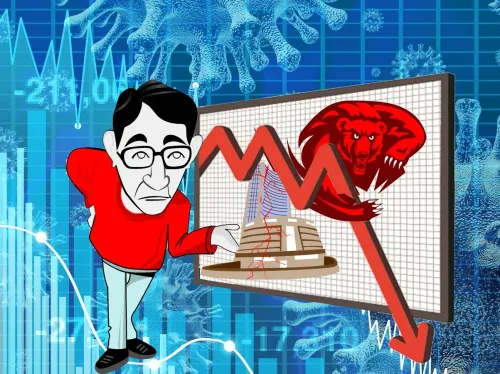
Sridhar Vembu , founder of Zoho Corporation , called the current AI-driven tech rally 'an insane bubble, even bigger than 1999' in a post on X .
Nvidia trades at approximately 20 times sales; Micron at 19 times ; Alphabet at 11 times ; Apple and Microsoft at roughly 10 times each; Meta at 7.5 times .
Vembu cited Scott McNealy's 2002 argument that paying 10 times revenues requires 100% revenue returns for 10 straight years to break even.
The AI boom has pushed several tech firms to record market capitalisations and lifted major global indices to new highs.
Unlike the 1999 bubble concentrated in revenue-light startups, today's elevated multiples sit atop largely profitable, cash-generative companies.
Sridhar Vembu, founder and chief scientist of Zoho Corporation, has sounded a sharp alarm over the soaring market valuations of the world's largest technology companies, warning that AI-driven investor euphoria has created a bubble that may dwarf even the infamous dot-com crash of the early 2000s. In a post on social media platform X, Vembu argued that current price-to-sales ratios across Big Tech are increasingly divorced from underlying business fundamentals.
The Numbers Behind the Warning
Vembu laid out a stark set of figures to support his case. According to his analysis, Nvidia currently trades at roughly 20 times its annual sales, while Micron Technology is near 19 times. Alphabet (Google) commands approximately 11 times sales, with Apple and Microsoft each at around 10 times. Meta Platforms trades at roughly 7.5 times sales.
Vembu wrote in his post: 'Price to sales ratio for big tech (not price to earnings): Nvidia: 20x, Apple: 10x, Alphabet (Google): 11x, Microsoft: 10x, Meta: 7.5x, Micron: 19x.'
The Scott McNealy Parallel
To contextualise the risk embedded in these multiples, Vembu invoked the post-crash remarks of Scott McNealy, former chief executive of Sun Microsystems, who reflected on dot-com-era valuations in 2002. McNealy had argued that an investor paying ten times a company's annual revenue would require that company to return 100% of revenues for 10 straight years simply to break even.
Vembu quoted McNealy directly before adding his own verdict: 'This is an insane bubble, even bigger than 1999.'
Why This Moment Echoes and Exceeds 1999
The current AI-fuelled rally has propelled several technology companies to record market capitalisations and helped push major global stock indices to new highs. Semiconductor manufacturers and software firms in particular have seen sustained gains, driven by investor expectations that artificial intelligence will deliver transformative productivity improvements across industries.
Notably, the 1999 dot-com bubble was largely concentrated in early-stage, revenue-light internet companies. Critics argue the current situation is more complex: several of today's highly valued firms are profitable, cash-generative businesses, yet their price-to-sales ratios have climbed to levels that surpass those seen at the peak of the dot-com era, raising questions about how much future growth is already priced in.
Vembu's Track Record and Broader Context
Vembu's warning carries weight given his history of contrarian, often prescient commentary on technology markets. As the founder of Zoho, a bootstrapped and profitable software company, he has long advocated for building businesses on sustainable fundamentals rather than capital-market enthusiasm.
His remarks come amid a broader debate among institutional investors and analysts about whether AI-related valuations reflect genuine long-term earnings potential or a speculative premium that could unwind sharply if adoption timelines disappoint. How the AI investment cycle resolves will have significant implications for global equity markets and India's own technology sector.
Point of View
Today's Big Tech firms are genuinely profitable, which makes the price-to-sales argument more damning, not less. If cash-generative businesses with real revenues are still trading at 10 to 20 times sales, the implied growth expectations baked into these prices are extraordinary. India's own IT sector, closely correlated with US tech sentiment and FII flows, would not be insulated from a sharp de-rating in global technology multiples. The real risk is not that Vembu is wrong; it is that he is right, but early.
NationPress
15 Oct 2026
Frequently Asked Questions
What did Sridhar Vembu say about AI stocks?
Zoho founder Sridhar Vembu warned in an X post that current AI-driven technology valuations represent an insane bubble, even bigger than 1999, pointing to price-to-sales ratios of 10 to 20 times for companies like Nvidia, Apple, Microsoft, and Alphabet. He argued these multiples are dangerously detached from business fundamentals.
Which companies did Vembu flag as overvalued?
Vembu cited Nvidia at approximately 20 times sales, Micron at 19 times, Alphabet at 11 times, Apple and Microsoft at around 10 times each, and Meta Platforms at roughly 7.5 times sales, using price-to-sales rather than price-to-earnings as his benchmark.
Who is Scott McNealy and why did Vembu reference him?
Scott McNealy was the co-founder and chief executive of Sun Microsystems, a major casualty of the dot-com bust. In 2002, he argued that paying 10 times a company's revenues requires 100% of revenues returned for 10 consecutive years just to break even. Vembu cited this to show how current valuations are mathematically difficult to justify.
How does the current AI bubble compare to the 1999 dot-com era?
The 1999 dot-com bubble was largely driven by early-stage, revenue-light internet companies. The current situation involves profitable, large-cap technology firms trading at even higher price-to-sales multiples, which Vembu argues makes it potentially larger than the 1999 episode.
Why does Vembu's warning matter for Indian investors?
India's technology sector and equity markets are closely linked to US tech sentiment through FII flows and the performance of IT exporters. A sharp correction in global technology valuations could pressure Indian IT stocks and broader indices, making Vembu's caution directly relevant to domestic investors.