WCEF 2026 inaugurated in Gandhinagar: India hosts circular economy forum for first time
Synopsis
For the first time in its 10-year history, the World Circular Economy Forum has landed in South Asia — in Gandhinagar, Gujarat. With 3,600-plus stakeholders from 62 countries and India's own EPR numbers on display (83,000 registered producers, 482 lakh metric tonnes of waste processed), India is signalling a shift from climate-talk participant to circular-economy host and standard-setter.
Key Takeaways
The 10th WCEF 2026 was inaugurated in Gandhinagar on 15 September 2026 — the first edition in India and South Asia .
More than 3,600 stakeholders from 62 countries are attending the four-day forum (15–18 September).
The event features 135 exhibitors showcasing practical circular economy solutions.
As of August 2026 , India has registered over 83,000 producers and 4,802 recyclers under its EPR frameworks, with 482.24 lakh metric tonnes of waste processed.
Two new publications on sewage reuse and India's EPR initiatives were released at the forum.
The event is jointly organised by the Central Pollution Control Board , Finnish Innovation Fund Sitra , Government of Finland , and Gujarat authorities.
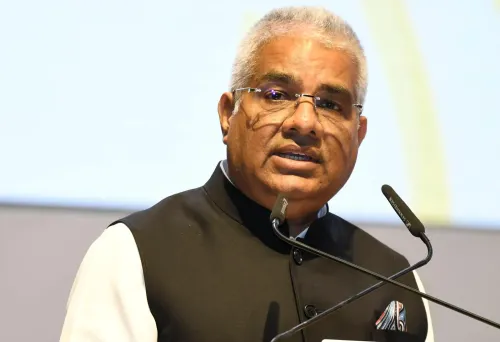
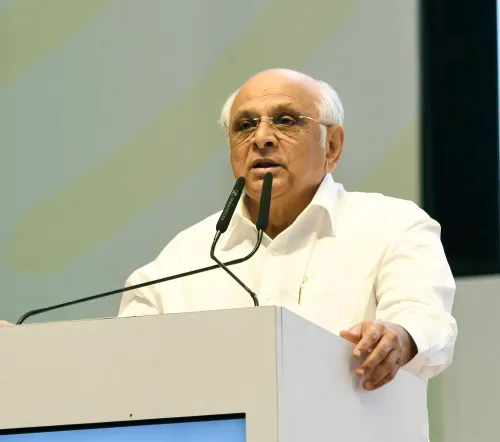
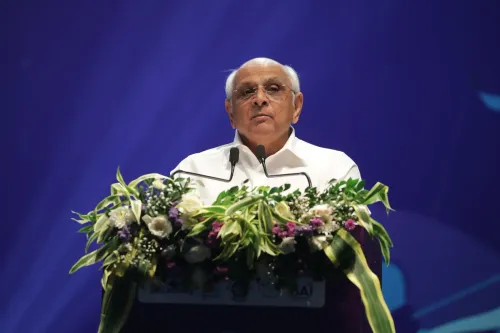
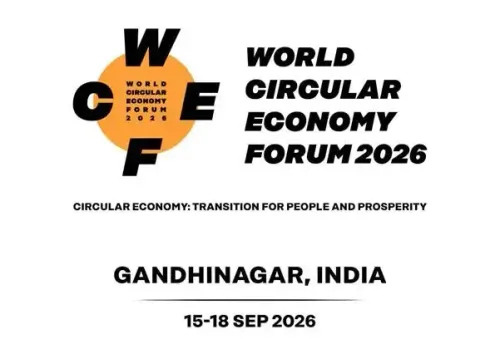
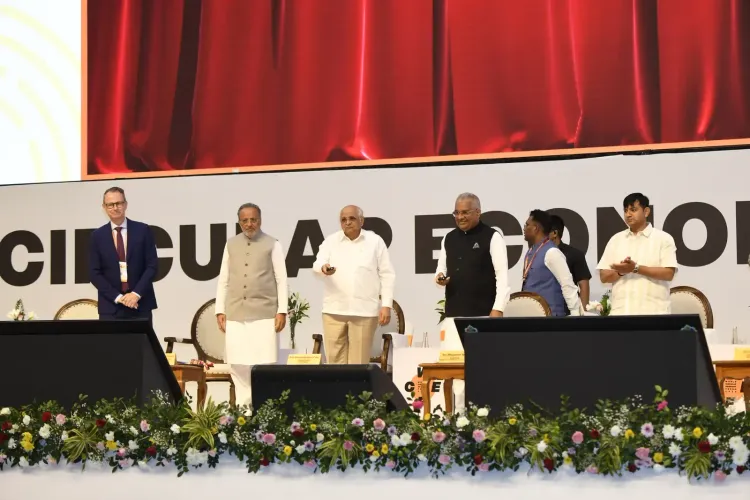
The 10th edition of the World Circular Economy Forum (WCEF) 2026 was inaugurated on Tuesday, 15 September 2026 in Gandhinagar, Gujarat, with Union Environment Minister Bhupender Yadav and Gujarat Chief Minister Bhupendra Patel jointly opening the four-day event. This marks the first time the forum is being held in India — and the first time it has come to South Asia in its decade-long history.
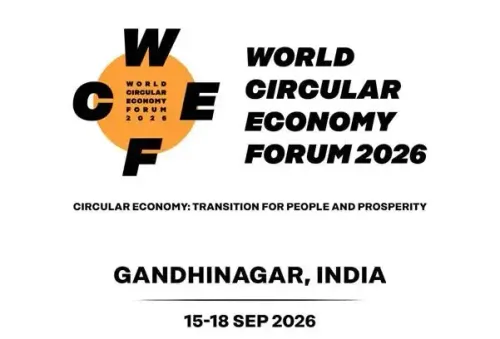
Running from 15 to 18 September under the theme 'Circular Economy: Transition for People and Prosperity', the forum has drawn more than 3,600 cross-sectoral stakeholders from 62 countries, including business leaders, entrepreneurs, researchers, policymakers, and academics.
Scale and Participation
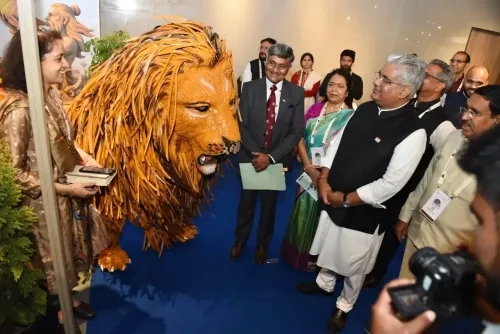
The forum's exhibition wing features 135 national and international exhibitors presenting practical circular economy solutions spanning waste management, resource recovery, and sustainable manufacturing. The breadth of participation underscores the growing global recognition of the circular economy as a policy and investment priority, not merely an environmental aspiration.
The event is jointly organised by the Central Pollution Control Board, the Finnish Innovation Fund Sitra, the Government of Finland, the Ministry of Environment, Forest and Climate Change, the Gujarat Government, and the Gujarat Pollution Control Board.
What Leaders Said
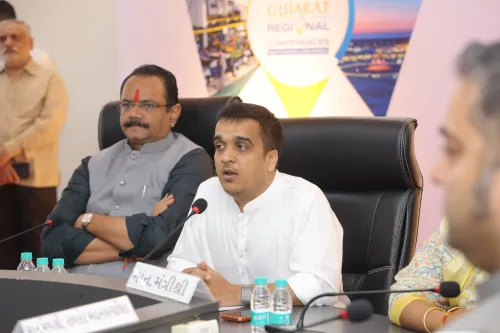
Speaking at the inaugural session, Chief Minister Bhupendra Patel said the hosting of WCEF in South Asia reflected India's growing global leadership under Prime Minister Narendra Modi. He called on the forum to embody the spirit of 'Vasudhaiva Kutumbakam' — the ancient Indian principle of universal kinship — by developing practical solutions for the world. Patel also highlighted Gujarat's experience in balancing industrial development with environmental conservation, citing the state's work in renewable energy, waste and water management, and resource efficiency as internationally replicable models.
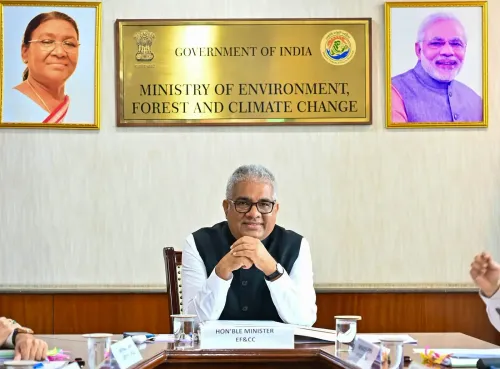
Union Minister Bhupender Yadav stressed that circularity could not be achieved in isolation. 'Knowledge, technology, finance and responsibility need to move across borders and sectors,' he said, adding that no single country, company, or community could close the resource loop on its own.
India's EPR Progress
Yadav provided a detailed account of India's regulatory momentum on circularity. He said the country's approach was underpinned by Extended Producer Responsibility (EPR) frameworks and digital compliance systems. As of August 2026, more than 83,000 producers and 4,802 recyclers were registered under various EPR frameworks, with nearly 482.24 lakh metric tonnes of waste processed across regulated waste streams — figures that position India among the larger EPR ecosystems globally.
Publications Released
The forum also saw the release of two significant publications: 'Best Practices for Reuse of Treated Sewage' and 'Driving Sustainability – A Guide to India's Circular Economy and EPR Initiatives'. These documents are expected to serve as reference material for policymakers and industry practitioners both within India and internationally.
With three days of deliberations still to come, the forum is set to produce recommendations on scaling circular solutions across sectors — outcomes that could shape both domestic policy and India's positioning in global sustainability diplomacy.
Point of View
But the harder question is whether the EPR numbers cited — 83,000 producers registered, 482 lakh metric tonnes processed — translate into measurable pollution reduction or are primarily compliance metrics. Registration and processing volumes are necessary but not sufficient; the quality of recycling and the informality of India's waste sector remain structural gaps that forum declarations rarely address. Gujarat's showcasing as a circular-economy model also bears scrutiny: the state's industrial corridors are among the country's largest pollution hotspots. The real test of this forum's value will be whether it generates binding commitments or remains a well-attended statement of intent.
NationPress
15 Sept 2026
Frequently Asked Questions
What is the World Circular Economy Forum (WCEF) 2026?
The WCEF 2026 is the 10th edition of an international forum dedicated to advancing circular economy solutions — where products and materials are reused, recycled, and kept in use rather than discarded. It is being held in Gandhinagar, Gujarat, from 15 to 18 September 2026, marking the first time the event has come to India or South Asia.
Who inaugurated WCEF 2026 in Gandhinagar?
Union Environment Minister Bhupender Yadav and Gujarat Chief Minister Bhupendra Patel jointly inaugurated the forum on 15 September 2026. Both leaders highlighted India's growing role in global sustainability governance and Gujarat's record on industrial-environmental balance.
Why is WCEF 2026 significant for India?
This is the first time the World Circular Economy Forum has been held in India and in South Asia, signalling international recognition of India's scale and ambition in circular economy policy. India's EPR frameworks now cover over 83,000 producers and have processed nearly 482.24 lakh metric tonnes of waste, among the larger such ecosystems globally.
What is Extended Producer Responsibility (EPR) and how is India using it?
EPR is a policy framework that makes manufacturers and producers responsible for the end-of-life management of their products, incentivising design for recyclability. As of August 2026, India had registered more than 83,000 producers and 4,802 recyclers under its various EPR frameworks, with waste processing spanning plastics, e-waste, and other regulated streams.
Who is organising WCEF 2026 and how many countries are participating?
The forum is jointly organised by the Central Pollution Control Board, Finnish Innovation Fund Sitra, Government of Finland, Ministry of Environment, Forest and Climate Change, Gujarat Government, and Gujarat Pollution Control Board. More than 3,600 stakeholders from 62 countries are participating.