‘Make in India’: Empowering Women and Generating Millions of Jobs, Says Ashwini Vaishnaw
Synopsis
The ‘Make in India’ initiative has significantly empowered women, creating millions of jobs, as stated by Union Minister Ashwini Vaishnaw. This program has revolutionized the job landscape, particularly within the Apple ecosystem.
Key Takeaways
Women are the primary beneficiaries of the ‘Make in India’ initiative.
The initiative has created millions of jobs in various sectors.
Major investments have been attracted through the PLI scheme.
Local production now meets a significant portion of domestic demand.
The government is focusing on advanced electronics manufacturing.
New Delhi, Feb 23 (NationPress) Women have emerged as the primary beneficiaries of the ‘Make in India’ initiative, which has resulted in the creation of lakhs of both direct and indirect jobs, stated Union Minister Ashwini Vaishnaw on Monday.
The IT Minister emphasized that the ‘Make in India’ initiative has not only generated employment but also offered skill development on an unparalleled scale.
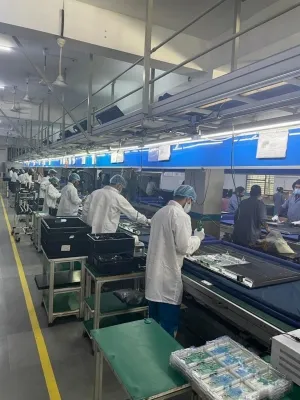
Within the Apple ecosystem alone, roughly 250,000 direct jobs have been established, with 70% of the recipients being women. Additionally, this ecosystem has led to the creation of around 750,000 indirect jobs.
“India is gearing up to develop a skilled workforce for the forthcoming era of electronics manufacturing, encompassing Robotics, Drones, Electric Vehicles, Smart Cars, Precision Components, Advanced Tooling, and Smart Glasses,” Vaishnaw mentioned in a post on X.
Furthermore, the production-linked incentive (PLI) scheme has successfully attracted investments exceeding Rs 2.16 lakh crore in the manufacturing sector, resulting in more than 14.39 lakh direct and indirect jobs as of December 31, 2025.
As stated by the Ministry of Commerce and Industry, cumulative sales from manufacturing units established under this scheme have surpassed Rs 20.41 lakh crore, with total exports exceeding Rs 8.3 lakh crore.
The government has allocated approximately Rs 28,748 crore as production-linked incentives under this initiative, the statement revealed.
Mobile phone imports have plummeted by nearly 77% since FY 2020-21, and over 99% of domestic demand is now fulfilled through local production. Manufacturing has expanded beyond mere assembly to include printed circuit board assemblies, batteries, camera and display modules, enclosures, and other essential sub-assemblies, fostering deeper integration with global value chains.
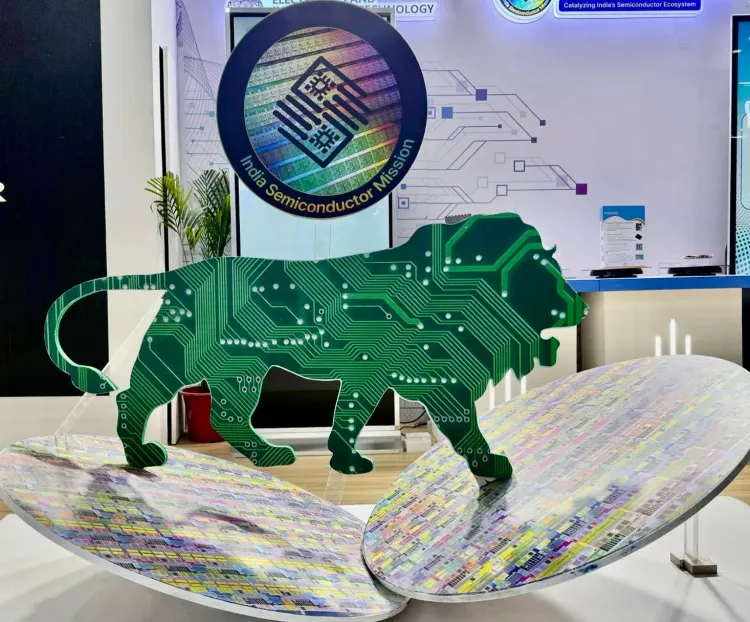
The domestic manufacturing capacity for IT hardware has also grown, with a gradual localization of components that reduces reliance on imports. The government has increased the component manufacturing budget to Rs 40,000 crore and announced the India Semiconductor Mission 2.0.
In the Union Budget, Finance Minister Nirmala Sitharaman unveiled the India Semiconductor Mission (ISM) 2.0 while boosting the allocation for electronics component manufacturing to Rs 40,000 crore to enhance local production and innovation, which is also expected to lead to more direct and indirect job opportunities.
Point of View
The 'Make in India' initiative is a pivotal program that not only aims to boost India's manufacturing sector but also plays a crucial role in empowering women and enhancing skill development. The reported job creation statistics reflect its significant impact, particularly in a rapidly evolving technological landscape.
NationPress
19 Sept 2026
Frequently Asked Questions
How many jobs have been created under the ‘Make in India’ initiative?
The initiative has created millions of direct and indirect jobs, with significant contributions from sectors like the Apple ecosystem.
What percentage of jobs created by the Apple ecosystem benefit women?
Around 70% of the direct jobs created within the Apple ecosystem have gone to women.
What is the production-linked incentive (PLI) scheme?
The PLI scheme aims to attract investments in the manufacturing sector and has been instrumental in job creation and economic growth.
How has local production changed since the launch of the initiative?
Local production now meets over 99% of domestic demand for mobile phones, significantly reducing imports.
What is the goal of the India Semiconductor Mission 2.0?
The mission aims to strengthen local production of semiconductor components, boosting the electronics manufacturing sector.