India can lead next phase of agricultural transformation: World Bank
Synopsis
The World Bank Group has named India as a potential leader in South Asia's next agricultural leap — but the real story is the gap: 30 per cent of the region's food is lost every year, enough to feed 300 million people. With AgriConnect targeting 300 million farmers by 2030 and processed food exports already doubling, the infrastructure and policy pieces are falling into place — the question is execution speed.
Key Takeaways
The World Bank Group identified India and South Asia as having major untapped potential in agricultural and food system transformation, speaking at the SAPLING High-Level Policy Dialogue in Ahmedabad on 9 June .
South Asia's agriculture sector is valued at over $700 billion annually but contributes only around 16 per cent of regional GDP.
More than 30 per cent of food produced in South Asia is lost or wasted each year — enough to feed nearly 300 million people .
India's processed food exports have more than doubled over the past decade, rising from approximately $4.9 billion to over $10 billion .
AgriConnect aims to connect 300 million farmers to markets by 2030 through infrastructure, policy reform, and private capital.
The food processing sector contributes around 9 per cent of India's manufacturing value added and nearly 13 per cent of its total exports.
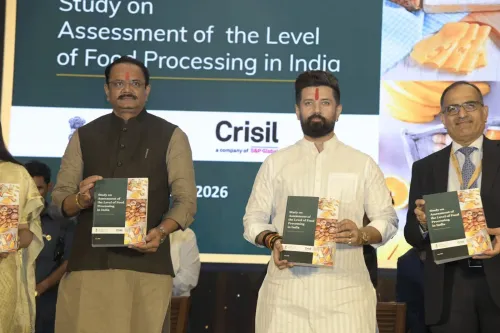
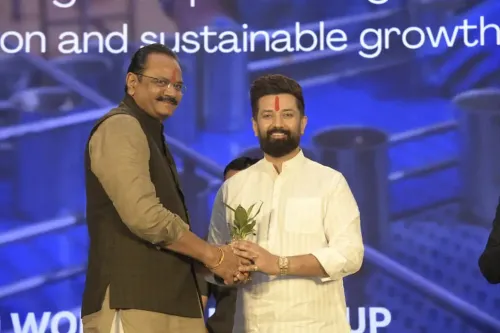
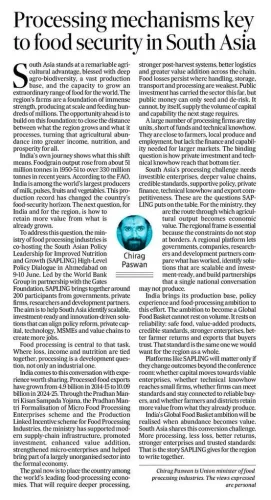
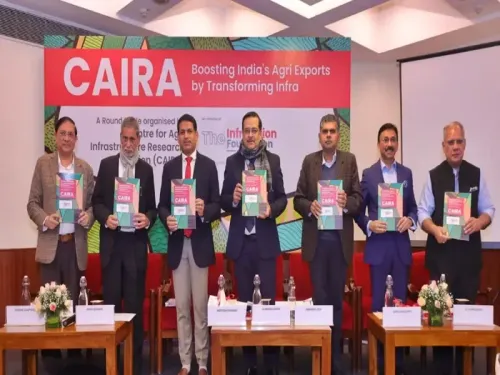
The World Bank Group said on Tuesday, 9 June that South Asia — and India in particular — stands poised to unlock substantial gains in employment, investment, and poverty reduction by transforming its agricultural and food systems beyond the farm. The assessment came at the SAPLING High-Level Policy Dialogue inaugurated in Ahmedabad, jointly organised by the Ministry of Food Processing Industries (MoFPI) and the World Bank Group-led SAPLING initiative.
Scale of the Opportunity
South Asia's agriculture sector is valued at over $700 billion annually and employs nearly 43 per cent of the region's workforce. Yet it contributes only around 16 per cent of regional GDP — a structural gap that experts at the dialogue said reflects untapped value rather than a ceiling. More than 30 per cent of food produced in the region is lost or wasted every year, a volume sufficient to feed nearly 300 million people.
Experts emphasised that the next wave of agricultural transformation must move beyond increasing production and focus instead on food processing, storage, logistics, marketing, and value addition — activities capable of generating millions of productive jobs while simultaneously cutting food losses and raising farmer incomes.
India's Progress and Remaining Gaps
India's own trajectory illustrates both the progress made and the distance still to travel. Food grain production has risen from 51 million tonnes in 1950–51 to more than 330 million tonnes today. Processed food exports have more than doubled over the past decade, climbing from approximately $4.9 billion to over $10 billion. The food processing sector now contributes around 9 per cent of manufacturing value added and nearly 13 per cent of India's total exports.
Despite these gains, food processing still accounts for only a small share of total employment, and a large proportion of agricultural produce remains unprocessed. Strengthening cold chains, storage infrastructure, logistics networks, and market linkages, according to experts, can substantially deepen value creation across the sector.
The AgriConnect and SAPLING Framework
To accelerate this transition, the World Bank Group is advancing a combined strategy through two platforms: AgriConnect and SAPLING. AgriConnect is a global platform targeting the connection of 300 million farmers to markets by 2030 through infrastructure investment, policy reform, and private capital mobilisation. The initiative is already supporting projects across India, Bangladesh, and Sri Lanka.
SAPLING, the regional initiative under which Tuesday's dialogue was convened, focuses on policy coordination across South Asian governments. Participants stressed that unlocking the sector's potential requires coordinated action by governments, businesses, investors, and development institutions working in concert.
What Investors and Companies Were Urged to Do
Investors at the dialogue were encouraged to direct capital toward cold chains, warehousing, logistics hubs, processing clusters, agro-industrial parks, and early-stage agri-enterprises. Companies were urged to build integrated value chains, adopt digital technologies for traceability and quality assurance, and invest in workforce skills and capacity building.
With the World Bank Group setting a 2030 horizon for its AgriConnect targets, the coming years will test whether coordinated policy and private investment can convert South Asia's agricultural scale into sustainable economic and nutritional gains.
Point of View
But the numbers tell a more complicated story. India's food grain output has grown sixfold since independence, yet the processing sector's share of employment remains thin — pointing to a structural failure to convert farm output into downstream jobs. The $700 billion regional agriculture valuation is an opportunity statement, not an achievement. Closing the gap between production scale and processing depth will require more than policy dialogue; it will need cold-chain investment at a pace that India's logistics infrastructure has not historically sustained. The 2030 AgriConnect target of 300 million farmers is ambitious — the credibility test is whether disbursements and reforms in India, Bangladesh, and Sri Lanka actually move in the next 24 months.
NationPress
19 Sept 2026
Frequently Asked Questions
What did the World Bank Group say about India's agricultural potential?
The World Bank Group said India and South Asia can unlock significant opportunities in employment, investment, and poverty reduction by transforming food systems beyond the farm. The assessment was made at the SAPLING High-Level Policy Dialogue in Ahmedabad on 9 June.
What is the SAPLING initiative and why was the dialogue held in Ahmedabad?
SAPLING is a World Bank Group-led regional initiative focused on agricultural policy coordination across South Asia. The High-Level Policy Dialogue in Ahmedabad was jointly organised with India's Ministry of Food Processing Industries (MoFPI) to discuss food system transformation priorities.
How much food is wasted in South Asia each year?
More than 30 per cent of food produced in South Asia is lost or wasted annually — a quantity that experts say is enough to feed nearly 300 million people. Strengthening cold chains, storage, and logistics is seen as key to reducing these losses.
What is AgriConnect and what is its 2030 target?
AgriConnect is a World Bank Group global platform that aims to connect 300 million farmers to markets by 2030 through infrastructure investment, policy reform, and private capital mobilisation. It is already supporting projects in India, Bangladesh, and Sri Lanka.
How has India's food processing sector performed in recent years?
India's processed food exports have more than doubled over the past decade, rising from approximately $4.9 billion to over $10 billion. The sector contributes around 9 per cent of manufacturing value added and nearly 13 per cent of total exports, though its share of employment remains limited.