India food processing levels hit 17% by 2023, MoFPI report released at SAPLING 2026
Synopsis
India's food processing rate has nearly doubled in seven years — from 10% in 2016 to 17% in 2023 — but a new MoFPI report released at SAPLING 2026 in Ahmedabad makes clear that perishables like fruits, vegetables, and dairy remain largely untapped. With 200 policymakers, industry leaders, and researchers from across South Asia in the room, the real question is whether regional collaboration can finally close that gap.
Key Takeaways
India's food processing levels rose from around 10% in 2016 to nearly 17% in 2023 , according to a new MoFPI report.
Union Minister Chirag Paswan inaugurated the SAPLING Dialogue 2026 in Ahmedabad on 10 June 2026 .
Around 200 participants from South Asian countries, startups, and research institutions are attending the two-day event.
The report identifies fruits, vegetables, and dairy as the biggest opportunities for value addition.
Gujarat Agriculture Minister Jitu Vaghani called for a NIFTEM campus in Gujarat to strengthen agro-industrial ties.
The dialogue is co-hosted by MoFPI and the World Bank Group -led SAPLING initiative, aligned with the AgriConnect platform.
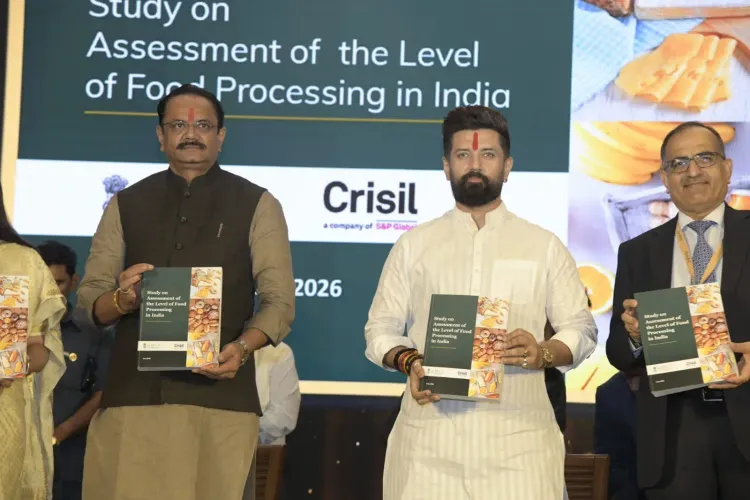
India's food processing levels rose from around 10 per cent in 2016 to nearly 17 per cent in 2023, according to a government report released at the SAPLING (South Asian Policy Leadership for Improved Nutrition and Growth) Dialogue 2026 in Ahmedabad on 10 June 2026. The report, titled 'Assessment of the Level of Food Processing in India', was published by the Ministry of Food Processing Industries (MoFPI) and highlights both the sector's momentum and the significant headroom that remains for value addition.
What the MoFPI Report Found
The study assessed food processing levels across major agricultural commodities and identified perishable categories — fruits, vegetables, and dairy products — as the most promising areas for further value addition. It also outlines policy recommendations targeting infrastructure upgrades, post-harvest loss reduction, improved farmer incomes, and a stronger competitive position for India in global food trade. The findings underscore that despite steady progress, a large share of agricultural produce still reaches consumers without any formal processing.
SAPLING 2026: Who Attended and Why
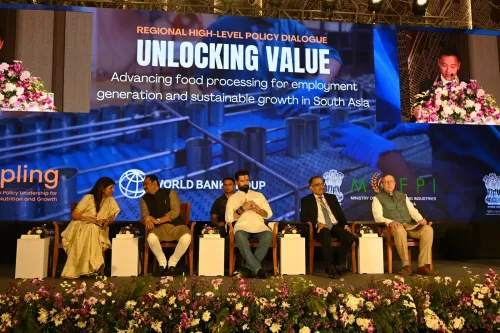
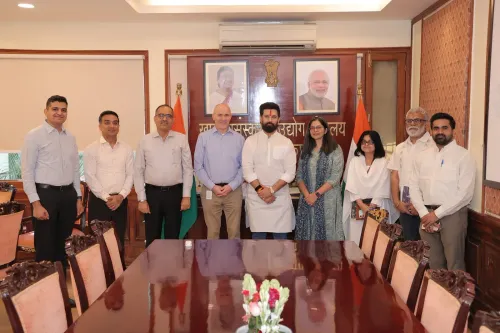
Union Food Processing Industries Minister Chirag Paswan inaugurated the two-day regional high-level policy dialogue, co-hosted by MoFPI and the World Bank Group-led SAPLING initiative. Around 200 participants attended, including representatives from South Asian countries, startups, development partners, and research institutions. The dialogue's full title — 'Unlocking Value: Advancing Food Processing for Employment Generation and Sustainable Growth in South Asia' — signals its twin focus on economic growth and food security.
The inaugural plenary was attended by Paul Procee, Acting Country Director for India at the World Bank; Archna Vyas, Country Director for India at the Gates Foundation; and Avinash Joshi, Secretary at MoFPI. Senior representatives from organisations including Nestle, Bayer, Rabobank, Ajinomoto, ITC, SEWA, NABARD, and Food Industry Asia also participated.
Key Statements from Ministers
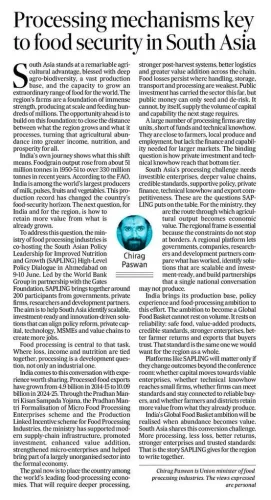
Addressing the inaugural session, Paswan described food processing as 'the bridge between agriculture and prosperity' with 'immense potential to generate employment, reduce post-harvest losses, improve farmer incomes, and strengthen food security.' He stressed value addition, technology adoption, and regional collaboration as pillars for transforming South Asia's food economy.
Gujarat Agriculture Minister Jitu Vaghani welcomed delegates and called SAPLING 2026 a significant regional platform. He advocated the establishment of a campus of the National Institute for Food Technology Entrepreneurship and Management (NIFTEM) in Gujarat, arguing it would strengthen links between agriculture and industry. Vaghani reaffirmed the state government's commitment to agro-industrial development as a driver of employment and economic growth.
Themes, Innovation Fair, and Regional Agenda
The dialogue's discussions span unlocking South Asia's food processing opportunities, formalising informal food processors, promoting technology-driven innovation, enhancing food safety standards, mobilising investment, and advancing regional policy cooperation. Alongside the main sessions, an Innovation Fair is showcasing solutions in cold-chain logistics, digital traceability, sustainable packaging, smart processing technologies, and storage systems.
The SAPLING Dialogue is aligned with the World Bank Group's AgriConnect initiative, which seeks to accelerate resilient, nutrition-focused food systems across South Asia through policy reform, investment mobilisation, and technology-driven solutions. Organisers expect the dialogue to promote cross-country learning, support micro, small and medium enterprises, and identify practical pathways for food processing-led employment generation across the region.
Point of View
But the headline number obscures a structural gap: perishables — fruits, vegetables, dairy — remain the weakest link, and that is precisely where post-harvest losses are heaviest and farmer income potential is greatest. SAPLING 2026 brings the right stakeholders into the room, but regional dialogues have a history of producing recommendations that stall at implementation. The more pointed question is whether MoFPI's policy recommendations will be backed by time-bound investment commitments, or whether the report will serve mainly as a benchmark for the next conference. India's ambition to be a global food-processing hub requires processing levels closer to 30–40%, a bar that peer economies cleared years ago.
NationPress
24 Oct 2026
Frequently Asked Questions
What did the MoFPI report on food processing levels in India find?
The report found that India's overall food processing levels rose from around 10% in 2016 to nearly 17% in 2023. It also identified perishable commodities — fruits, vegetables, and dairy — as the most significant areas for further value addition, and offered policy recommendations on infrastructure, post-harvest loss reduction, and global competitiveness.
What is the SAPLING Dialogue 2026?
SAPLING 2026 is a two-day regional high-level policy dialogue held in Ahmedabad, co-hosted by India's Ministry of Food Processing Industries and the World Bank Group-led SAPLING initiative. It brings together around 200 policymakers, industry leaders, startups, and researchers from across South Asia to advance food processing ecosystems, employment generation, and sustainable food systems.
Who inaugurated SAPLING 2026 and what did they say?
Union Food Processing Industries Minister Chirag Paswan inaugurated the event, describing food processing as 'the bridge between agriculture and prosperity.' He stressed value addition, technology adoption, and regional collaboration as essential to transforming South Asia's food economy.
Which organisations are participating in SAPLING 2026?
Participants include senior representatives from Nestle, Bayer, Rabobank, Ajinomoto, ITC, SEWA, NABARD, and Food Industry Asia, alongside officials from the World Bank, the Gates Foundation, and MoFPI. Representatives from multiple South Asian countries, startups, and research institutions are also attending.
What is the Innovation Fair being held alongside SAPLING 2026?
The Innovation Fair is an exhibition running alongside the dialogue, showcasing emerging solutions in cold-chain logistics, digital traceability, sustainable packaging, smart processing technologies, and storage systems. It aims to encourage collaboration between innovators, policymakers, and industry stakeholders.