2026 Box Office Mid-Year: Theatre owners weigh in on Bollywood's recovery
Synopsis
Two veteran Indian theatre owners — one from Mumbai's oldest single-screen, one from Bihar's Tier-2 circuit — offer starkly different reads of the same six months. The divide reveals that Bollywood's 2026 recovery is real but uneven, powered by grounded content rather than star power, with OTT still rewriting the rules of audience loyalty.
Key Takeaways
Manoj Desai of Gaiety Galaxy, Mumbai says only a few films — notably Dhurandhar and Border 2 — drove meaningful footfall in the first half of 2026 .
Desai cites OTT platforms as the primary threat, saying exhibitors now consider a one-week run a success.
Vishak Chauhan of Purnia, Bihar calls the first six months 'fairly decent,' with hits like Bhooth Bangla and Welcome To The Jungle working across the country.
Chauhan says Bollywood is returning to 'universal cinema' — grounded, basic-subject films targeting all audiences, not just urban multiplexes.
Both exhibitors agree that content , not star cast, is the primary driver of box office success in 2026.
South Indian films are outperforming Bollywood releases at single-screen theatres in Mumbai, according to Desai.
As the first half of 2026 drew to a close on 30 June, NationPress spoke with veteran theatre owners across India to assess the state of the exhibition business and decode what the numbers mean for Hindi cinema's recovery.
Struggles at the Ticket Counter
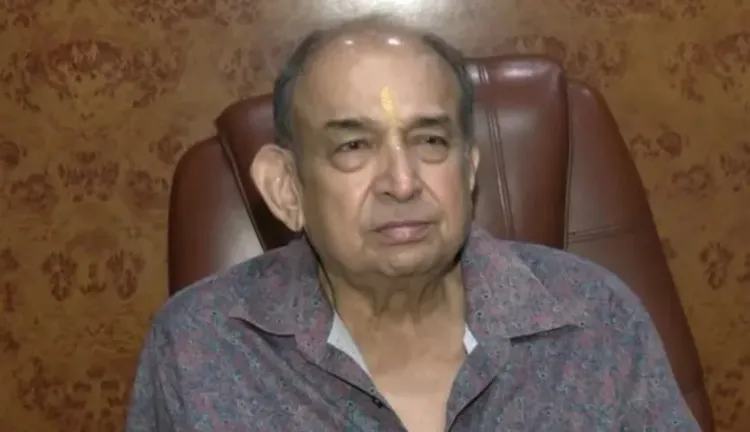
Manoj Desai, owner of the iconic Gaiety Galaxy in Mumbai — one of India's oldest single-screen theatres — offered a candid assessment of Bollywood's first-half performance. According to Desai, the industry is still fighting an uphill battle, with only a handful of releases making a meaningful dent at the box office.
'Except for a few movies such as Dhurandhar and Border 2, not many movies have done great business at the ticket counters, which is not a good sign for the industry,' he said. Desai attributed much of the struggle to the dominance of OTT platforms, which he argued have fundamentally altered audience behaviour. 'In the era of OTT, people are not too keen to come to the theatre,' he noted, adding that exhibitors now feel relieved if a film sustains even a single week of healthy footfall.
He pointed to Akshay Kumar's Welcome To The Jungle as a cautionary tale — a film that 'could not sustain, even with such a massive star cast.' When asked what drives audiences to cinemas today, Desai was unequivocal: content, followed closely by music, which he said plays a crucial role in forging an emotional connection with viewers.
Desai also flagged a trend that he described as surprising — South Indian films consistently outperforming Bollywood releases at Mumbai's single-screen theatres, a market that was historically the heartland of Hindi cinema.
A More Optimistic Reading from Bihar
Vishak Chauhan, a fourth-generation theatre owner from Purnia, Bihar, offered a notably more upbeat perspective on the same six-month period. For Chauhan, the first half of 2026 has been 'fairly decent,' with several titles delivering genuine box office success across geographies.
He cited Dhurandhar, Border 2, Bhooth Bangla, and Welcome To The Jungle as films that worked across the country — not just in metropolitan multiplexes. He attributed this to a structural shift in how filmmakers are approaching their craft. 'They are making very basic films on basic subjects, and the treatment of their movies is also extremely grounded,' Chauhan said, adding that the industry appears to be moving away from urban-centric storytelling and returning to universal, rooted narratives.
Surprise Performers and Niche Wins
Chauhan identified Haunted — a sequel to Vikram Bhatt's earlier film of the same name — as the most unexpected success story of the half-year for his circuit. He also highlighted Imtiaz Ali's Main Vapas Aaunga, a film initially targeted at elite multiplex audiences, which gradually built momentum and delivered solid box office returns.
This pattern of slow-burn successes is, according to Chauhan, a healthy indicator for the ecosystem. 'I think it is a very healthy scenario for movie theatres, exhibitors, distributors, producers, that people are ready to watch all kinds of cinema — all you need to do is make commercially viable movies,' he said.
What the Divergence Reveals
The contrasting views from Mumbai and Purnia reflect a broader fault line in the Indian exhibition business: the experience of a legacy single-screen operator in a metro is vastly different from that of a theatre owner serving a Tier-2 audience. This comes amid an ongoing structural debate about whether Bollywood's recovery is real or concentrated in pockets. Notably, the titles that both exhibitors agreed upon — Dhurandhar and Border 2 — were content-driven, high-concept films, reinforcing the industry consensus that spectacle alone no longer guarantees footfall. The second half of 2026 will be a sharper test, with several major releases lined up across languages.
Point of View
Driven by OTT substitution and a Bollywood that spent years chasing multiplex demographics at the expense of mass audiences. Chauhan's optimism from Purnia, however, points to something the industry has been slow to acknowledge: the Tier-2 and Tier-3 audience never left — Bollywood simply stopped making films for them. The titles that worked in both circuits share a common thread: grounded storytelling over spectacle. If that lesson holds for the second half of 2026, the recovery could broaden. If producers revert to star-led vanity projects, Desai's pessimism will prove the more accurate forecast.
NationPress
30 Sept 2026
Frequently Asked Questions
How did Bollywood perform at the box office in the first half of 2026?
Performance was uneven, according to theatre owners. Only a handful of films — including Dhurandhar, Border 2, and Bhooth Bangla — delivered strong box office returns, while many others struggled to sustain even a week of healthy footfall, partly due to competition from OTT platforms.
What did Manoj Desai say about the state of Indian theatres in 2026?
Manoj Desai, owner of the iconic Gaiety Galaxy in Mumbai, said theatres are still struggling and that OTT has significantly reduced audiences' motivation to visit cinemas. He noted that even a star-heavy film like Welcome To The Jungle could not sustain at the box office.
What is Vishak Chauhan's take on the 2026 mid-year box office?
Vishak Chauhan, a fourth-generation theatre owner from Purnia, Bihar, described the first half of 2026 as 'fairly decent.' He credited a shift toward grounded, universally appealing content for the success of several films across Tier-2 and Tier-3 markets.
Which films were the biggest surprises at the 2026 mid-year box office?
According to Vishak Chauhan, Haunted — a sequel to Vikram Bhatt's earlier film — was the most unexpected hit of the period. Imtiaz Ali's Main Vapas Aaunga also outperformed expectations after a slow start, gradually building strong box office numbers.
Why are South Indian films outperforming Bollywood in Mumbai theatres?
Manoj Desai expressed surprise that South Indian films are consistently drawing larger audiences than Bollywood releases at Mumbai's single-screen theatres. He did not offer a specific reason but implied it reflects a content quality gap that Hindi cinema has yet to close.