Nani questions 'pan-Indian' label: Why should only South films carry the tag?
Synopsis
Nani is asking a question the Indian film industry has largely avoided: if Jawan and Pathaan crossing into Tamil and Telugu markets doesn’t make them 'pan-Indian', why does a Telugu film succeeding in Hindi earn that tag? Speaking in Chennai ahead of 'The Paradise', he called the label selectively applied — and said he has raised it every single time.
Key Takeaways
Nani questioned the 'pan-Indian' label during a media interaction in Chennai on 18 September 2026 .
He argued that Hindi hits like Jawan and Pathaan are never called pan-Indian despite performing well in South Indian markets.
His position: the term is applied selectively to South Indian films and does not reflect a neutral, industry-wide standard.
Nani said he has raised this objection for every film in his career, though he acknowledged he cannot stop others from using the term.
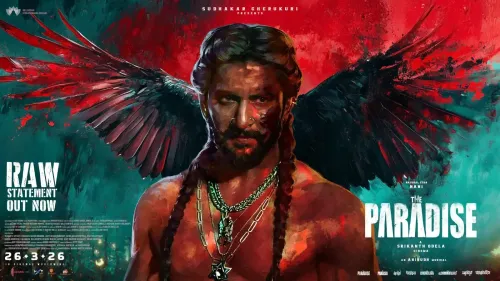
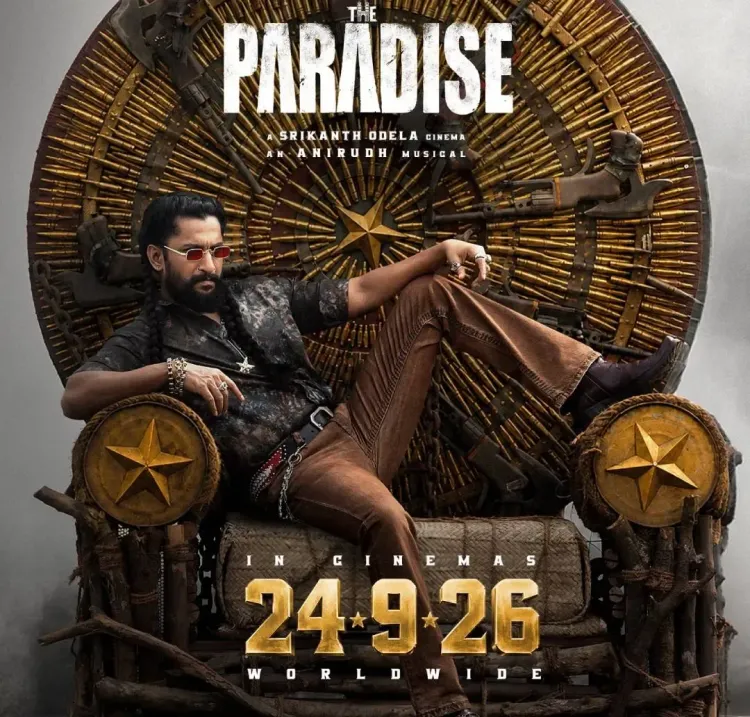
He was speaking ahead of the release of his film 'The Paradise' , directed by Srikanth Odela .
Telugu actor Nani has sparked a fresh conversation in the Indian film industry by questioning the selective use of the term 'pan-Indian' — arguing that the label is applied almost exclusively to South Indian films while Hindi blockbusters that cross regional boundaries are never described the same way. The actor made these remarks during a media interaction in Chennai on 18 September 2026, ahead of the release of his upcoming action entertainer 'The Paradise', directed by Srikanth Odela.
The Core Argument
Nani pointed to a clear double standard in how the Indian film trade uses the phrase. 'If a Hindi film comes and it becomes a big success in Telugu, in Tamil and in Malayalam, that Hindi film is not called pan-Indian. It’s still called a Hindi film,' the actor said. He cited major Hindi productions as examples: 'When we see a Jawan or a Pathaan doing very well in the Tamil version, in the Telugu version, it is not called pan-Indian. It is still called a Hindi film.'
His argument is straightforward — if Hindi films are not labelled pan-Indian when they succeed across linguistic markets, why should a Telugu or Tamil film earn a separate tag when it achieves the same feat? 'I don’t understand the word pan-Indian. Why is it introduced for South Indian films? Why is it not for Hindi films?' he asked.
A Request He Has Made Before
Nani clarified that this is not a new stance — he has consistently raised this point for every film in his career whenever the pan-Indian label has been applied. 'I have been saying this actually for every film of mine, whenever they call it pan-Indian. But the moment I say it, it is becoming a discussion,' he noted. The fact that it keeps sparking debate, he implied, suggests the underlying question resonates with a wider audience in the industry.
What Nani Said He Can — and Cannot — Control
'I can’t stop everyone from calling films pan-Indian, but that word doesn’t make sense to me,' he admitted. The actor said his intent has always been to reach audiences across Tamil, Hindi, Malayalam, and Kannada markets regardless of the label attached. 'This will always be the process. But I don’t want them to use those tags on my films — but it will still be used. I cannot do much about it. I can only mention or request,' he said.
About 'The Paradise'
'The Paradise' is an action entertainer directed by Srikanth Odela, who is best known for helming Dasara (2023). The film is being described as an explosive, high-stakes production and is eagerly awaited by Nani’s fan base. With Nani actively engaging regional media across the country in the promotional circuit, the film is clearly being positioned for a wide multi-lingual release — whether or not it carries the pan-Indian tag.
The conversation Nani has ignited touches on a deeper question about how Indian cinema categorises itself along linguistic and geographical lines, and whether those categorisations reflect genuine cultural bias or simply trade shorthand that has calcified over time.
Point of View
While every other language must earn or explain its national ambition. The term 'pan-Indian' implicitly positions South-language films as regional products that have 'broken through', while Hindi films are assumed to belong to the whole country by default. That asymmetry has real commercial consequences: it shapes how distributors price deals, how OTT platforms categorise content, and how media frames success. Nani is unlikely to change industry vocabulary alone, but the debate he keeps forcing is one the industry has been reluctant to have directly.
NationPress
18 Sept 2026
Frequently Asked Questions
Why does Nani not want his films called pan-Indian?
Nani objects to the term because he believes it is applied selectively — South Indian films that succeed nationally are labelled 'pan-Indian', while Hindi films that succeed in Tamil or Telugu markets are simply called Hindi films. He finds the distinction inconsistent and argues it implies an unequal standard across language industries.
What is Nani’s upcoming film 'The Paradise'?
'The Paradise' is an action entertainer directed by Srikanth Odela, the filmmaker behind the 2023 hit Dasara. Nani has been promoting the film across multiple cities, including Chennai, positioning it for a wide multi-lingual release.
Which Hindi films did Nani cite in his argument?
Nani specifically mentioned Jawan and Pathaan as examples of Hindi films that performed strongly in Tamil and Telugu versions but were never referred to as pan-Indian productions, even though they crossed the same regional boundaries that South films are celebrated for crossing.
Is this the first time Nani has raised this issue?
No. Nani stated that he has raised this objection for every film in his career whenever the pan-Indian label has been applied. He acknowledged, however, that he cannot prevent others from using the term and can only request that it not be used for his films.
What broader debate does Nani’s argument touch on?
His remarks point to a long-standing asymmetry in Indian film trade language, where Hindi cinema is treated as the national default while other language industries must justify their national reach with special labels. Critics and filmmakers have intermittently raised similar concerns about how success is framed differently depending on a film’s language of origin.