Ali Fazal on 'Raakh': Violence is nature's truth, but society must choose kindness

Synopsis
Ali Fazal isn't just promoting 'Raakh' — he's using it as a lens on the world. In a candid post-release conversation, the actor traced violence from the food chain to nuclear war, arguing that one-upmanship is civilisation's engine and its greatest danger. His ask: that people feel, not just know, what violence does to flesh and soul.
Key Takeaways
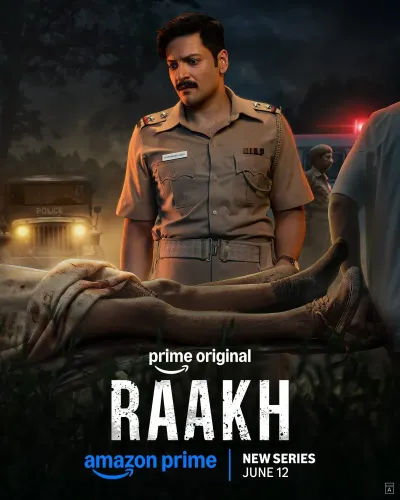
Ali Fazal spoke about the themes of violence and nature following the release of 'Raakh' on Prime Video on 20 June .
Fazal argued that the impulse of one-upmanship — 'I have something that you don't' — underlies everything from consumerism to nuclear war .
He acknowledged violence as part of nature but called on people to understand its real human cost — on 'skin, on flesh'.
The cast present included Sonali Bendre , Aamir Bhashir , Ramandeep Yadav , Prosit Roy , Anusha Nandkumar , and Sandeep Sanket . 'Raakh' is streaming now on Prime Video and has received strong early audience response.
Actor Ali Fazal has reflected on the themes of violence and human nature in the context of his latest streaming series 'Raakh', now available on Prime Video, saying that while aggression is embedded in nature itself, individuals and societies must consciously work to contain it. The actor shared his thoughts in Mumbai following the show's release on 20 June.
The Philosophy Behind the Series
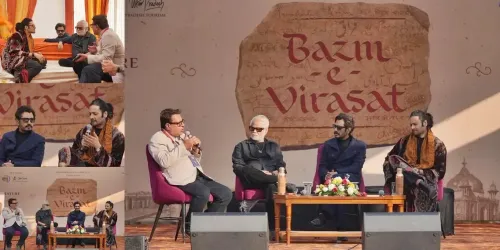
Speaking alongside cast members Sonali Bendre, Aamir Bhashir, Ramandeep Yadav, Prosit Roy, Anusha Nandkumar, and Sandeep Sanket, Fazal drew a direct line from the natural world to human behaviour. He argued that the impulse to dominate — the sense of 'I have something that you don't' — is the root driver of conflict at every scale.
'It's the very nature, I suppose. There is violence in our nature as well. I think it is there. The start point only is, I have something that you don't. And I think that one-upmanship is what is carrying the world forward in some way or form. Sadly, that is, I have something that you don't. Everything from consumerism, nuclear war, politics is based on this concept,' Fazal said.
On Entropy and the Balance of Forces
When asked specifically about entropy — the tendency of systems to move toward disorder — Fazal acknowledged the concept as a reflection of nature's inherent violence. He noted that the food chain itself is built on an act of violence, where the predator's survival comes at the prey's expense. Yet, he suggested, equilibrium is possible. 'Somewhere in that you find a balance. You call it the male-female balance, you call it the duality, whatever,' he added.
Notably, Fazal stopped short of fatalism. He expressed hope that greater awareness of violence's consequences could temper its expression in human affairs.
The Human Cost of Violence
Fazal urged audiences — and society at large — to viscerally understand what violence does to a person, not merely in abstract terms but in its immediate, physical reality. 'It in real time affects people. And it's happening now as we speak. There are wars happening. We don't even go outside our country actually. There is enough, we have enough stuff happening here. So, that's it. That's the idea. Stop and maybe, just maybe like, understand how that one strike really translates on the other, on skin, on flesh. When flesh burns, what really happens. You have to understand that. You have to feel it,' he said.
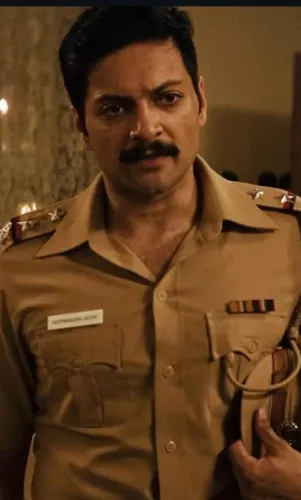
This comes amid 'Raakh' generating considerable positive audience response, with Fazal's performance drawing particular attention for its emotional intensity.
About 'Raakh'
'Raakh' is currently streaming on Prime Video. The series features an ensemble cast and has been directed and produced with Prosit Roy among its key creative collaborators. The show's themes of destruction, consequence, and moral reckoning appear to have informed Fazal's off-screen reflections as much as his on-screen work.
As 'Raakh' continues to find its audience on the platform, Fazal's remarks signal a broader conversation the series hopes to spark — one about the cost of unchecked aggression, both personal and political.
Point of View
Not just star power. What's worth noting is how deliberately Fazal connects the abstract (entropy, duality) to the immediate (ongoing wars, domestic conflict) — it's a rhetorical move that keeps the conversation grounded and the series relevant beyond its release week. Whether 'Raakh' itself delivers on that philosophical promise is the question audiences are now answering.
NationPress
19 Sept 2026
Frequently Asked Questions
What is 'Raakh' and where can it be watched?
'Raakh' is a recently released Indian streaming series available on Prime Video. It features an ensemble cast including Ali Fazal, Sonali Bendre, Aamir Bhashir, Ramandeep Yadav, Prosit Roy, Anusha Nandkumar, and Sandeep Sanket.
What did Ali Fazal say about violence and human nature?
Ali Fazal said that violence is innate to nature and rooted in one-upmanship — the feeling of 'I have something that you don't.' He connected this impulse to consumerism, politics, and nuclear war, while urging people to consciously strive for balance and empathy.
What did Ali Fazal mean by understanding violence on 'skin and flesh'?
Fazal called on people to move beyond abstract awareness of violence and truly feel its physical and emotional consequences. He said, 'understand how that one strike really translates on the other, on skin, on flesh. When flesh burns, what really happens. You have to understand that. You have to feel it.'
Who are the other cast members of 'Raakh'?
The series stars Sonali Bendre, Aamir Bhashir, Ramandeep Yadav, Prosit Roy, Anusha Nandkumar, and Sandeep Sanket alongside Ali Fazal. The cast spoke together at a post-release event in Mumbai on 20 June.
How has 'Raakh' been received by audiences?
'Raakh' has received considerable positive response since its release on Prime Video, with Ali Fazal's performance drawing particular attention for its emotional depth and intensity.