Alisha Chinai shares Rajiv Gandhi's 1989 letter: 'A golden era'
Synopsis
A letter typed on the Prime Minister’s official letterhead in 1989 — in which Rajiv Gandhi tells a young Alisha Chinai he ‘greatly enjoyed’ her Hindi pop CD — has resurfaced on social media, offering a rare, humanising glimpse of Gandhi’s personal engagement with India’s emerging pop culture on his death anniversary.
Key Takeaways
Alisha Chinai shared a personal letter from Rajiv Gandhi dated 27 May 1989 on her social media account.
The letter, on official Prime Minister’s letterhead , thanks Chinai for a compact disc of Hindi pop songs and her English track ‘Prize Possession’ .
Gandhi also noted his appreciation for Chinai’s involvement in a proposed Saturday youth programme .
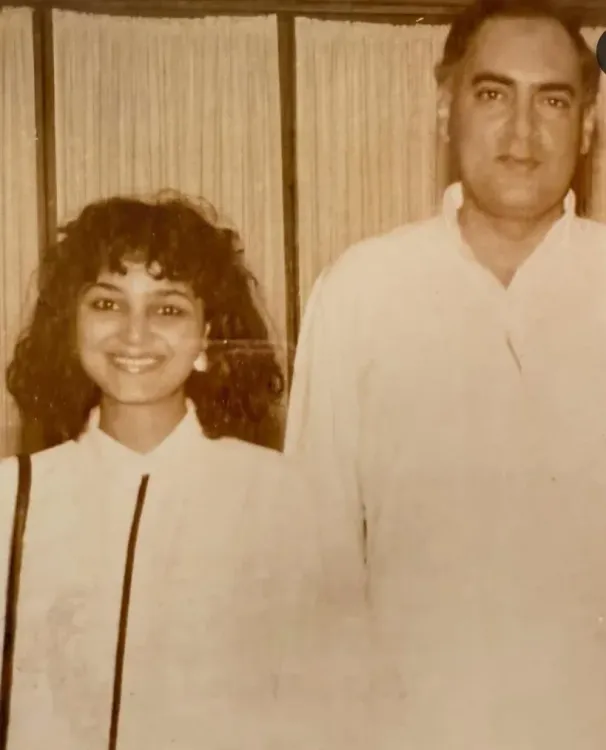
Chinai shared a vintage photograph of herself alongside Gandhi, calling it an ‘epic moment’ from a ‘golden era.’ The post was shared on 22 May , Rajiv Gandhi’s death anniversary .
Veteran pop singer Alisha Chinai has shared a rare personal letter written to her by former Prime Minister Rajiv Gandhi, dated 27 May 1989, offering a glimpse into a little-known exchange between two prominent figures of that era. The singer posted both the letter and a vintage photograph alongside Gandhi on her social media account, calling it an ‘epic moment’ from a ‘golden era.’
The Letter and Its Contents
The handwritten correspondence, typed on official Prime Minister’s letterhead and signed by Rajiv Gandhi, was a personal reply to Chinai dated New Delhi, 27 May 1989. In it, Gandhi thanked the singer for sending him a compact disc of Hindi pop songs, writing: “Dear Ms. Chinoy, Thank you for your letter of the 25th April. I too was delighted to make your acquaintance. Thank you for letting me have your compact disc of Hindi pop songs. I have greatly enjoyed listening to it. Thank you too for your English song Prize Possession. I am glad you have got involved with the proposed Saturday youth programme. I look forward to the results of your efforts. Yours sincerely.”
The letter reveals that Gandhi had personally listened to Chinai’s music and acknowledged her involvement in a proposed Saturday youth programme, underscoring the cultural outreach of his administration.
The Vintage Photograph
Alongside the letter, Chinai shared a photograph of herself as a young woman standing beside Rajiv Gandhi, who is seen in a classic white kurta-pyjama. Chinai is seen with her signature curly hair. The image has since drawn significant attention for its historical warmth and rarity.
Sharing the post, Chinai captioned it: “Epic Moment and a Rare Pic with Then PM Shri Rajiv Gandhi !!! That was a Golden Era … I Will always Treasure that Personable Heartfelt Letter @rahulgandhi.”
Who Is Alisha Chinai
Alisha Chinai is widely regarded as one of the most iconic voices in Indian pop music. She rose to national prominence in the 1990s with the landmark album Made In India, still considered one of the most successful Indian pop albums of all time. Her catalogue includes beloved tracks such as ‘Kajra Re’, ‘Tinka Tinka’, ‘Oh La La’, and ‘Zooby Zooby’.
Why This Moment Resonates
The letter surfaces on 22 May, the death anniversary of Rajiv Gandhi, lending the post particular emotional weight. It offers a rare, humanising window into Gandhi’s personal engagement with the arts and youth culture during his tenure. Notably, the exchange took place just months before the 1989 general elections, a period of intense political activity for his government. The post has prompted an outpouring of nostalgia from fans and cultural commentators alike. How such personal archives continue to surface decades later speaks to the enduring public fascination with Gandhi’s legacy.
Point of View
At a time when Indian pop was barely a genre. That Rajiv Gandhi flagged the Saturday youth programme suggests his administration was actively courting youth culture as a political constituency, not merely as a soft gesture. Sharing it on his death anniversary is a deliberate act of remembrance, and the tag to Rahul Gandhi signals that the nostalgia is not entirely apolitical. The real story here is how personal archives, surfacing decades later on social media, are quietly reshaping how younger Indians encounter historical figures.
NationPress
27 Sept 2026
Frequently Asked Questions
What did Rajiv Gandhi write in his 1989 letter to Alisha Chinai?
In the letter dated 27 May 1989, Rajiv Gandhi thanked Alisha Chinai for sending him a compact disc of Hindi pop songs, said he had ‘greatly enjoyed’ listening to it, and acknowledged her English song ‘Prize Possession.’ He also expressed support for her involvement in a proposed Saturday youth programme.
Why did Alisha Chinai share the letter now?
Chinai shared the letter and photograph on 22 May, which is observed as Rajiv Gandhi’s death anniversary. She described the post as a treasured memory from a ‘golden era.’
Who is Alisha Chinai?
Alisha Chinai is one of India’s most celebrated pop singers, best known for her landmark 1990s album Made In India. Her hit songs include ‘Kajra Re’, ‘Tinka Tinka’, ‘Oh La La’, and ‘Zooby Zooby’.
What does the letter reveal about Rajiv Gandhi’s cultural interests?
The letter shows Gandhi personally engaging with India’s emerging pop music scene, acknowledging both Hindi and English pop tracks. It also indicates his administration’s interest in youth-oriented programming, with Gandhi expressing anticipation for results of a proposed Saturday youth programme.
Was the letter authentic and on official stationery?
According to Chinai’s post, the letter was typed on official Prime Minister’s letterhead, signed by Rajiv Gandhi, and dated New Delhi, 27 May 1989.