PM Modi pays tribute to Rajiv Gandhi on 34th death anniversary
Synopsis
Thirty-four years after his assassination, Rajiv Gandhi's death anniversary drew tributes from Prime Minister Modi and the Congress leadership. The occasion is a rare moment of cross-party acknowledgement for a leader who reshaped India's democratic and technological landscape — and whose political legacy still defines the Congress party's identity.
Key Takeaways
PM Narendra Modi paid tribute to Rajiv Gandhi on his death anniversary on 21 May 2025 via a post on X .
Rajiv Gandhi became India's youngest Prime Minister at age 40 in 1984 , following the assassination of his mother Indira Gandhi .
He served as PM from 1984 to 1989 and was assassinated on 21 May 1991 in a terrorist attack.
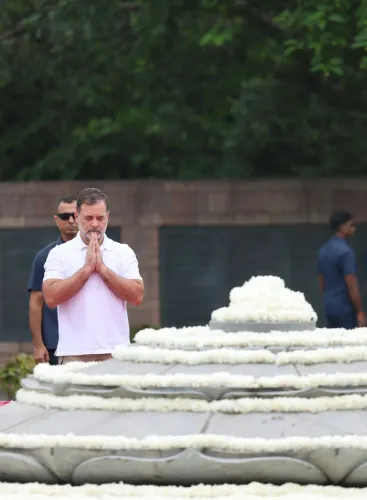
Congress leaders including Mallikarjun Kharge , Sonia Gandhi , Rahul Gandhi , and Priyanka Gandhi Vadra paid floral tributes at Vir Bhumi , New Delhi.
This year marks 34 years since Rajiv Gandhi's assassination.
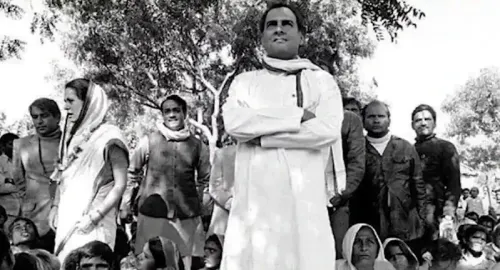
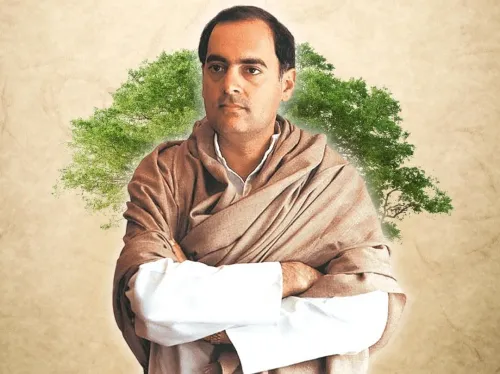
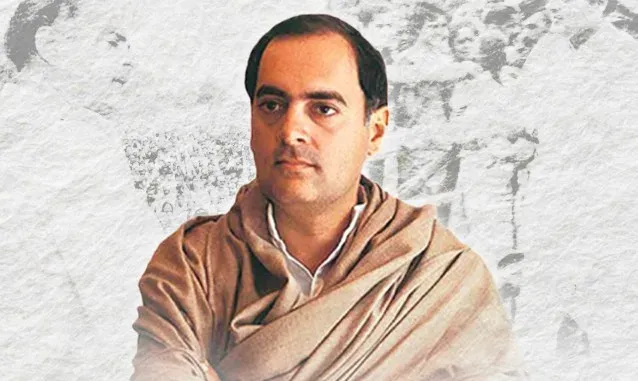
Prime Minister Narendra Modi on Thursday, 21 May paid homage to former Prime Minister Rajiv Gandhi on his death anniversary, marking the day the country remembers its youngest-ever Prime Minister, assassinated in a terrorist attack in 1991.
Modi's Tribute
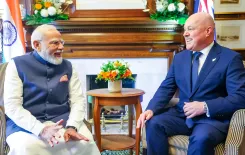
In a post on X, Prime Minister Modi wrote: 'Tributes to former Prime Minister Shri Rajiv Gandhi Ji on his death anniversary.' The brief but formal acknowledgement came as political leaders across the spectrum observed the solemn occasion.
Who Was Rajiv Gandhi
Born on 20 August 1944 in Mumbai, Rajiv Gandhi entered politics under extraordinary circumstances. He assumed office as Prime Minister in 1984 at the age of 40, following the assassination of his mother, then Prime Minister Indira Gandhi — becoming the youngest person to hold the office in Indian history. He governed the country until the 1989 general elections, subsequently serving as Leader of Opposition in the Lok Sabha. He resigned from that position in December 1990, just six months before he was killed in a suicide bombing attack on 21 May 1991 in Tamil Nadu.
Congress Pays Homage at Vir Bhumi
Congress National President Mallikarjun Kharge, CPP Chairperson Sonia Gandhi, Lok Sabha Leader of Opposition Rahul Gandhi, Congress MP Priyanka Gandhi Vadra, and other senior party leaders paid floral tributes to Rajiv Gandhi at Vir Bhumi in New Delhi. The Indian National Congress (INC) said in a statement: 'On the death anniversary of former Prime Minister of India, Rajiv Gandhi ji, countless salutations. Rajiv Gandhi ji's visionary leadership, dedication to the nation, and his thoughts will always continue to inspire the Congress family.'
Legacy Recalled
The Congress also highlighted that 'Rajiv ji's contributions to strengthening India's unity, democratic values and technological progress remain deeply etched in the nation's journey.' Rajiv Gandhi is widely credited with liberalising India's telecommunications sector, lowering the voting age from 21 to 18, and initiating early steps toward computerisation of government services. Notably, his grandfather Jawaharlal Nehru was India's first Prime Minister — making the Nehru-Gandhi family a defining thread in post-independence Indian political history. This year marks 34 years since his assassination.
Point of View
Reflecting the party's existential investment in the Nehru-Gandhi legacy. What is often underreported is the substantive policy imprint Rajiv Gandhi left: the lowering of the voting age, early computerisation, and telecom reform. Reducing him to a death-anniversary ritual does a disservice to a record that, for all its controversies, genuinely altered India's developmental trajectory.
NationPress
23 Sept 2026
Frequently Asked Questions
Why is 21 May observed as Rajiv Gandhi's death anniversary?
21 May marks the day in 1991 when former Prime Minister Rajiv Gandhi was assassinated in a suicide bombing attack in Tamil Nadu. The day is observed nationally as Sadbhavana Diwas, a day of goodwill and harmony.
Who was Rajiv Gandhi and why is he significant?
Rajiv Gandhi served as India's Prime Minister from 1984 to 1989 and was the youngest person to hold the office, assuming power at age 40 after the assassination of his mother Indira Gandhi. He is credited with liberalising India's telecom sector, lowering the voting age to 18, and initiating early computerisation of government services.
Where did Congress leaders pay tribute to Rajiv Gandhi?
Senior Congress leaders including Mallikarjun Kharge, Sonia Gandhi, Rahul Gandhi, and Priyanka Gandhi Vadra paid floral tributes at Vir Bhumi in New Delhi, the memorial dedicated to Rajiv Gandhi.
How did PM Modi pay tribute to Rajiv Gandhi?
Prime Minister Narendra Modi posted a tribute on X, writing: 'Tributes to former Prime Minister Shri Rajiv Gandhi Ji on his death anniversary.' The post came on Thursday, 21 May 2025.
How many years has it been since Rajiv Gandhi's assassination?
2025 marks 34 years since Rajiv Gandhi was assassinated on 21 May 1991. He had resigned as Leader of Opposition in December 1990, just six months before his death.