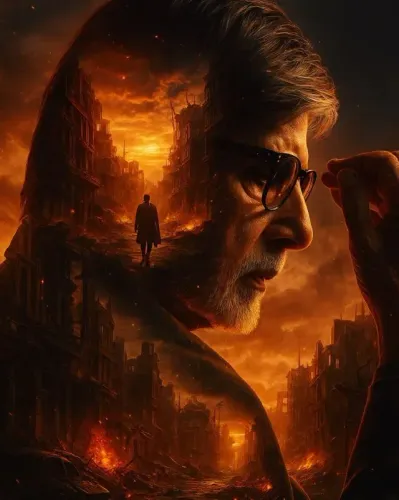
Amitabh Bachchan on Deewaar's temple scene: Audience laughed first, then froze
Synopsis
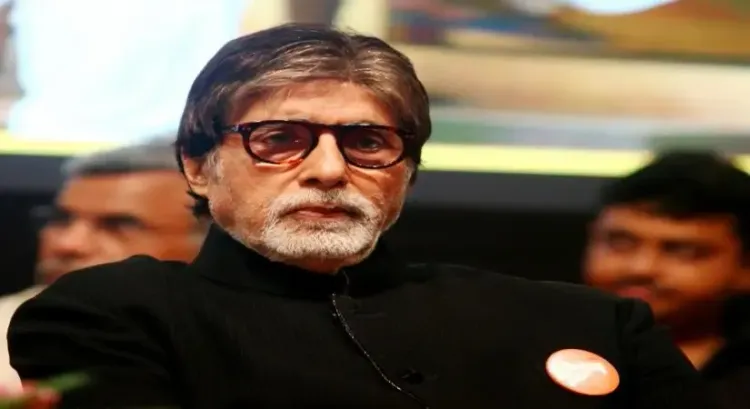
Amitabh Bachchan has finally explained the surprising first reaction to Deewaar's most iconic scene — audiences at the 1975 premiere laughed before the silence hit. On KBC Season 18, triggered by Rajkummar Rao's live recreation of the monologue, Bachchan revealed why a line now revered as Hindi cinema's most daring confrontation with God was once mistaken for a joke.
Key Takeaways
Amitabh Bachchan revealed on Kaun Banega Crorepati Season 18 that audiences laughed at the 'Aaj khush toh bahut hoge tum' dialogue during Deewaar 's premiere before falling silent.
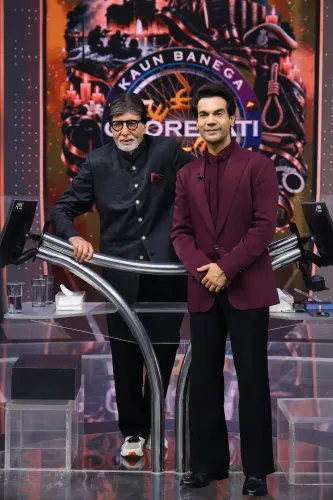
The disclosure came after actor Rajkummar Rao recreated the iconic temple monologue on the sets of KBC .
Bachchan explained the laughter arose because no screen character had ever spoken to God with defiance before Vijay Verma did.
Deewaar ( 1975 ), directed by Yash Chopra and written by Salim-Javed , starred Bachchan alongside Shashi Kapoor , Nirupa Roy , Neetu Singh , and Parveen Babi .
Salim-Javed won multiple accolades for story, screenplay, and dialogue in 1976 for the film.
Bollywood legend Amitabh Bachchan has revealed that audiences at the premiere of Deewaar initially burst into laughter when they first heard the now-iconic 'Aaj khush toh bahut hoge tum' dialogue — before the theatre fell into stunned silence. The revelation came during an episode of Kaun Banega Crorepati Season 18, where Bachchan spoke at length about one of the most celebrated scenes in Hindi cinema history.
How the Conversation Unfolded on KBC
The discussion was triggered when actor Rajkummar Rao recreated Bachchan's legendary temple monologue from Deewaar on the sets of KBC. Facing the very actor who had originally embodied the role of Vijay Verma, Rao delivered the lines, prompting Bachchan to reflect on the scene's unusual reception at its debut screening.
Recalling the premiere night, Bachchan said: 'Sir, jab yeh dialogue bola gaya tha premiere ke din tab log hasne lage kyuki kisi bhi kirdhar ne bhagwan se iss tarah se baat nahi ki hain aur Vijay ka character hain ki voh bhagwan mein nahi manta aur uski maa bimaar hain, voh mandir ki seedhi pehli baar chadhta hain aur fir kehta hain ki 'Aaj khush toh bohot honge tum'.' (Sir, when this dialogue was spoken on the day of the premiere, people started laughing because no character had ever spoken to God in this manner. Vijay's character does not believe in God, and his mother is ill. He climbs the temple steps for the first time and then says, 'Today, you must be very happy.')
The Moment That Silenced a Theatre
Bachchan further recalled that there was a 'snigger and a gentle laughter' at the premiere, as viewers initially assumed the confrontational address to God was meant to be comedic. Within seconds, however, the mood shifted entirely — the laughter stopped and the audience froze, recognising the raw emotional weight of what they were witnessing.
The reaction is now understood as a testament to how radically Vijay's character broke the conventions of portraying faith on screen. No protagonist in mainstream Hindi cinema had ever spoken to God with defiance rather than devotion, and the initial confusion was almost instinctive.
The Scene and Its Place in Deewaar
The temple sequence is widely regarded as the emotional centrepiece of Deewaar (1975). In the film, Vijay Verma — a man shaped by poverty, humiliation, and a descent into crime — visits a temple for the first time when his mother falls critically ill. His confrontation with the divine, culminating in the line 'Aaj khush toh bahut hoge tum', encapsulated a generation's complex, often adversarial relationship with fate and belief.
Directed by Yash Chopra and written by the celebrated duo Salim-Javed, Deewaar starred Amitabh Bachchan, Shashi Kapoor, Nirupa Roy, Neetu Singh, and Parveen Babi. The film's screenplay and dialogues earned Salim-Javed multiple accolades in the story, screenplay, and dialogue categories in 1976.
Legacy of the Dialogue
Fifty years after its release, the 'Aaj khush toh bahut hoge tum' line continues to be cited in film schools, academic analyses of Indian cinema, and popular culture. It marked a turning point in how Hindi films engaged with moral ambiguity and the anti-hero archetype. Notably, the fact that it first drew laughter — before commanding silence — makes its evolution into an untouchable cultural touchstone all the more remarkable.
Bachchan's recollection on KBC Season 18 adds a layer of behind-the-scenes texture to a scene that generations of cinephiles had only known as a finished, polished masterpiece — a reminder that even cinema's most enduring moments were once uncertain bets.
Point of View
From pious sufferer to defiant rebel, in a single monologue. Mainstream coverage of the clip will likely focus on the anecdote; what it deserves is a conversation about why Indian popular cinema has never quite matched that level of moral complexity since. Vijay Verma wasn't just an anti-hero — he was the mirror that 1970s India apparently wasn't ready to look into until the laughter died.
NationPress
25 Sept 2026
Frequently Asked Questions
Why did audiences laugh at Deewaar's 'Aaj khush toh bahut hoge tum' scene at the premiere?
Audiences laughed because no Hindi film character had ever addressed God with defiance before Vijay Verma did. Amitabh Bachchan explained that the confrontational tone was so unprecedented that viewers initially assumed it was meant to be humorous, before the emotional weight of the scene hit and the theatre fell silent.
Where did Amitabh Bachchan reveal this story about Deewaar?
Bachchan made the revelation on Kaun Banega Crorepati Season 18, during a conversation with actor Rajkummar Rao, who had just recreated the iconic temple monologue on the show's sets.
What is the significance of the temple scene in Deewaar?
The scene is widely considered the emotional and thematic centrepiece of the 1975 film. In it, Vijay Verma — an avowed non-believer — visits a temple for the first time when his mother falls critically ill, and his raw, confrontational address to God became a landmark of Hindi cinema's anti-hero tradition.
Who directed Deewaar and who wrote its screenplay?
Deewaar (1975) was directed by Yash Chopra and written by the celebrated screenwriting duo Salim-Javed. Their screenplay and dialogues earned multiple accolades in the story, screenplay, and dialogue categories in 1976.
Who starred in Deewaar alongside Amitabh Bachchan?
Deewaar featured Shashi Kapoor, Nirupa Roy, Neetu Singh, and Parveen Babi alongside Amitabh Bachchan, who played the lead role of Vijay Verma.