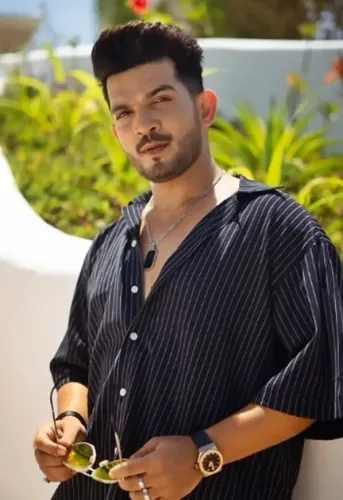
Arjun Bijlani on TV vs OTT vs films: 'Different classrooms, same craft'
Synopsis
Arjun Bijlani's 'different classrooms' analogy cuts through the tired TV-vs-OTT debate: same craft, different rules. His defence of television's traditional identity — family-first, slow-burn evolution — is a rare counter-narrative in an industry that often treats TV as the lesser medium.
Key Takeaways
Arjun Bijlani described TV, OTT, and films as 'different classrooms' with acting as the common input.
He said television allows actors to evolve gradually, films require precision, and OTT enables deeper character exploration.
Bijlani acknowledged that TV is more traditional than OTT and films, positioning it as family entertainment .
He argued that storytelling quality — not the platform — determines a content's success.
His TV credits include 'Naagin' , 'Miley Jab Hum Tum' , and 'Pyar Ka Pehla Adhyaya: Shiv Shakti' .
Television actor Arjun Bijlani has weighed in on the ongoing debate around how television, OTT platforms, and films differ as storytelling mediums — arguing that each serves a distinct purpose rather than competing with the others.
Three Platforms, One Craft
Bijlani drew a thoughtful distinction between the three mediums, describing them as complementary rather than rival spaces. 'I don't see TV, OTT, or films as competition to each other. I feel they are like different classrooms, where the input remains the same — that is, acting — only the result differs in the sense of the platforms,' he said.
He elaborated that television offers actors the time to evolve gradually, films demand precision, and OTT provides room for layered, exploratory characterisation. 'However, I do agree that TV is much more traditional than OTT and films,' he added.
Why Storytelling Remains the Core
The actor stressed that the medium itself is secondary to the quality of the narrative. 'As an actor, the medium is immaterial. Our job is to tell stories no matter the medium. If the storyline is good, it can easily be successful on the big screen, the small screen, and the streaming platforms,' Bijlani said. He described the power of storytelling as lying in its ability to connect with audiences while delivering entertainment.
On Bold Content and Family Viewing
When asked about the increasingly explicit content on OTT and in films, Bijlani defended television's traditional positioning. 'TV still continues to be traditional. It is family entertainment, while OTT and films can be personal,' he noted. He also acknowledged that today's audiences benefit from a wider content ecosystem — something for every age group, from children to senior citizens — and that viewers retain the choice to skip content they find unsuitable.
Bijlani's Career Across Formats
Arjun Bijlani has built a substantial television career spanning over two decades, with credits including 'Remix', 'Left Right Left', 'Miley Jab Hum Tum', 'Naagin', and more recently 'Pyar Ka Pehla Adhyaya: Shiv Shakti'. His perspective carries the weight of an actor who has navigated television's long-form storytelling through multiple shifts in the Indian media landscape.
As OTT platforms continue to reshape viewing habits in India, voices like Bijlani's reflect a broader industry conversation about where television fits — and whether its traditional identity is a limitation or a lasting strength.
Point of View
But it quietly concedes what the ratings data already shows: television's traditional format is both its identity and its constraint. The 'different classrooms' metaphor avoids the harder question — whether TV's family-first guardrails are a creative choice or a commercial necessity driven by advertiser caution. As OTT original budgets in India now routinely outpace primetime TV productions, the gap between the mediums is widening beyond tone and content. The more interesting debate isn't tradition versus experimentation — it's whether television can retain talent when OTT offers both creative freedom and comparable, sometimes superior, pay.
NationPress
24 Oct 2026
Frequently Asked Questions
What did Arjun Bijlani say about TV versus OTT and films?
Arjun Bijlani said he sees television, OTT, and films as 'different classrooms' rather than competitors, with acting as the common craft across all three. He acknowledged that TV is more traditional than OTT and films, describing it as family entertainment, while OTT allows for bolder, more layered storytelling.
Why does Arjun Bijlani think TV is more traditional than OTT?
Bijlani explained that television caters to a family audience and follows a more conventional storytelling format, whereas OTT platforms and films allow for personal, experimental, and sometimes bold content. He said viewers today can choose what they watch and skip content they find unsuitable.
What is Arjun Bijlani's view on the importance of storytelling?
Bijlani believes that the medium is secondary to the quality of the story. He said a good storyline can succeed across the big screen, small screen, and streaming platforms, and that the power of content lies in its ability to connect with and entertain audiences.
Which TV shows has Arjun Bijlani appeared in?
Arjun Bijlani has appeared in several popular Indian television shows including 'Remix', 'Left Right Left', 'Miley Jab Hum Tum', 'Naagin', and 'Pyar Ka Pehla Adhyaya: Shiv Shakti', among others.
Does Arjun Bijlani see OTT as a threat to television?
No, Bijlani does not view OTT as a threat to television. He described the three mediums as complementary, each offering a different experience — TV for gradual evolution, films for precision, and OTT for deeper character work and creative exploration.