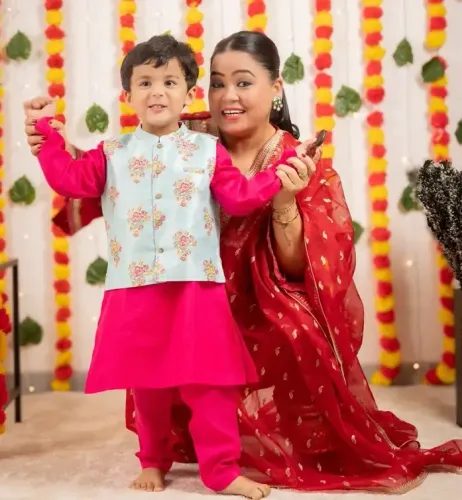
Bharti Singh on body shaming: 'Even my mother passed comments growing up'
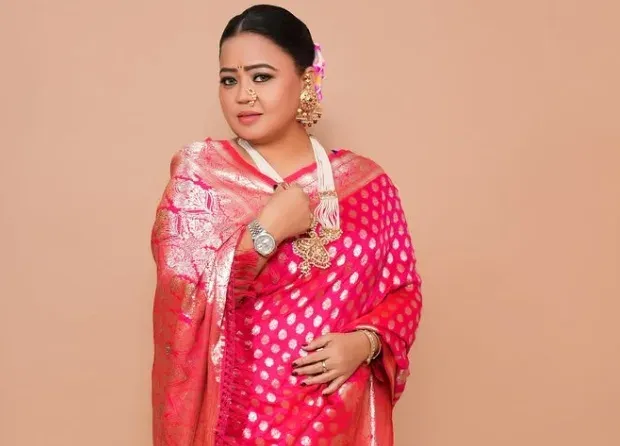
Synopsis
Bharti Singh's admission that even her own mother casually body-shamed her as a child cuts through the usual celebrity wellness narrative. On Double Date, she traced a direct line from those childhood remarks to her conscious decision to redirect her comedy inward — a rare moment of accountability from one of Indian television's biggest comic names.
Key Takeaways
Bharti Singh revealed on Double Date (hosted by Neha Dhupia and Angad Bedi ) that body shaming was routine in her childhood environment.
Her own mother would say, 'Bas kar, kitna khayegi, moti ho jayegi' — a remark she absorbed without initially recognising its impact.
In her hometown, calling someone 'mota' or 'kala' was considered normal social interaction.
Bharti consciously shifted her comedy style to make herself the subject of jokes, rather than targeting others' appearances.
Both Bharti and Neha Dhupia, mothers of two each , discussed how motherhood strengthened their resolve to build healthier body-image environments for their children.
Comedian Bharti Singh has opened up about growing up in an environment where body shaming was considered normal, revealing that even her own mother made casual remarks about her weight during her childhood. She made these disclosures during an appearance on the talk show Double Date, hosted by Neha Dhupia and Angad Bedi.
A Childhood Shaped by Casual Cruelty
Bharti recalled that in her hometown, labelling people as 'mota' (fat) or 'kala' (dark-skinned) was entirely commonplace — a reflexive social habit with no thought given to its emotional consequences. She shared that her own mother would routinely say, 'Bas kar, kitna khayegi, moti ho jayegi' — a remark she absorbed as a child without fully grasping its long-term impact on self-worth and confidence.
For years, Bharti admitted, she did not recognise how corrosive such throwaway comments could be. It was only after entering the entertainment industry — where body-image jokes were standard currency for laughs — that she began to question the practice.
A Conscious Shift in Comedy
With time, Bharti made a deliberate choice: she would no longer use another person's appearance as the punchline. Instead, she redirected the humour inward, making herself the subject of her own jokes. This shift, she said, was not just professional but deeply personal — a way of ensuring her comedy did not wound someone else the way she had been wounded.
This is a notable evolution for one of Indian television's most recognisable comic voices, and it reflects a broader conversation in the entertainment industry about the line between self-deprecating humour and harmful mockery.
Neha Dhupia Echoes the Sentiment
Host Neha Dhupia resonated with Bharti's account, sharing her own perspective on body image. Both women, who are mothers of two children each, went on to discuss how motherhood had deepened their awareness of these issues — and sharpened their resolve to model healthier attitudes for the next generation.
Their exchange underscored how body shaming, often disguised as affectionate teasing or casual humour, can embed itself in family dynamics and cultural norms long before a child has the vocabulary to challenge it.
Why This Conversation Matters
Body shaming remains a pervasive issue in India, frequently normalised through everyday language in homes, schools, and public spaces. Mental health professionals have long cautioned that repeated exposure to such remarks — particularly from close family members — can contribute to low self-esteem, disordered eating, and anxiety, especially in young women.
Bharti's willingness to name her own mother's comments, without bitterness but with clarity, gives the conversation a rare and credible authenticity. As public figures increasingly use their platforms to address these issues, such candid disclosures can shift the needle on what is considered acceptable in everyday speech.
Both Bharti and Neha's reflections serve as a reminder that awareness, empathy, and more mindful language can make a meaningful difference — beginning at home.
Point of View
A fact that public discourse tends to sidestep in favour of blaming media or peer groups. The detail about her mother's remarks is uncomfortable precisely because it is so recognisable across Indian households. What is missing from this conversation, as welcome as it is, is any structural reckoning: individual awareness shifts matter, but the normalisation of body commentary in Indian vernacular culture runs deep enough that it will not be dislodged by celebrity candour alone. The entertainment industry, which Bharti herself notes used body-image jokes as standard fare, has a longer road to walk.
NationPress
23 Sept 2026
Frequently Asked Questions
What did Bharti Singh reveal about body shaming on Double Date?
Bharti Singh revealed that body shaming was deeply normalised in the environment she grew up in, with people openly using terms like 'mota' and 'kala' without regard for emotional impact. She also disclosed that her own mother would casually comment on her eating habits and weight during her childhood.
What did Bharti Singh's mother say to her as a child?
According to Bharti, her mother would often remark, 'Bas kar, kitna khayegi, moti ho jayegi' — a casual comment about overeating and weight gain. Bharti said she did not fully understand the emotional weight of such remarks until much later in life.
How did body shaming affect Bharti Singh's approach to comedy?
Bharti said she made a conscious decision to stop using other people's appearances as the basis for jokes. Instead, she redirected humour towards herself, ensuring her comedy did not hurt someone else's self-esteem the way she had been affected.
What did Neha Dhupia say on the episode?
Neha Dhupia echoed Bharti's sentiments and joined the discussion on body image and self-love. Both women, who are mothers of two children each, spoke about how motherhood had changed their perspective and reinforced their commitment to raising children in a healthier, more accepting environment.
Why is this conversation about body shaming significant?
Body shaming remains widely normalised in Indian social and family settings, often framed as humour or affection. Mental health experts note that repeated exposure to such remarks — especially from family members — can have lasting effects on self-esteem and mental wellbeing, making public conversations like this one an important step toward cultural change.