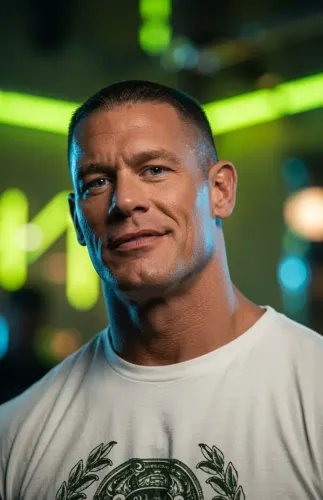
John Cena: 'I was run out of town' by Hollywood in 2009–2010

Synopsis
John Cena's Hollywood fall was as swift as his WWE rise. At the peak of his wrestling fame, he misread film culture so badly that he was effectively shut out of major roles for years — a rare admission of self-sabotage from one of entertainment's most bankable names. The 20th anniversary of The Marine prompted the confession.
Key Takeaways
John Cena admitted he was 'run out of town' by Hollywood in 2009–2010 after failing to adapt from WWE's live-performance culture to the discipline of film sets.
His big-screen debut, The Marine ( 2006 ), received mixed reviews and, by his own account, cost him major acting opportunities.
Cena was at the height of his WWE fame — including a championship reign — when he made his film debut in 2004–2006 .
A second chance came in 2012 and 2015 , with comedy roles in Trainwreck , Sisters , and Daddy's Home helping reshape his approach.
He went on to join the Fast and Furious franchise, Transformers , and DC 's Peacemaker , crediting gratitude and coachability for his turnaround.
Hollywood actor John Cena has opened up about being effectively blacklisted from major film roles between 2009 and 2010, admitting the setback was entirely self-inflicted. Speaking ahead of the 20th anniversary of his big-screen debut The Marine, Cena said his failure to respect the discipline of filmmaking cost him years of opportunity in Los Angeles.
The Honest Admission
'I have to lead with honesty,' Cena said. 'That (The Marine) really led me to pretty much lose those (acting) opportunities. I pretty much was run out of town for the movie business in 2009, 2010. It was my own fault.'
The star, who was at the peak of his WWE fame when he made his film debut in 2006, acknowledged that he arrived on set with the wrong mindset entirely — one shaped by years of live-performance adrenaline rather than the patience that filmmaking demands.
WWE Stardom vs Film Set Culture
Cena described the contrast between the two worlds in stark terms. 'Making movies is a patient process, and everyone there has a meaningful position,' he said. 'I came from a world of live performance where it's very different. And you gotta keep in mind in 2004, heck, I was in my mid-20s, and I was WWE champion.'
He recalled the intensity of wrestling's live circuit: 'Every town I went to, there were thousands of people either screaming that I'm awesome or screaming that I suck at the top of their lungs — it was like there's nothing like it.' He described film sets, by contrast, as 'library silent' — long, patient days that required a fundamentally different mental approach.
Cena rose to prominence during WWE's Ruthless Aggression era, headlining WrestleMania events and cultivating a devoted fanbase through his 'Doctor of Thuganomics' persona before evolving into the company's clean-cut flagship figure.
The Quiet Years and the Second Chance
After his Hollywood stumble, Cena spent several quieter years before filmmakers and casting directors gave him another opportunity. 'Thank goodness that some people along the way, in 2012, in 2015, saw some potential in me and took another gamble,' he said.
That second act began with supporting comedy roles — most notably in Trainwreck alongside Amy Schumer, as well as appearances in Sisters and Daddy's Home. Those projects, Cena said, fundamentally reshaped his understanding of the craft.
From Redemption to Major Franchises
The recalibration proved decisive. Cena's career subsequently expanded into some of Hollywood's biggest properties — the Fast and Furious franchise, Transformers, and DC's Peacemaker series. He credits the turnaround to a shift in attitude. 'That's why I approach every single opportunity now with gratitude and just try to be coachable,' he said.
The Marine received mixed reviews on its 2006 release, but its 20th anniversary has prompted Cena to reflect publicly on the lessons — and the cost — of those early missteps. With a decorated Hollywood career now behind him, his candour offers a rare look at how quickly doors can close, and how long it can take to reopen them.
Point of View
And his eventual success came only after years of smaller, unglamorous roles that most champions would have declined. The real lesson here is institutional as much as personal — Hollywood's second-chance window is narrow, and Cena was fortunate that casting directors looked past the early misfire.
NationPress
25 Sept 2026
Frequently Asked Questions
Why did John Cena say he was 'run out of town' by Hollywood?
John Cena said he was effectively shut out of major film roles in 2009 and 2010 because he failed to adapt to the patience and discipline that filmmaking requires, having come from WWE's high-energy live-performance environment. He described the setback as entirely his own fault.
What was John Cena's first major film?
John Cena's big-screen debut was The Marine , released in 2006. The action film received mixed reviews, and Cena has said it contributed to him losing acting opportunities in the years that followed.
How did John Cena rebuild his Hollywood career?
Cena credits filmmakers and casting directors who gave him another chance in 2012 and 2015. Supporting comedy roles in Trainwreck , Sisters , and Daddy's Home helped him reset his approach to acting, eventually leading to major franchise roles.
Which major franchises has John Cena appeared in?
After his Hollywood comeback, Cena joined the Fast and Furious franchise, appeared in Transformers, and headlined DC's Peacemaker series on television.
What did John Cena say about the difference between WWE and film sets?
Cena described WWE arenas as places where thousands of fans screamed at full volume, creating an unmatched live-performance rush. Film sets, he said, were 'library silent' — demanding long, patient days and a completely different mental mindset.