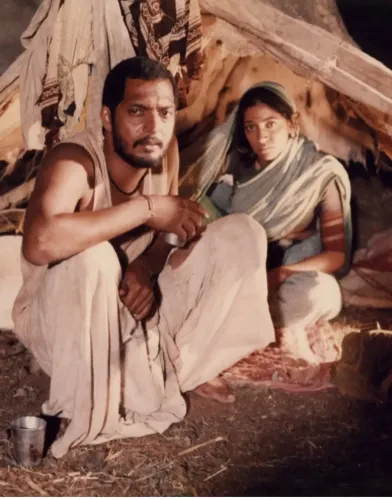
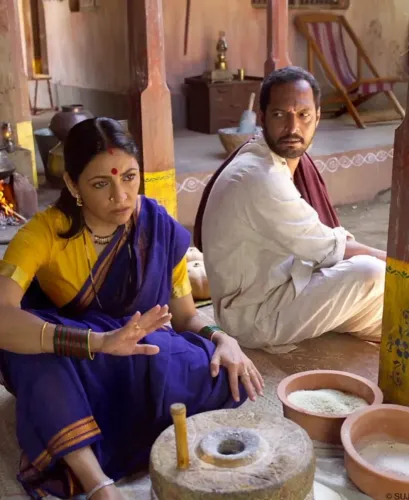
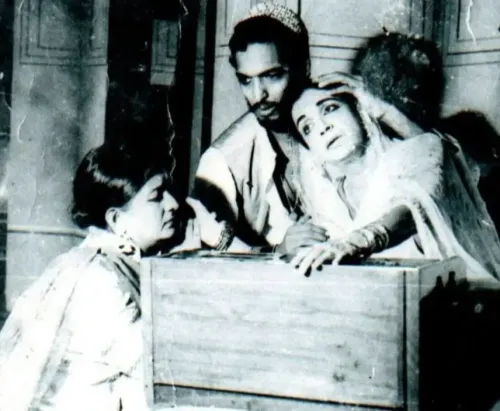
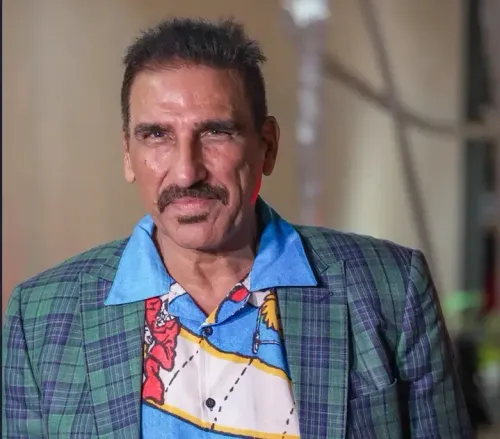
Gautam Ghose restoring Yatra as tribute to Nana Patekar
Synopsis
Gautam Ghose is putting Yatra back on the restoration bench as a tribute to Nana Patekar. The 2006 drama's negative has been found and digitised. Ghose remembers a month at Ramoji City with Patekar, Rekha and Deepti Naval — and an actor deeply engrossed in his character, not the short-tempered figure of public lore.
Key Takeaways
Director Gautam Ghose recalled working with the late Nana Patekar on the 2006 drama Yatra (The Journey) .
The unit spent almost a month at Ramoji City with Patekar , Rekha , Deepti Naval and Jeeva .
Ghose said Patekar was deeply engrossed in his character and that he never saw the actor's much-discussed short temper on that set.
The film's camera negative has been found and digitisation is complete.
Ghose and his producer plan to restore and re-release Yatra as a tribute to Patekar's memory.
Director Gautam Ghose has recalled working with the late veteran actor Nana Patekar on the 2006 drama Yatra (The Journey), saying the star was deeply engrossed in his character during a nearly month-long shoot at Ramoji City. Speaking in Mumbai on 25 November, Ghose also said the film's camera negative has been found, digitisation is complete, and a restoration-and-re-release is being pursued as a tribute to Patekar's memory.
Key memories from the Ramoji City shoot
Asked to share an experience he particularly cherishes from working with Patekar, Ghose pointed to that concentrated stretch of filming rather than a single flashy anecdote. We spent almost a month together at Ramoji City, where Nana, Rekha, Deepti Naval and Jeeva were all part of the film, he said, adding that he has wonderful memories of Nana.
The Ramoji City schedule, as Ghose framed it, was a closed working world: four principal names, a built environment, and an actor treating the set as a place to be discovered rather than merely occupied. Notably, the director did not reach for stories of clash or temperament. He reached for craft.
The Nana Patekar Ghose describes
Ghose called Patekar a brilliant actor and an extremely serious, dedicated performer. Many people used to say that he was short-tempered, the filmmaker said, but he never experienced that side of him. He was deeply engrossed in his character.
Even while the unit was constructing Patekar's room on the set, Ghose recalled, the actor would walk around trying to understand and discover his own space. That image sits at odds with the public caricature of Patekar as permanently on a short fuse. Ghose did not claim the reputation was invented. He simply recorded that it did not appear on this floor.
He also described Patekar as a very old friend. The professional note and the personal one sit together: immersion on set, and a long off-screen association that, in Ghose's telling, never curdled into the volatility others claimed to have seen.
Why Yatra was ahead of its time
Ghose has many memories associated with Yatra. He called it a very important film, and much ahead of its time because of its distinctive narrative style, which moved between fact and fiction. Rekha was fantastic in it, he said, and so was Deepti Naval.
This comes amid a wider industry impulse to remember Patekar through his most volcanic screen roles. Ghose is instead staking the film's claim on form: a hybrid of fact and fiction that, in 2006, sat outside the more linear grammar of mainstream Hindi drama. He did not recap plot points. He was clear, however, that the film's narrative experiment — not only its cast — is why it should be seen again.
Restoration and re-release plan
We are now making a serious effort to restore it, Ghose said. We have found the negative, and the digitisation work has already been completed. My producer is also keen to restore and re-release the film.
Finding the camera negative is the practical bottleneck for many Indian titles of that period, when storage was uneven and intermediate materials often degraded. Digitisation already being finished means the first technical pass is behind the team. What remains, in Ghose's account, is completing restoration and taking the film back to audiences. He did not announce a release date.
What the tribute is meant to do
As a tribute to Nana's memory, we will complete the restoration and release the film, Ghose concluded. The pledge is specific: not only condolence, but a return of the work itself.
If the restored Yatra reaches screens, it will also put Rekha and Deepti Naval's performances before viewers who may know Patekar mainly from later, louder parts. Ghose's portrait — a man mapping a room before he inhabits it — is the through-line he wants attached to the re-release. The next test is execution: finishing the restoration and finding a window that treats the film as cinema, not only as a memorial.
Point of View
Digitisation is done, and a re-release is being framed as the tribute rather than another round of television soundbites. The more interesting tension is the one he quietly records — Patekar the short-tempered public myth versus Patekar the actor walking a half-built room to find his space. If Yatra only returns as a memorial window, the fact-fiction experiment Ghose calls ahead of its time will be missed again. Restoration without a serious release plan is just a better-looking archive.
NationPress
25 Nov 2026
Frequently Asked Questions
What did Gautam Ghose say about Nana Patekar?
Ghose said Nana Patekar was a brilliant, extremely serious and dedicated actor who was deeply engrossed in his character on the Yatra set. He added that although many people called Patekar short-tempered, he never experienced that side of him and considered the actor a very old friend.
Is the 2006 film Yatra being restored?
Yes. Ghose said a serious effort is under way to restore Yatra, the camera negative has been found, and digitisation is already complete. His producer is keen to restore and re-release the film as a tribute to Nana Patekar's memory.
Who starred in Yatra besides Nana Patekar?
Yatra also featured Rekha, Deepti Naval and Jeeva, who spent almost a month with Patekar and Ghose shooting at Ramoji City. Ghose said Rekha was fantastic in the film, and so was Deepti Naval.
Why does Gautam Ghose say Yatra was ahead of its time?
Ghose described Yatra as a very important film whose distinctive narrative style moved between fact and fiction. He argued that hybrid form made it much ahead of its time in 2006, which is why he wants it restored and seen again.
When will the restored Yatra be released?
Ghose did not give a release date. He said digitisation is complete and that the restoration will be finished and the film released as a tribute to Nana Patekar, with the producer also keen on a re-release.