What Did Jaaved Jaaferi Say About A. R. Rahman’s Statement on Changing Values?
Synopsis
In a recent interview, Jaaved Jaaferi shared his observations on the evolving film industry, linking it to A. R. Rahman’s comments on discrimination. Discover how both artists view the rapid transformations in storytelling and industry dynamics as they prepare for their respective projects.
Key Takeaways
Jaaved Jaaferi reflects on over 40 years of industry changes.
The film industry is evolving alongside global trends.
Rahman faced backlash for comments on discrimination.
Attention span of Gen Z is just 6 seconds.
Filmmakers must adapt to new audience expectations.
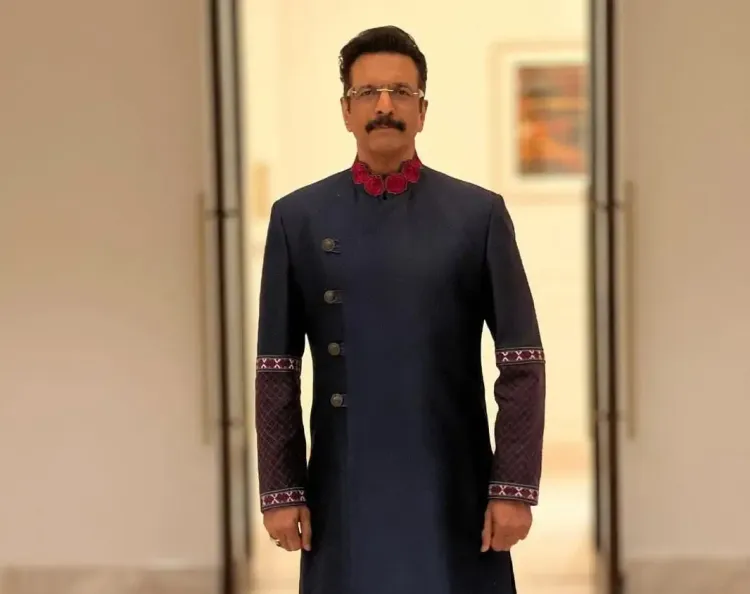
Mumbai, Jan 21 (NationPress) Actor Jaaved Jaaferi, who is preparing for the release of his forthcoming film ‘Mayasabha’, has expressed his views on the evolving landscape of the industry.
During a promotional interview with IANS, the actor shared his observations regarding the transformations he has witnessed throughout his impressive career spanning over 40 years. Jaaved, who has donned various roles in the industry, believes that like everything else, the industry is subject to change.
When probed about whether he has noticed parallels to the remarks made by the renowned A. R. Rahman concerning religious bias in the industry, he tactfully redirected the discussion towards broader industry practices.
He stated, “The industry has evolved just as the world has evolved. The digital era, AI, everything is changing. Fashion, cuisine, and values are all in flux. Naturally, the narrative is shifting. I recently learned that the attention span of Gen Z or Alpha is merely 6 seconds.”
He continued, “Channel executives assert that if you cannot engage within 6 seconds, it’s over. This highlights the rapid pace of change. While there has been a certain structure and opportunities, storytelling in a film format has limited time. There are various options, but there’s also a business aspect involved. You are crafting a project, not just a film.”
Meanwhile, the controversy surrounding A. R. Rahman ignited following his recent comments about his experiences in the Hindi film industry. In an interview with BBC Asian Network, Rahman discussed receiving fewer work offers in Bollywood.
He indicated that in the past eight years, a shift in power dynamics and “communal” factors, which relate to religion, regional identity, and industry politics, may have influenced the type of opportunities available to him in Bollywood. His remarks led to considerable public and media backlash, with many interpreting his statements as indicative of discrimination or bias in the industry.
In light of the uproar, Rahman released a video clarification, emphasizing that his intentions had been misconstrued and that he “never intended to hurt anyone.” He characterized India as his muse and reiterated that his music embodies unity and cultural celebration.
Point of View
It is essential to acknowledge that both Jaaved Jaaferi and A. R. Rahman are significant figures in the entertainment landscape. Their perspectives on change reflect broader societal trends. By examining these viewpoints, we can foster a deeper understanding of the dynamics at play within the industry and the implications these changes have for creators and audiences alike.
NationPress
27 Sept 2026
Frequently Asked Questions
What did Jaaved Jaaferi say about the industry changes?
Jaaved Jaaferi discussed how the film industry has evolved alongside global changes, emphasizing the impact of digital innovations and shifting audience expectations.
How did A. R. Rahman’s comments spark controversy?
Rahman's remarks regarding limited work offers in Bollywood and perceived communal factors led to public backlash, with many interpreting them as hints at discrimination.
What is the significance of attention span in storytelling?
Jaaved noted that the attention span of younger generations is only 6 seconds, highlighting the need for filmmakers to adapt their storytelling techniques.