Jane Fonda defends Mark Ruffalo against antisemitism accusations
Synopsis
Jane Fonda, identifying herself as a Jewish American, has called Paramount's antisemitism charge against Mark Ruffalo a deliberate smear — one designed to deflect scrutiny from a media merger that would hand a single company sweeping control over Hollywood films, television, and news. The row has turned a corporate deal into a First Amendment flashpoint.
Key Takeaways
Jane Fonda released a statement on 26 August defending Mark Ruffalo against antisemitism accusations made by Paramount .
Fonda, identifying as a Jewish American , called the charges 'false accusations' used to silence legitimate political criticism.
Mark Ruffalo had criticised Larry Ellison's ties to Israel and raised concerns about David Ellison's proposed merger with Warner Bros.
Ruffalo posted on X (formerly Twitter) calling the antisemitism label 'appalling and fundamentally dishonest.' The statement was issued through the Committee for the 1st Amendment via Instagram .
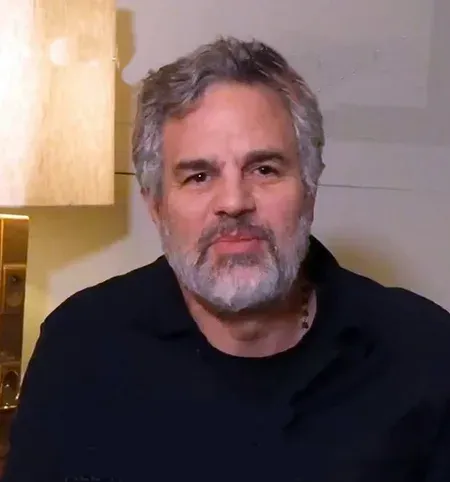
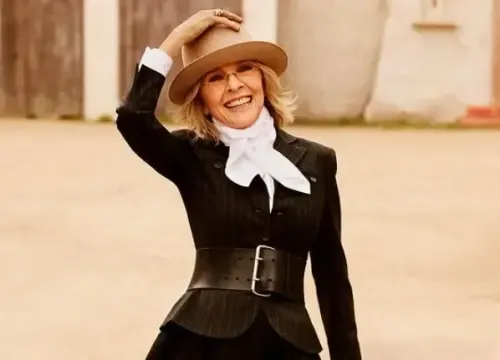
Hollywood actress Jane Fonda has publicly defended actor Mark Ruffalo after Paramount accused him of antisemitism following his criticism of Larry Ellison's ties to Israel and David Ellison's proposed merger with Warner Bros. Fonda released an official statement on 26 August through the Committee for the 1st Amendment, calling the charges against Ruffalo 'false accusations' designed to silence political dissent.
What Jane Fonda Said
In her statement shared on Instagram, Fonda wrote: 'Especially as a Jewish American, I find it deeply troubling to see false accusations of antisemitism used to silence legitimate political criticism in this country.' She argued that the charge of antisemitism carries real weight and should not be weaponised against those with opposing political views.
Fonda further stated that Ruffalo has 'a First Amendment right to speak out about politics, powerful corporations and this dangerous merger, full stop,' adding that calling his criticism antisemitic is 'a smear to delegitimize criticism of the merger and to distract from the question Paramount would rather not answer: Should one company be allowed to accumulate this much power over our movies, television and news?'
The Controversy Around Mark Ruffalo
The dispute began after Mark Ruffalo publicly denounced Larry Ellison's reported ties to Israel and raised concerns about David Ellison's planned merger with Warner Bros. Paramount responded by labelling his remarks antisemitic — a charge Ruffalo has firmly rejected.
In a lengthy post on X (formerly Twitter), Ruffalo wrote: 'The accusation that I am antisemitic is appalling and fundamentally dishonest. Criticizing the actions of the Israeli prime minister, a military technology contract, or the executives who supply it is not the same as criticizing Jewish people.'
Ruffalo's Defence of His Views
Ruffalo went on to clarify the basis of his criticism: 'This critical and necessary dialogue is then dishonestly framed as being anti-Israel. To be clear, my views come from my own political convictions and should never be interpreted as hostility toward Jewish people, for whom I have deep love and respect.' He also noted that his approach to acting, activism, and humanism has been 'profoundly shaped by the Jewish friends, colleagues, and loved ones' in his life.
Broader Context: Free Speech and Corporate Power
The dispute sits at the intersection of two contentious debates in the United States — the boundaries of legitimate criticism of Israeli government policy, and the concentration of media power through large corporate mergers. Fonda's statement, issued through the Committee for the 1st Amendment, signals that the controversy is being framed by Ruffalo's supporters as a First Amendment issue rather than one of prejudice.
Notably, this is not the first time Hollywood figures have faced accusations of antisemitism after voicing political criticism related to Israel. Critics of such accusations argue that conflating policy criticism with ethnic hatred dilutes the meaning of antisemitism; supporters of the charge counter that intent does not always determine impact. As the Paramount-Warner Bros. merger debate intensifies, the row over Ruffalo's remarks is likely to remain in the spotlight.
Point of View
But to corporate criticism. Fonda's intervention, framed explicitly from a Jewish American identity, is strategically significant: it undercuts the charge on its own terms. What mainstream coverage risks missing is the underlying story — a media merger that could concentrate extraordinary editorial and cultural power in a single set of hands, and the chilling effect that accusations like this can have on public scrutiny of such deals. Whether Ruffalo's criticism was well-calibrated is a fair debate; whether it constitutes antisemitism is a much harder case to make.
NationPress
26 Aug 2026
Frequently Asked Questions
Why did Paramount accuse Mark Ruffalo of antisemitism?
Paramount accused Mark Ruffalo of antisemitism after he publicly criticised Larry Ellison's reported ties to Israel and raised concerns about David Ellison's planned merger with Warner Bros. The company characterised his remarks as antisemitic, a charge Ruffalo has strongly denied.
What did Jane Fonda say in defence of Mark Ruffalo?
Jane Fonda, writing as a Jewish American, said she finds it 'deeply troubling to see false accusations of antisemitism used to silence legitimate political criticism.' She argued that Ruffalo has a First Amendment right to criticise corporations and the Paramount-Warner Bros. merger, and called the antisemitism charge a smear.
What did Mark Ruffalo post on X about the antisemitism accusation?
Ruffalo posted a lengthy statement on X calling the accusation 'appalling and fundamentally dishonest,' and drew a clear distinction between criticising Israeli government policy or corporate executives and expressing hostility toward Jewish people. He said his political views should never be interpreted as anti-Jewish sentiment.
What is the Committee for the 1st Amendment?
The Committee for the 1st Amendment is the organisation through which Jane Fonda released her statement defending Ruffalo. Ruffalo is identified as a member of the committee, which focuses on free speech issues in the United States.
What is the David Ellison-Warner Bros. merger that Ruffalo criticised?
The merger in question involves David Ellison's planned acquisition of or combination with Warner Bros., which critics — including Ruffalo — argue would give a single entity disproportionate control over Hollywood film, television, and news output. Ruffalo's criticism of this deal, alongside remarks about Larry Ellison's ties to Israel, triggered Paramount's antisemitism accusation.