Mark Ruffalo rejects antisemitism allegations, defends criticism of Ellisons
Synopsis
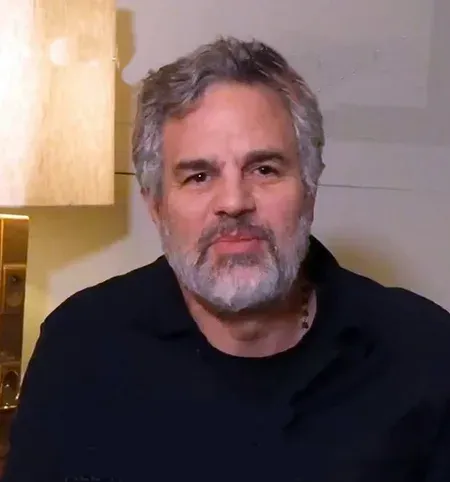
Mark Ruffalo isn’t backing down. After Paramount slammed him for calling the Ellisons ‘destructive,’ the actor went on X to argue that criticising a military tech contract is not antisemitism—and used the moment to warn that a $111 billion merger could hand one family editorial control over CNN, HBO, and Warner Bros., partly funded by unexplained foreign money.
Key Takeaways
Mark Ruffalo rejected antisemitism allegations on X on 23 August , calling them “appalling and fundamentally dishonest.” The controversy began after Ruffalo accused David and Larry Ellison of “powering some of the most destructive and inhuman forces in the world.” Ruffalo shared a clip involving Paramount board member Safra Catz and raised concerns about Oracle’s alleged military technology contracts with the Israeli military post October 7 .
He warned that the proposed $111 billion Paramount-Warner Bros. merger would give one family control over CNN , HBO , and Warner Bros.
Ruffalo flagged concerns about foreign money backing the deal and its potential impact on editorial freedom and thousands of jobs.
Hollywood actor Mark Ruffalo has firmly rejected allegations that he is antisemitic, calling the charge “appalling and fundamentally dishonest” in a lengthy post on X (formerly Twitter) on 23 August. The controversy erupted after Ruffalo publicly accused David and Larry Ellison of “powering some of the most destructive and inhuman forces in the world.”
What Ruffalo Said
In his post, Ruffalo drew a sharp distinction between political criticism and bigotry. “Criticizing the actions of the Israeli prime minister, a military technology contract, or the executives who supply it is not the same as criticizing Jewish people,” he wrote.
He further stated: “This critical and necessary dialogue is then dishonestly framed as being anti-Israel. To be clear, my views come from my own political convictions and should never be interpreted as hostility toward Jewish people, for whom I have deep love and respect. Everything I know about acting, activism, and humanism has been profoundly shaped by the Jewish friends, colleagues, and loved ones who have been integral and family throughout every point of my life.”
The Oracle-Israel Military Link
Ruffalo shared a clip featuring Paramount board member Safra Catz, in which he raised concerns about what he described as “really profoundly scary technologies” that Oracle allegedly used to assist the Israeli military following the October 7 terror attack. The actor labelled the elder Ellison a “classic oligarch” and warned of broader implications if the proposed media merger proceeds.
Concerns Over the Paramount-Warner Bros. Merger
At the heart of Ruffalo’s remarks is the reported $111 billion deal that would hand the Ellison family control over CNN, HBO, and Warner Bros. “This merger has real consequences for real people, and for the entire country,” he wrote, adding that the deal is “backed in part by foreign money whose influence on editorial decisions has never been fully explained to the public.”
He argued that scrutinising the Ellisons—including Oracle’s data, surveillance technology, and government contracts—is “fair and necessary,” and raised the threat to editorial freedom and the livelihoods of thousands of families employed across the merged entity.
Paramount’s Response and the Broader Context
Ruffalo’s post came directly in response to Paramount slamming his earlier remarks. The actor’s pushback reflects a widening debate in Hollywood over the intersection of corporate consolidation, defence technology contracts, and the limits of political speech. Notably, this is not the first time a high-profile entertainer has faced backlash for publicly criticising Israeli military policy—several actors and musicians have navigated similar controversies in the post-October 7 environment.
With the Paramount-Warner Bros. merger still under regulatory scrutiny, Ruffalo’s intervention is unlikely to be the last word from the creative community on a deal that would reshape the American media landscape.
Point of View
HBO, and Warner Bros. under one family, with foreign funding whose editorial influence remains unexplained, deserves far more regulatory scrutiny than it has received. Ruffalo’s celebrity noise may actually be obscuring the structural media power argument he is trying to make.
NationPress
8 Oct 2026
Frequently Asked Questions
Why is Mark Ruffalo being called antisemitic?
Mark Ruffalo was accused of antisemitism after he publicly criticised David and Larry Ellison, calling them out for allegedly ‘powering some of the most destructive and inhuman forces in the world.’ Paramount, whose board includes Safra Catz, slammed his remarks, prompting the antisemitism allegation.
What did Mark Ruffalo say in his X post?
Ruffalo posted a lengthy statement on X rejecting the antisemitism label, arguing that criticising an Israeli prime minister’s actions, a military technology contract, or the executives who supply it is not the same as criticising Jewish people. He also expressed deep personal respect for the Jewish community.
What is the Paramount-Warner Bros. merger that Ruffalo mentioned?
The proposed deal is a reported $111 billion merger that would give the Ellison family control over CNN, HBO, and Warner Bros. Ruffalo argued the deal poses a serious threat to editorial freedom and the livelihoods of thousands of media workers, and raised concerns about unexplained foreign money backing the transaction.
What is Oracle’s alleged role in the controversy?
Ruffalo shared a clip referencing Paramount board member Safra Catz and alleged that Oracle supplied ‘profoundly scary technologies’ to the Israeli military following the October 7 terror attack. Oracle is co-founded by Larry Ellison, whose family is central to the Paramount-Warner Bros. merger.
Has Paramount responded to Mark Ruffalo’s remarks?
Yes, Paramount publicly slammed Ruffalo’s earlier comments criticising the Ellisons, which prompted the actor to post his detailed rebuttal on X, accusing the company of dishonestly framing political criticism as antisemitism.