Jaya Bachchan on roles for older women in Bollywood: 'It must have something'
Synopsis
Jaya Bachchan's remark on 'Koffee With Karan' — 'I don't mind a small role, but it has to contribute' — is deceptively simple. Coming from a woman who walked away from stardom voluntarily and returned 17 years later on her own terms, it doubles as a quiet indictment of how Bollywood imagines women beyond a certain age.
Key Takeaways
Jaya Bachchan spoke on 'Koffee With Karan' about the limited and often shallow roles offered to older women in Bollywood .
She said she does not object to small roles, but insists they must have 'some kind of depth' and contribute to the story.
Jaya made her screen debut as a teenager in Satyajit Ray's 'Mahanagar' in 1963 , and her adult Bollywood debut in 'Guddi' (1971) .
She took a 17-year break from films after 'Silsila' (1981) following her marriage to Amitabh Bachchan .
She returned to cinema in 1998 with Govind Nihalani's 'Hazaar Chaurasi Ki Maa' .
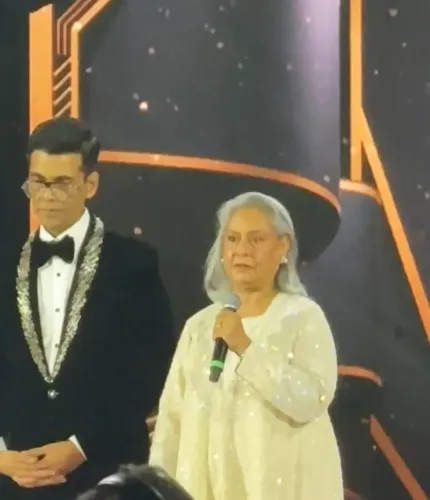
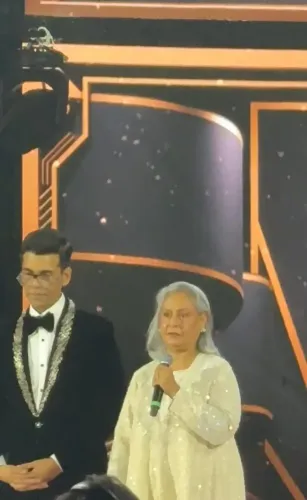
Veteran actress Jaya Bachchan once opened up candidly about the kind of roles available to older women in Bollywood, making her views clear during an appearance on filmmaker Karan Johar's popular chat show 'Koffee With Karan'. Her remarks cut to the heart of a debate the Hindi film industry has long skirted — whether women remain relevant on screen as they age.
What Jaya Bachchan Said
During a conversation about whether older women still receive substantial parts in cinema, Jaya was asked to weigh in after Karan observed that Hollywood continues to offer meaningful roles to women of a certain age. Jaya pushed back gently but firmly.
'Not really. I think you know what is important is that I do accept the fact that we are much older,' she said.
She elaborated further: 'Yeah. So obviously maybe older people don't have much to do in life. I don't know. I mean, I think we are doing a lot more than our children really. Even if it's a small role, it must have something. There should be a character. Some kind of depth.'
Karan responded, 'Some reason for you to exist within the framework,' to which Jaya concluded: 'I don't mind a small role, but it has to contribute.'
Why the Remark Resonates
Jaya's comments reflect a wider conversation about age and gender parity in Indian cinema. Critics and film scholars have long noted that while male stars in their 50s and 60s routinely headline commercial films, women of the same generation are typically relegated to supporting or decorative parts — if cast at all. Her insistence on depth over screen time, rather than a demand for leading roles, makes the observation all the more pointed.
Notably, this is not an isolated grievance. Several senior actresses, including Shabana Azmi and Revathy, have voiced similar concerns in recent years, suggesting a structural gap in how Bollywood writes and imagines women beyond a certain age.
A Career That Defied the Mould
Jaya Bachchan's own trajectory stands as both an argument for and against the industry's limitations. She first appeared on screen as a teenager in Satyajit Ray's Bengali film 'Mahanagar' in 1963. Her adult Bollywood debut came in 1971 with Hrishikesh Mukherjee's 'Guddi', in which she played a schoolgirl infatuated with film star Dharmendra, who appeared as himself.
A string of critically regarded films followed — 'Uphaar' (1971), 'Koshish' (1972), 'Zanjeer' (1973), 'Abhimaan' (1973), 'Kora Kagaz' (1974), 'Chupke Chupke' (1975), 'Mili' (1975), 'Sholay' (1975), and 'Silsila' (1981). These films spanned comedy, drama, and social realism, cementing her reputation as one of Hindi cinema's most versatile performers of her era.
The Long Hiatus and the Return
Following her marriage to Amitabh Bachchan in 1973, Jaya stepped away from the screen after 'Silsila' (1981), a hiatus that lasted 17 years as she focused on her family. She returned to films in 1998 with Govind Nihalani's critically acclaimed 'Hazaar Chaurasi Ki Maa' — a return that itself challenged the notion that an older woman's screen story is over.
Her words on 'Koffee With Karan' carry the weight of lived experience: a woman who chose family over stardom, came back on her own terms, and still found the industry's imagination for older women frustratingly narrow. Whether Bollywood is listening remains an open question.
Point of View
Only purposeful writing. That framing should embarrass an industry that struggles to meet even that bar. Bollywood's age-and-gender problem is well documented but poorly acted upon; the same directors who cast 60-year-old heroes opposite 25-year-old leads rarely ask whether the women sharing the frame have anything to do. Jaya's 17-year voluntary absence and her subsequent return also reframe the usual narrative: she was not sidelined, she chose family — and yet the roles she returned to were still constrained. The industry's imagination, not her ambition, was the ceiling.
NationPress
20 Sept 2026
Frequently Asked Questions
What did Jaya Bachchan say about roles for older women in Bollywood?
Jaya Bachchan said she does not mind playing a small role as long as it has depth and contributes to the story. Speaking on 'Koffee With Karan', she remarked that every character — even a minor one — should have 'some kind of depth' and a reason to exist within the narrative.
When did Jaya Bachchan make her Bollywood debut?
Jaya Bachchan made her adult Bollywood debut in 1971 with Hrishikesh Mukherjee's 'Guddi', playing a schoolgirl infatuated with film star Dharmendra. She had earlier appeared on screen as a teenager in Satyajit Ray's Bengali film 'Mahanagar' in 1963.
Why did Jaya Bachchan take a long break from films?
Jaya Bachchan stepped away from the screen after 'Silsila' in 1981 to focus on her family following her marriage to Amitabh Bachchan in 1973. The hiatus lasted 17 years, after which she returned with 'Hazaar Chaurasi Ki Maa' in 1998.
What are some of Jaya Bachchan's most notable films?
Her celebrated filmography includes 'Guddi' (1971), 'Koshish' (1972), 'Zanjeer' (1973), 'Abhimaan' (1973), 'Sholay' (1975), and 'Silsila' (1981), spanning comedy, social drama, and action. After her comeback, 'Hazaar Chaurasi Ki Maa' (1998) was widely praised.
Is the problem of limited roles for older women unique to Bollywood?
No, though the issue is particularly pronounced in Bollywood. Karan Johar noted on the same show that Hollywood still offers roles to older women, though Jaya Bachchan partially disagreed, suggesting the gap exists across industries. Several senior Indian actresses, including Shabana Azmi and Revathy, have raised similar concerns about structural under-representation of older women in Indian cinema.