Juhi Chawla's 'Ghoonghat Ki Aad Se' look: created overnight with vintage mirror work
Synopsis
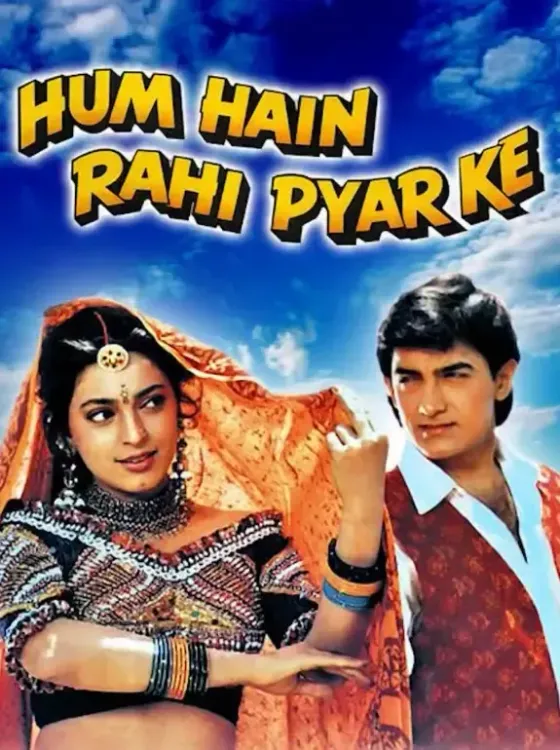
National Award-winning designer Neeta Lulla has revealed that Juhi Chawla's most-copied look from 'Hum Hain Rahi Pyar Ke' — the one that had college students across India dressing up for two years — was put together in a single overnight sprint after a 6 pm call, using deconstructed torans, kachhi fabrics, and vintage mirror work. The story is a rare behind-the-scenes window into how a deadline-driven act of improvisation became one of Bollywood's defining fashion moments.
Key Takeaways
Neeta Lulla revealed on Instagram that Juhi Chawla 's look in 'Ghoonghat Ki Aad Se' was created in a single overnight session.
Lulla received a call at around 6 pm the evening before the shoot, with the crew departing for Jaipur the next morning.
The outfits used vintage mirror work , deconstructed torans , kachhi embroidery fabrics , ganti fabrics , and tissue for dupattas.
The look became a nationwide fashion trend for nearly two years after the 1993 film's release, widely replicated by college students. 'Hum Hain Rahi Pyar Ke' was directed by Mahesh Bhatt and also starred Aamir Khan , Sharokh Bharucha , and Kunal Kemmu .
National Award-winning costume designer Neeta Lulla has revealed that Juhi Chawla's iconic look in the song 'Ghoonghat Ki Aad Se' from the 1993 Bollywood classic 'Hum Hain Rahi Pyar Ke' — which went on to become a defining fashion trend of the decade — was assembled in a single frantic overnight session before a shoot in Jaipur. Lulla shared the backstory in a video posted on Instagram, offering a rare glimpse into the unplanned magic behind one of Hindi cinema's most-replicated looks.
The Midnight Call That Started It All
According to Lulla, the call came at around 6 pm the evening before the shoot. The team was set to travel to Jaipur the following morning and needed three outfits ready by daybreak. With no lead time for sourcing or planning, Lulla rushed to fabric stores and picked up whatever was available.
'I got all these fabrics from a store that was selling kachhi embroidery, kachhi fabrics and created the looks overnight,' she recalled. 'I used a lot of vintage mirror work. I used a lot of torans, cut them up and put them together, hand-stitched them and created blouses out of it.'
The Craft Behind the Costume
Lulla described a hands-on, instinct-driven process — visualising the entire look in her head before a single stitch was made. Ganti fabrics were repurposed into skirts, while tissue was fashioned into flowing dupattas. Traditional torans — decorative door hangings — were deconstructed and restitched as blouse panels, giving the costume its distinctive artisanal character.
The finished outfits were delivered in time for the crew to depart, and photographs from the Jaipur shoot were sent back to Lulla. 'I was amazed at how beautiful it looked against the backdrop,' she said.
A Look That Defined a Generation
When 'Hum Hain Rahi Pyar Ke' released in 1993, the song and its visuals struck an immediate chord with audiences. Lulla noted that college students across India began replicating the silhouette — mirror-work blouses, layered skirts, and dupatta draping — for campus events, India Day celebrations, and special occasions. 'It was a huge trend at that time for almost a couple of years,' she said.
The look's resonance is a textbook example of how a costume born of constraint can outlast the film itself, embedding itself in the cultural memory of an era.
About the Film
Directed by Mahesh Bhatt and loosely based on the 1958 Hollywood film 'Houseboat', 'Hum Hain Rahi Pyar Ke' starred Aamir Khan, Juhi Chawla, Sharokh Bharucha, and Kunal Kemmu. The film follows Rahul, who is tasked with raising his nephews Sunny and Vicky and niece Munni; their lives change when they shelter Vyjayanti, a young woman who has run away from home. The film remains a beloved entry in 1990s Bollywood, and Lulla's costumes are now widely cited as a significant part of its legacy.
Lulla's revelation adds yet another chapter to the film's enduring story — proof that some of cinema's most memorable moments are born not of luxury, but of deadline pressure and raw craft.
Point of View
Not vision boards, and yet it drove a two-year trend that no amount of planned styling has matched since. What it underscores is an uncomfortable truth for the industry: some of its most culturally durable work happened not despite constraints but because of them. As Bollywood increasingly leans on international stylists and months-long costume budgets, Lulla's overnight sprint stands as a quiet rebuke to the idea that more resources always equal better outcomes.
NationPress
22 Sept 2026
Frequently Asked Questions
What is the story behind Juhi Chawla's look in 'Ghoonghat Ki Aad Se'?
Designer Neeta Lulla revealed that the look was created overnight after she received a call at around 6 pm the evening before a Jaipur shoot for the 1993 film 'Hum Hain Rahi Pyar Ke'. She sourced kachhi fabrics, vintage mirror work, and deconstructed torans from a store and hand-stitched the outfits through the night.
What materials did Neeta Lulla use to create the outfit?
Lulla used kachhi embroidery fabrics, vintage mirror work, traditional torans that were cut up and re-stitched as blouse panels, ganti fabrics converted into skirts, and tissue fabric to make dupattas. The entire construction was hand-stitched overnight.
Did the 'Ghoonghat Ki Aad Se' look become a fashion trend?
Yes, according to Lulla, the look became a major fashion trend for nearly two years after the film released in 1993. College students across India replicated the mirror-work blouse and layered skirt silhouette for campus events, India Day celebrations, and other special occasions.
Who directed 'Hum Hain Rahi Pyar Ke' and who starred in it?
The film was directed by Mahesh Bhatt and starred Aamir Khan, Juhi Chawla, Sharokh Bharucha, and Kunal Kemmu. It was loosely based on the 1958 Hollywood film 'Houseboat'.
Where did Neeta Lulla share this story about the costume?
Neeta Lulla shared the story in a video posted on Instagram, where she described the rushed process of creating the three outfits for the Jaipur shoot overnight.