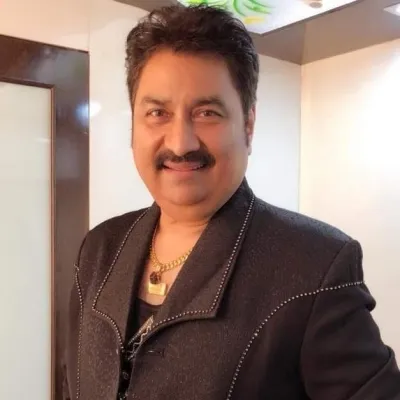
Kumar Sanu reveals his shorthand trick for singing in India's languages
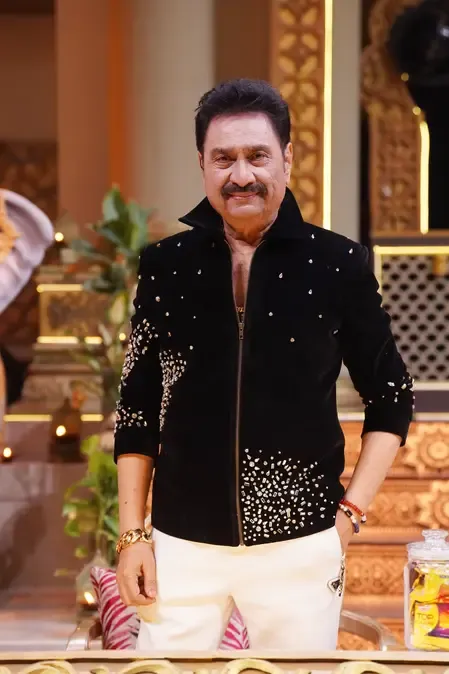
Synopsis
Kumar Sanu doesn't speak Tamil, Telugu, or Nepali — yet listeners assume he is a native. The 90s Bollywood legend has finally explained how: a self-invented shorthand notation system that maps a composer's exact pronunciation, letting him deliver multilingual tracks with near-native accuracy. It's a rare peek at the phonetic discipline behind India's most recognisable playback voice.
Key Takeaways
Kumar Sanu revealed his multilingual singing technique during promotions for 'Suniyo Zara' in Andheri West, Mumbai .
He is proficient only in Bengali , Hindi , and limited English , yet has sung in Nepali, Telugu, Tamil, Malayalam, Gujarati , and Marathi .
His method: a self-devised shorthand notation that captures a composer's or lyricist's exact pronunciation during dictation sessions.
During recording, he reads lyrics alongside his shorthand notes to replicate phonetics with precision.
Sanu credits the technique — not formal language learning — for convincing regional audiences that he is a native speaker.
Legendary playback singer Kumar Sanu has revealed the behind-the-scenes technique that allows him to sing convincingly in almost every regional language across India — a personalised shorthand notation system he developed entirely on his own. The disclosure came during promotions for his latest track 'Suniyo Zara', in an interaction at his residence in Andheri West, Mumbai, on 15 November 2026.
The Shorthand System Behind the Magic
Sanu, who is fluent only in Bengali, Hindi, and limited English by his own admission, explained that his secret lies in careful observation and documentation. 'When a music director or a lyricist dictates to me, I pay attention to how they are pronouncing it. I mark his pronunciation in my shorthand. In any of my papers, there is a lot of shorthand. I have created all this,' he said.
The veteran singer added that during recording sessions, he would simultaneously reference both the lyrics sheet and his shorthand notes to replicate the precise phonetics demonstrated by the composer or lyricist. 'So, the way he pronounced it, I try to give it 100%. So, people think he is Nepali, or he is Tamilian,' he noted.
Languages He Has Sung In
Over his decades-long career, Sanu has lent his voice to songs in Nepali, Telugu, Tamil, Malayalam, Gujarati, and Marathi, among other regional tongues — despite not being formally trained or proficient in any of them. He was candid about this gap: 'I can't say that I don't know any language except Bengali, Hindi, and a little bit of English. That's all I know.'
He made a special mention of Marathi, saying his long association with Maharashtra has given him a particular fondness for the language and its rich pool of musical talent.
A Self-Made Phonetic Craft
What makes Sanu's approach notable is that it is entirely self-devised rather than rooted in formal linguistic study. 'I haven't worked out on the language. But I developed one thing that through the shorthand, I tried to go as close as possible to the language. I tried that. And I succeeded in that to a large extent. People accepted it,' he said.
Sanu's admission underlines a broader truth about Indian playback singing — that the genre demands not just vocal range but a sensitivity to phonetics that spans the country's vast linguistic diversity. For a singer who rose to prominence in Bollywood through the 1990s, his multilingual output has remained a defining part of his legacy.
About 'Suniyo Zara'
The occasion for Sanu's remarks was the promotional run for 'Suniyo Zara', the latest track to feature his voice. While details of the full project were not disclosed during the interaction, the song's release has given the veteran singer a fresh platform to reflect on his craft and the decades of discipline behind it.
As Indian music continues to embrace multilingual and cross-regional collaborations, Sanu's self-taught phonetic method offers a rare window into how artists of his generation bridged the country's language barriers one notation at a time.
Point of View
With no formal phonetics training built into the system. That Sanu had to invent his own notation to fill that gap speaks to how much of Bollywood's multilingual output rested on individual ingenuity rather than institutional support. As regional music asserts greater independence and streaming platforms surface local artists, the pressure on pan-India playback veterans to code-switch linguistically may finally be easing — but Sanu's self-taught method remains a quietly remarkable workaround to a problem the industry never formally solved.
NationPress
15 Nov 2026
Frequently Asked Questions
How does Kumar Sanu sing in languages he does not know?
Kumar Sanu uses a self-devised shorthand notation system to record the exact pronunciation demonstrated by the music director or lyricist during dictation. He then reads the lyrics alongside his shorthand notes while recording, allowing him to replicate the phonetics accurately without formal knowledge of the language.
Which languages has Kumar Sanu sung in?
Despite being fluent only in Bengali, Hindi, and limited English, Kumar Sanu has sung in Nepali, Telugu, Tamil, Malayalam, Gujarati, and Marathi, among other regional languages. He credits his shorthand technique for making listeners believe he is a native speaker.
What is 'Suniyo Zara', the song Kumar Sanu recently lent his voice to?
'Suniyo Zara' is Kumar Sanu's latest track, which served as the occasion for his candid interview about his multilingual singing technique. Further details about the full project were not disclosed during the interaction.
Has Kumar Sanu formally studied regional Indian languages?
No. Sanu has stated clearly that he has not formally studied any regional language beyond his native Bengali, Hindi, and some English. His multilingual proficiency in singing is entirely the result of his self-taught phonetic shorthand method, not language classes or academic training.
Why is Kumar Sanu's phonetic technique significant?
It highlights a rarely discussed challenge in Indian playback singing — the expectation that a small group of top voices serve a linguistically vast country. Sanu's self-invented notation system is a rare example of an individual artist developing his own solution to a gap the industry never formally addressed.