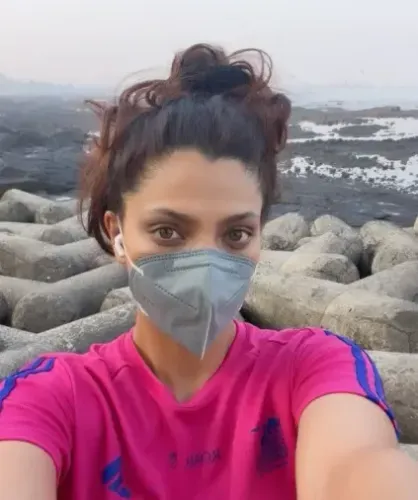
Mumbai water crisis: Kanika Maheshwari calls for sustainable water management

Synopsis
With Mumbai's seven reservoirs at a critical 7% and the BMC enforcing emergency cuts, actress Kanika Maheshwari is putting a human face on a civic crisis — arguing that water access is not a privilege but a right, and that sustainable management, not seasonal panic, is the only real fix.
Key Takeaways
Actress Kanika Maheshwari voiced concern over Mumbai's water crisis on 30 June .
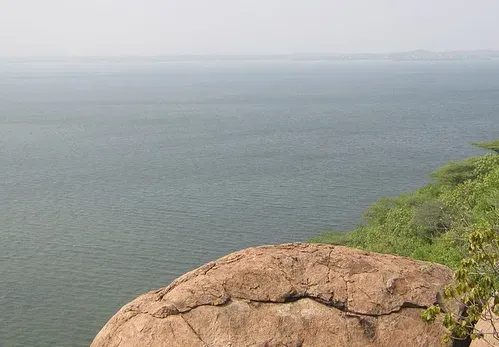
Mumbai's seven key reservoirs have fallen to a critically low level of approximately 7% .
The Brihanmumbai Municipal Corporation (BMC) has imposed a mandatory 10% water usage cut across the city.
BMC has also suspended water supply to construction sites and swimming pools .
Maheshwari called for year-round conservation habits and long-term sustainable water management policy.
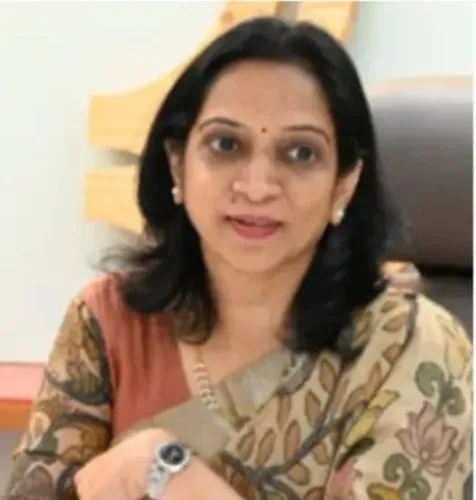
Television actress Kanika Maheshwari, best known for her role in 'Diya Aur Baati Hum', has spoken out about Mumbai's deepening water crisis, urging both authorities and citizens to treat reliable water access as a fundamental right rather than a seasonal concern. Her remarks come as the city's seven key reservoirs have fallen to a critically low combined stock of approximately 7%.
The Human Cost of Water Scarcity
Maheshwari, who has also appeared in 'Kahaani Ghar Ghar Kii', drew attention to the everyday toll that water shortages inflict on ordinary households. 'Water scarcity is not just about inconvenience; it quietly impacts every aspect of your daily life. When your day begins with uncertainty over whether there will be enough water to cook, clean, or even carry out basic hygiene, you realize how fragile something as essential as water can become,' she said.
The actress described how prolonged shortages force families to fundamentally alter their routines. 'Something as simple as taking a shower is replaced with a bucket bath because every litre has to be used mindfully. You begin calculating your consumption instead of living freely. It's a reality that many families silently deal with, and unless you've experienced it yourself, it's difficult to truly understand the emotional and practical burden it creates,' she added.
Call for Long-Term Urban Water Policy
Maheshwari argued that the discourse around water must shift from reactive, seasonal responses to structural, long-term planning. 'The conversation around water should move beyond seasonal discussions. As cities continue to expand, sustainable water management has to become a long-term priority. Residents shouldn't have to constantly adapt to shortages while waiting for lasting solutions. A clean and consistent water supply is not a privilege; it is a fundamental necessity that every household deserves,' she stated.
This comes amid growing pressure on Mumbai's civic administration as rapid urbanisation strains ageing water infrastructure across the metropolitan region.
BMC's Emergency Measures
The Brihanmumbai Municipal Corporation (BMC) has responded to the reservoir crisis by enforcing a mandatory 10% cut in water usage across the city. The civic body has also suspended water supply to construction sites and swimming pools as part of emergency conservation measures. Notably, a 7% reservoir level at this point in the year signals that replenishment from the monsoon season has not kept pace with the city's consumption demands.
Citizen Responsibility and Conservation
Beyond governance, Maheshwari stressed that residents themselves must internalise conservation habits year-round rather than only during acute shortages. 'Water conservation cannot become a habit only during a crisis. Whether it's avoiding unnecessary wastage, fixing leakages, reusing water wherever possible or adopting simple practices at home, collective responsibility can create a meaningful impact. Every drop we save today contributes towards a more secure tomorrow,' she said.
She concluded by calling for convergence of stronger infrastructure, responsible governance, and greater public awareness, expressing hope that 'no community has to live with the uncertainty of something as basic and essential as water.'
Point of View
Unauthorised connections, and a monsoon-dependence that leaves the city perpetually one dry spell away from crisis. The reservoir level of 7% this late in the cycle is a governance signal, not just a weather event. Mumbai's water problem is ultimately a political will problem, and no amount of bucket-bath awareness will substitute for capital investment in storage and distribution infrastructure.
NationPress
29 Sept 2026
Frequently Asked Questions
What is the current state of Mumbai's water crisis?
Mumbai's seven key reservoirs have dropped to approximately 7% of their total capacity, prompting the BMC to impose a 10% mandatory water usage cut and suspend supply to construction sites and swimming pools.
What steps has the BMC taken to address the water shortage?
The Brihanmumbai Municipal Corporation has enforced a compulsory 10% reduction in water usage across Mumbai and has suspended water supply to construction sites and swimming pools to conserve the critically low reservoir stocks.
Why did Kanika Maheshwari speak about the Mumbai water crisis?
Actress Kanika Maheshwari spoke out to highlight the everyday hardships water scarcity imposes on ordinary families — from disrupted hygiene routines to altered lifestyles — and to urge both authorities and citizens to prioritise sustainable, long-term water management over seasonal responses.
What did Kanika Maheshwari say about citizen responsibility?
She argued that water conservation must become a year-round habit, not just a crisis response. She called on residents to avoid wastage, fix leakages, and reuse water wherever possible, stating that collective responsibility can create meaningful impact.
What is the long-term solution Kanika Maheshwari advocates for?
Maheshwari called for stronger infrastructure, responsible governance, and greater public awareness to converge so that no community faces uncertainty over access to water. She emphasised that a clean, consistent water supply is a fundamental necessity, not a privilege.