Christopher Nolan on film criticism's 'fundamental flaw' and The Odyssey
Synopsis
Christopher Nolan isn’t just making a Greek epic — he’s also taking on the internet critics. In a candid podcast conversation, the director argued that spotting a storytelling technique doesn’t make it fake or manipulative, a defence of cinematic craft that arrives just as his most ambitious film yet, The Odyssey, prepares to face exactly that kind of scrutiny.
Key Takeaways
Christopher Nolan called identifying a storytelling mechanism without invalidating it a ‘fundamental flaw’ of amateur film criticism, in a podcast with Zhong Shu .
Nolan defended filmmakers’ use of shared cinematic language, arguing audiences understand and respond to it.
His new film The Odyssey adapts Homer’s ancient Greek epic, following Odysseus’s return to Ithaca after the Trojan War .
The cast includes Matt Damon , Tom Holland , Zendaya , Anne Hathaway , Charlize Theron , Robert Pattinson , and Lupita Nyong’o .
The film was shot using IMAX technology across multiple international locations.
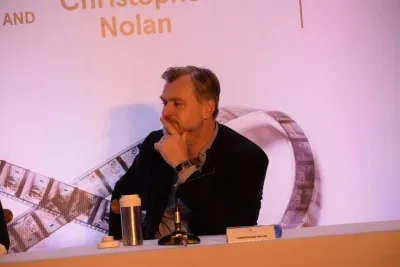
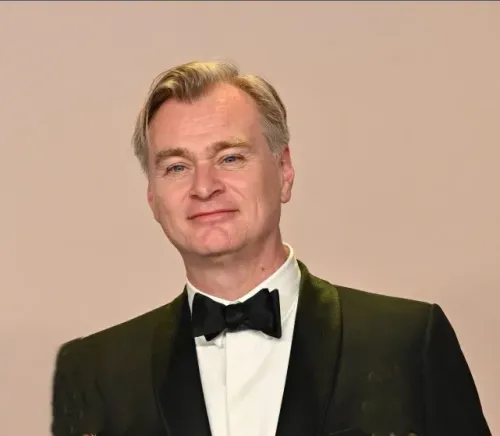
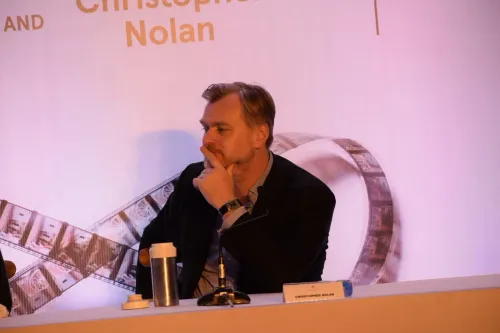
Acclaimed filmmaker Christopher Nolan has pushed back against a strain of amateur movie criticism he considers fundamentally misguided — arguing that identifying a storytelling mechanism does not strip it of its power. Nolan made the remarks in a recent conversation with podcaster Zhong Shu, ahead of his latest directorial venture, The Odyssey, his big-screen adaptation of the ancient Greek epic attributed to Homer.
What Nolan Said About Film Criticism
The 56-year-old director took aim at what he called a recurring failure in amateur film discourse. “The criticism that’s often levelled at movies in general is, ‘Oh, the character has to be made sympathetic, so the character is manipulated in different ways or changed in different ways’. And that’s a fundamental flaw of film criticism in a way, or storytelling criticism. Because to be able to identify the mechanism does not invalidate the mechanism,” Nolan said.
He was careful to draw a distinction between professional and casual critique. “I’m thinking more of amateur criticism, because they feel they’ve identified the mechanism, they feel that it invalidates it,” he added. “That can be true of certain elements, and film grammar, film language evolves with that. So when a trope becomes too familiar to an audience, then it has to be changed. But we do, as filmmakers, avail ourselves of that common language. We build on that understanding. Our audience has seen many films and they understand that language.”
The Argument Behind the Argument
Nolan’s remarks reflect a broader tension in contemporary film culture, where online discourse has democratised criticism but also, some argue, flattened it. The director is essentially defending the legitimacy of well-worn cinematic devices — sympathy construction, narrative framing, emotional cues — provided they are deployed with craft. Notably, this is not the first time a major filmmaker has pushed back against ‘deconstruction as dismissal’ in audience criticism.
His comments carry added weight given the scale of The Odyssey, a production that will ask audiences to engage with a hero — Odysseus — whose moral complexity has been debated since antiquity. Making such a figure sympathetic without appearing manipulative is precisely the challenge Nolan is defending.
About The Odyssey
Nolan’s The Odyssey follows the legendary Greek hero Odysseus on his years-long struggle to return home to Ithaca after the Trojan War, navigating mythical creatures, divine interventions, and mortal peril. The film blends large-scale spectacle with practical filmmaking techniques and was shot using cutting-edge IMAX technology across multiple international locations.
The ensemble cast is among the most star-studded of Nolan’s career: Matt Damon leads as Odysseus, joined by Tom Holland, Zendaya, Anne Hathaway, Charlize Theron, Robert Pattinson, and Lupita Nyong’o.
What to Watch
As The Odyssey moves toward release, the critical conversation around it will likely test Nolan’s own thesis — whether audiences and reviewers can engage with familiar storytelling grammar on its own terms, or whether the instinct to deconstruct will dominate. Given the source material’s near-mythic status, the film may become a flashpoint for exactly the kind of criticism Nolan is cautioning against.
Point of View
But it also arrives at a convenient moment — just before a film that will require audiences to root for a morally complicated ancient hero. The defence of ‘cinematic language’ is legitimate, but it can also serve as pre-emptive armour against negative reception. The more interesting question is whether mainstream criticism has itself become too deconstruction-led, rewarding the spotting of tropes over the evaluation of execution. If The Odyssey lands well, Nolan’s argument will look prescient; if it does not, these remarks will be quoted back at him.
NationPress
20 Sept 2026
Frequently Asked Questions
What did Christopher Nolan say about film criticism?
Nolan argued that recognising a storytelling mechanism — such as making a character sympathetic — does not make that mechanism invalid. He described the assumption that it does as a ‘fundamental flaw’ of amateur film criticism, made during a podcast conversation with Zhong Shu.
What is Christopher Nolan’s new film The Odyssey about?
The Odyssey is Nolan’s adaptation of Homer’s ancient Greek epic poem, following Odysseus on his perilous journey home to Ithaca after the Trojan War. The film features mythical creatures, divine interventions, and large-scale IMAX filmmaking across international locations.
Who stars in Christopher Nolan’s The Odyssey?
Matt Damon plays Odysseus, with an ensemble cast including Tom Holland, Zendaya, Anne Hathaway, Charlize Theron, Robert Pattinson, and Lupita Nyong’o.
What did Nolan mean by ‘film grammar’ and ‘common language’?
Nolan used these terms to describe the shared set of cinematic conventions — character arcs, emotional cues, narrative devices — that audiences have absorbed from decades of filmgoing. He argued filmmakers legitimately build on this shared understanding rather than manipulate viewers.
Why are Nolan’s remarks significant ahead of The Odyssey?
The Odyssey centres on Odysseus, a hero whose moral ambiguity has been debated for centuries. Nolan’s defence of sympathy-building as a valid craft technique is directly relevant to how audiences and critics may respond to his portrayal of the character.