Ashoke Pandit slams BMC over Diwali cracker appeal: 'Why no lectures on Eid, Christmas?'

Synopsis
Filmmaker Ashoke Pandit's 'enough is enough' broadside at BMC has exposed a politically charged fault line: the civic body ran a Diwali firecracker campaign on court orders, only to pull the Dia Mirza video after BJP backlash — raising uncomfortable questions about whether civic outreach in Mumbai can ever be both consistent and apolitical.
Key Takeaways
Ashoke Pandit released a video attacking BMC Commissioner Ashwini Bhide over the civic body's Diwali firecracker awareness campaign on 2 November .
He questioned why BMC issues no comparable advisories during Eid or Christmas , calling the outreach selective.
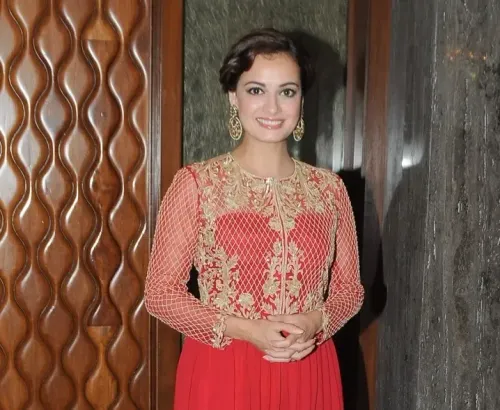
BMC had shared a video featuring actress Dia Mirza urging compliance with Bombay High Court directions on firecrackers.
Mumbai BJP president Ameet Satam objected to the campaign; BMC subsequently removed the video without explanation.
The campaign was itself a response to a Bombay High Court directive asking civic authorities to use celebrities for pollution-awareness outreach during festivals.
Filmmaker and social activist Ashoke Pandit has launched a sharp attack on the Brihanmumbai Municipal Corporation (BMC) over its awareness campaign urging Mumbai residents to avoid bursting firecrackers during Diwali, questioning why the civic body does not issue comparable advisories during other religious festivals such as Eid and Christmas. The remarks, delivered in a strongly worded video message, have reignited a broader debate about selective civic outreach in the city.
What Pandit Said
Addressing BMC Commissioner Ashwini Bhide directly in the video, Pandit said: 'Honourable Municipal Commissioner Ashwini Bhide ji. We don't need a lecture on how to celebrate Diwali. We don't need a lecture on how to save the environment.' He questioned the civic body's decision to involve film celebrities in the campaign, accusing it of being 'glamour stuck.'
Pandit challenged the consistency of BMC's outreach: 'I have never heard you on my handles or on Eid. I have never heard you on Christmas. And in any religious festival, has BMC ever been so proactive to give lectures on how to celebrate Eid, how not to slaughter goats on the streets, how not to shed blood? I have never seen this on BMC's handle.'
He also raised civic grievances, pointing to what he described as BMC's failure to address basic infrastructure: 'You don't remove the illegal barracks. You don't build roads. You don't build gutters. You don't give clean water. And you are giving us lectures on how to celebrate Diwali.'
Pandit concluded with a pointed demand: 'I request you with folded hands. Please delete all these tweets, all these posts on Instagram and stop giving us lectures on how to celebrate our festivals. Enough is enough.'
The Dia Mirza Campaign and BMC's Retreat
Pandit's remarks come in the wake of a BMC-backed video featuring actress Dia Mirza, in which she appealed to Mumbaikars to comply with the Bombay High Court's directions on firecrackers and avoid noise pollution during the festive season. The video specified that bursting crackers on public roads, lanes, and footpaths was prohibited.
The campaign drew immediate backlash. Mumbai BJP president Ameet Satam objected to the video, arguing that the city did not require lessons on celebrating Diwali from the actress and that its traditions were deeply rooted in local culture. Shortly after, BMC removed the video from its social media accounts without offering an official explanation.
The Court's Directive and Its Fallout
The controversy is set against a legal backdrop: the Bombay High Court had recently urged the Maharashtra government and civic authorities to run awareness campaigns aimed at curbing air and noise pollution during festivals, and had specifically suggested involving celebrities and social media influencers to maximise reach.
Notably, the BMC's campaign appeared to follow the court's recommendation directly — making the subsequent withdrawal of the Dia Mirza video politically significant. Critics argue the pullback signals that civic bodies remain susceptible to political pressure even when acting on judicial directives.
Broader Context
This is not the first time Mumbai's civic administration has faced accusations of selective enforcement or outreach along religious lines. The debate over firecracker bans and Diwali celebrations has resurfaced annually in several Indian cities, with courts, activists, and political groups staking out sharply differing positions. Pandit's intervention reflects a wider tension — between environmental regulation, judicial oversight, civic responsibility, and perceived religious bias — that remains unresolved at the policy level.
With Diwali festivities underway, the controversy is unlikely to fade quickly, and all eyes are now on whether BMC will issue any formal clarification about its campaign strategy.
Point of View
It signals that judicial directives on pollution are negotiable in election-sensitive cities. Pandit's charge of selective outreach is a real accountability question — but it should prompt BMC to expand its campaigns across festivals, not abandon them altogether. The pull-down of the Dia Mirza video, without explanation, is the most telling detail here: it suggests Mumbai's civic governance still bends to communal optics rather than consistent public-health policy.
NationPress
2 Nov 2026
Frequently Asked Questions
Why did Ashoke Pandit criticise BMC over its Diwali campaign?
Ashoke Pandit accused the BMC of issuing firecracker-related advisories selectively for Diwali while never running similar campaigns during Eid or Christmas. He argued that the civic body had no right to 'lecture' Hindu communities on how to celebrate their festivals.
What was the BMC's Diwali awareness campaign about?
BMC shared a video featuring actress Dia Mirza urging Mumbaikars to comply with Bombay High Court directions on firecrackers and avoid noise pollution during Diwali. The video also stated that bursting crackers on public roads, lanes, and footpaths was prohibited.
Why did BMC remove the Dia Mirza video?
BMC removed the video after Mumbai BJP president Ameet Satam publicly objected to it, saying the city did not need lessons on celebrating Diwali from the actress. The civic body offered no official explanation for the withdrawal.
What was the Bombay High Court's role in this controversy?
The Bombay High Court had urged the Maharashtra government and civic authorities to run awareness campaigns to curb air and noise pollution during festivals, and specifically suggested involving celebrities and social media influencers. BMC's campaign was a direct response to that directive.
Who is Ashoke Pandit?
Ashoke Pandit is a Mumbai-based filmmaker and social activist who has frequently spoken on issues related to the Hindi film industry and Hindu cultural identity. He is known for publicly criticising what he describes as bias against Hindu communities in public discourse.