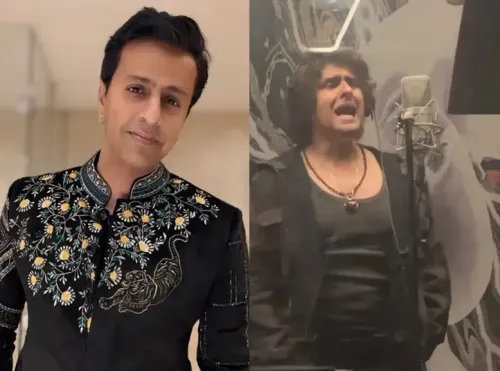
Salim Merchant trolled for Kamakhya Temple visit, questioned on faith
Synopsis
Salim Merchant shared devotional pictures from Kamakhya Temple in Guwahati — and a section of social media users pushed back hard, questioning his faith. For a composer who openly prays to Lord Shiva on Mondays and observes Jummah on Fridays, this is a recurring flashpoint, and it exposes just how contested interfaith spiritual identity remains in India's online discourse.
Key Takeaways
Salim Merchant shared photographs from his visit to Kamakhya Temple , Guwahati , on 19 September 2026 .
He posted a devotional Hindi caption invoking the goddess: 'Shakti ke charanon mein, Om Aim Hreem Kleem Kamakhye Namah' .
A section of users questioned his visit, raising the Islamic concept of shirk ; many others responded warmly.
In March 2026 , Salim had spoken about praying to Lord Shiva on Mondays while also observing Jummah on Fridays.
Salim is one half of composer duo Salim-Sulaiman , known for films including Chak De!
India and Band Baaja Baaraat .
Music composer and singer Salim Merchant faced a wave of online criticism on 19 September 2026 after he shared photographs from his visit to the Kamakhya Temple in Guwahati, Assam — one of the most revered Shakti shrines in India. The post drew both warm responses and pointed questions about his religious identity from a section of social media users.
What Salim Posted
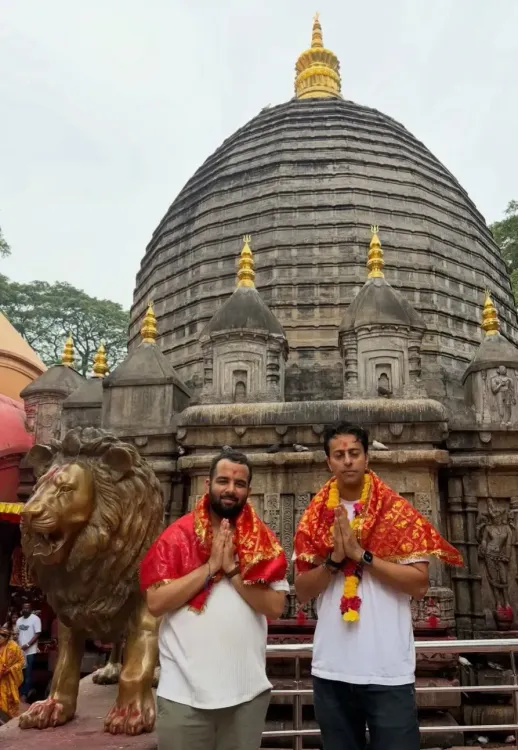
In the pictures, Salim is seen alongside a friend, both standing before the temple with folded hands after seeking blessings. He wore a white T-shirt and dark trousers, with a red religious stole draped around his shoulders and a garland around his neck. Sharing the images, he wrote in Hindi: 'Shakti ke charanon mein, Om Aim Hreem Kleem Kamakhye Namah' — a devotional invocation to the goddess.
The Online Reaction
While a large number of users responded warmly — with heart emojis, folded-hand icons, and messages seeking Maa Kamakhya's blessings — some users from the Muslim community questioned the act. One commenter wrote, 'Astaghfirullah from all muslims side' — an Arabic phrase seeking forgiveness from Allah. Another questioned Salim directly, writing: 'Our shirk kia jiski maafi ni Quran me Hy btao saleem' — raising the Islamic theological concept of shirk, the association of partners with Allah, for which the Quran does not promise forgiveness. A third comment read: 'Ali Ali na kia kr na ahlbait ka zikar kia kr' — urging him to confine his devotion to Islamic figures.
Not the First Time
This is not Salim's first encounter with such scrutiny. In March 2026, he had publicly spoken about his practice of offering prayers to Lord Shiva every Monday while also observing Jummah prayers on Fridays. He reportedly described his connection with God and music as something 'difficult to put into words,' and said he respects both religions. His interfaith spiritual practice has consistently invited commentary, both supportive and critical, from across communities.
Who Is Salim Merchant
Salim is one half of the acclaimed Bollywood composer duo Salim-Sulaiman, alongside his elder brother Sulaiman Merchant. The brothers have collaborated for more than three decades, composing music and background scores for a string of major Hindi films. Their credits include Chak De! India, Fashion, Rab Ne Bana Di Jodi, and Band Baaja Baaraat, among others. Together, they are among the most versatile composers in contemporary Hindi cinema.
The Broader Context
The controversy sits within a wider pattern of public figures from minority communities facing scrutiny — and at times hostility — when they publicly engage with majority religious practices. Salim's position — expressing devotion across faiths without appearing to renounce either — is not unprecedented in India's syncretic cultural tradition, but it remains a flashpoint in increasingly polarised online spaces. The episode underscores how social media has amplified debates around interfaith identity and religious expression in India.
Point of View
Yet it now generates organised pushback online. What is notable is the framing of the criticism: theological, not merely cultural, with the invocation of shirk suggesting doctrinal policing by a vocal minority. Mainstream coverage tends to frame these episodes as celebrity controversies; the more important read is what they reveal about the growing pressure on individuals to perform fixed, legible religious identities in a social media environment that punishes ambiguity.
NationPress
19 Sept 2026
Frequently Asked Questions
Why was Salim Merchant trolled for visiting Kamakhya Temple?
A section of social media users questioned Salim Merchant's visit to the Kamakhya Temple in Guwahati because, as a Muslim, some felt his act of seeking blessings at a Hindu shrine was theologically impermissible. Several comments invoked the Islamic concept of shirk — the association of partners with Allah — while others urged him to confine his devotion to Islamic traditions.
What did Salim Merchant write while sharing the Kamakhya Temple pictures?
Salim shared the photographs with a Hindi devotional caption reading 'Shakti ke charanon mein, Om Aim Hreem Kleem Kamakhye Namah' — an invocation to the goddess Kamakhya. He was seen in a red religious stole and garland, with folded hands before the temple.
Has Salim Merchant spoken about his interfaith practices before?
Yes. In March 2026, Salim publicly described his practice of praying to Lord Shiva every Monday while also observing Jummah prayers on Fridays. He reportedly said he respects both religions and described his connection with God and music as something difficult to put into words.
Who is Salim Merchant and what has he worked on?
Salim Merchant is one half of the Bollywood composer duo Salim-Sulaiman, alongside his elder brother Sulaiman Merchant. The duo has worked for more than three decades and composed music for major Hindi films including Chak De! India, Fashion, Rab Ne Bana Di Jodi, and Band Baaja Baaraat.
What is the Kamakhya Temple and why is it significant?
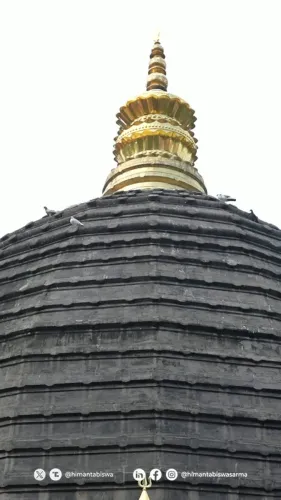
The Kamakhya Temple in Guwahati, Assam, is one of the most revered Shakti shrines in India, dedicated to the goddess Kamakhya. It is a major pilgrimage site and holds deep significance in the Tantric tradition of Hinduism, drawing devotees from across the country and beyond.