Shweta Tiwari thanks MNS member after online abuser sends written apology

Synopsis
Shweta Tiwari went public with abusive comments targeting women, tagged MNS chief Raj Thackeray — and within three days, MNS member Snehal Adarkar had tracked down the accused and secured a handwritten apology. Tiwari welcomed it, then immediately pivoted to the harder question: what about the millions of abusers who never get caught?
Key Takeaways
Shweta Tiwari publicly shared screenshots of derogatory comments targeting women on social media and posted the abusers' Instagram accounts.
MNS member and advocate Snehal Adarkar contacted Tiwari, clarified the accused were not party members, and traced the individual within three days .
The accused submitted a handwritten apology letter to Tiwari following the intervention.
Tiwari thanked the MNS team for acting without being asked twice and for affirming they do not tolerate insults against women.
Tiwari cautioned that the incident highlights a systemic problem — millions of online abusers remain anonymous and unaccountable.
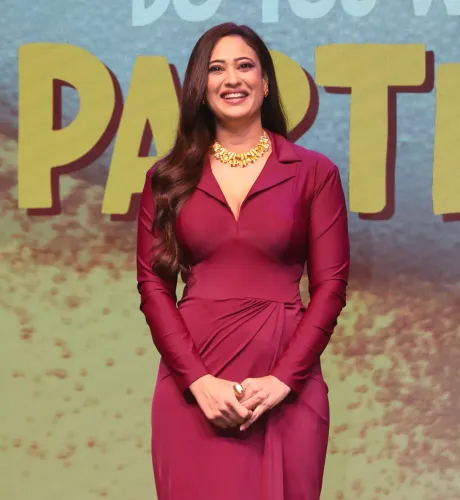
Actress Shweta Tiwari has publicly acknowledged the intervention of Maharashtra Navnirman Sena (MNS) member Snehal Adarkar, who helped track down a man accused of posting derogatory and abusive comments against women on social media. Within three days of Adarkar taking up the matter, the accused submitted a handwritten apology letter — an outcome Tiwari described as both gratifying and insufficient given the scale of online abuse women face.
How the Incident Unfolded
A few days before her acknowledgement post, Shweta Tiwari had shared screenshots on social media highlighting abusive comments made by certain men against women. She also posted their Instagram accounts publicly, arguing that individuals who behave this way should not be allowed to believe they can act without consequences. Notably, she directed a question at MNS chief Raj Thackeray, asking whether such conduct was acceptable from people who claimed to support him.
The post drew a swift response from Snehal Adarkar, an advocate and MNS member, who contacted Tiwari directly. Adarkar clarified that the party neither endorses nor tolerates abusive behaviour towards women, and confirmed that the men involved were not party members.
The Apology and Tiwari's Response
In her own words, Tiwari wrote: 'Within just three days, she sent me the phone number of the person involved. And also a handwritten apology letter by him.' She thanked Adarkar and the MNS team for acting proactively — without being asked a second time — and for making it clear that insults against women are taken seriously by the organisation.
Tiwari also noted that Adarkar offered continued support, telling her she could reach out if she faced similar harassment in the future. The 'Kasautii Zindagi Kay' actress said the gesture gave her a measure of relief, even as she acknowledged the larger problem remained unresolved.
The Bigger Problem Tiwari Raised
Despite welcoming the resolution in her individual case, Tiwari was candid about its limitations. She wrote: 'We may be able to catch one or two people here and there, but what about the thousands, or perhaps millions, of people who hide behind their screens and feel completely invincible?'
She argued that the core issue is a mentality — a belief among online abusers that targeting women carries no real consequences. In her view, catching isolated offenders does not address the systemic nature of online misogyny, and meaningful change requires a broader cultural shift.
Context: Women and Online Abuse in India
Tiwari's experience reflects a pattern increasingly documented across Indian social media platforms. Celebrities and public figures — particularly women — routinely face coordinated harassment campaigns, often with little institutional recourse. This is not the first time a Bollywood or television personality has used their own platform to publicly name and shame abusers, though the involvement of a political party in mediating an apology is uncommon.
The episode raises questions about the role political organisations can play in curbing online abuse, and whether such interventions can be replicated at scale. As Tiwari herself noted, the challenge is systemic — and one handwritten apology, however welcome, is only a start.
Point of View
But it also exposes the arbitrariness of the system: accountability here depended entirely on a celebrity's reach and a politician's reputation being on the line. The millions of non-famous women who face identical abuse have no such leverage. Tiwari is right to flag the structural gap — and the episode, however well-resolved in this instance, underscores why platform-level accountability mechanisms, not ad hoc political interventions, are the only scalable answer.
NationPress
11 Oct 2026
Frequently Asked Questions
Why did Shweta Tiwari post about online abuse on social media?
Shweta Tiwari shared screenshots of derogatory and abusive comments made by certain men against women, posting their Instagram accounts publicly to hold them accountable. She also questioned MNS chief Raj Thackeray about whether such behaviour was acceptable from people who claimed to support him.
Who is Snehal Adarkar and what role did she play?
Snehal Adarkar is an advocate and member of the Maharashtra Navnirman Sena (MNS) who contacted Tiwari after her posts went public. She clarified that the MNS does not support abuse against women, confirmed the accused were not party members, and tracked down the individual within three days, obtaining a handwritten apology from him.
What was the outcome of Shweta Tiwari's complaint?
Within three days of MNS member Snehal Adarkar taking up the matter, the accused individual's phone number was shared with Tiwari and he submitted a handwritten apology letter. Tiwari publicly thanked the MNS team for resolving the matter without requiring a follow-up from her.
What larger concern did Shweta Tiwari raise despite the apology?
Tiwari cautioned that catching one or two offenders does not address the root problem — a mentality among online abusers that they can target women without consequences. She argued that thousands or even millions of people hide behind anonymity online, and that a cultural shift, not isolated accountability, is what is truly needed.
Is this the first time Shweta Tiwari has spoken about online harassment?
This particular episode began when Tiwari recently shared a note revealing she had received derogatory messages from individuals she identified as supporters of MNS chief Raj Thackeray. Her subsequent posts and the MNS response represent a continuation of that public stand against online abuse targeting women.