Anubhav Sinha misled by unverified claims on Bismillah Khan's house demolition
Synopsis
Anubhav Sinha's heartfelt tribute to Ustad Bismillah Khan went viral — but it was built on a false premise. The Varanasi Development Authority says it issued no demolition order; Khan's own family tore down the house for renovation, and plans to build a museum there. A well-meaning post became a case study in how misinformation about cultural heritage spreads fastest when emotion runs highest.
Key Takeaways
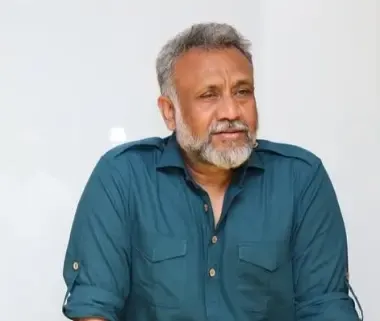
Filmmaker Anubhav Sinha posted a lengthy tribute on X on 9 November 2026 , mourning the demolition of Ustad Bismillah Khan 's house in Varanasi .
Sinha's post reflected viral social media claims that the house was razed for road infrastructure expansion .
The Varanasi Development Authority has denied issuing any demolition orders for the property.
According to authorities, the demolition was carried out by Khan's own family for renovation .
The Khan family has proposed setting up a museum dedicated to Bharat Ratna Ustad Bismillah Khan at the same site after reconstruction.
Ustad Bismillah Khan , born in 1916 and awarded the Bharat Ratna in 2001 , passed away in 2006 and remained rooted in Varanasi throughout his life.
Filmmaker Anubhav Sinha shared a heartfelt post on X (formerly Twitter) on Monday, 9 November 2026, lamenting what he believed was the demolition of Bharat Ratna awardee Ustad Bismillah Khan's ancestral home in Varanasi as part of road infrastructure expansion — claims that have since been contradicted by both local authorities and the Khan family itself.
What Sinha Said
In a lengthy post on X, Sinha recounted a recent visit to Varanasi during which he stopped by Khan's residence. He described the state of the house as unworthy of a legend of Khan's stature, and noted that, as he had been told, royalties from the maestro's recordings reportedly never reached his family. 'All his albums are still being played today, but as far as I was told, not a penny in royalties reaches his home,' Sinha wrote.
Sinha described being shown Khan's rooftop room, with 'a chair, a wooden bed he used to sleep on, a few broken shehnais on a cupboard,' the very roof where the legendary musician had practised. 'I don't know how long I sat there. I became tearful, which doesn't happen easily. I felt as though I were sitting with him,' he wrote. He recounted a story about Khan, shared with him by a journalist: when asked why he sometimes smiled while playing the shehnai, Khan had replied, 'How can you hit the right note every day? When you do, your heart is happy.'
Sinha also recalled a road trip in Europe during which he introduced a French friend to Khan's music. The friend, after three hours of listening, reportedly asked, 'Is this from before Jan Garbarek?' — a reference to the celebrated 89-year-old Norwegian jazz saxophonist. On being told Khan was born in 1916, the friend said, 'He did all the things that happened in the West much later.'
The Road Expansion Claim — And the Rebuttal
Social media had been rife with claims that the demolition of Khan's house was ordered as part of a civic road-widening project, drawing sharp reactions from cultural commentators. Sinha's post, while framed as a tribute rather than an accusation, reflected the same narrative when he wrote: 'Ustad Bismillah Khan's house, a Bharat Ratna, has been demolished in Banaras. A road has to pass through there.'
However, the Varanasi Development Authority has denied issuing any demolition orders for the property. According to authorities, the demolition was carried out by Khan's own family for renovation purposes. The family has also proposed setting up a museum dedicated to Bharat Ratna Ustad Bismillah Khan at the same site following reconstruction — a development that substantially alters the narrative that had spread online.
Who Was Ustad Bismillah Khan
Ustad Bismillah Khan, born in 1916, is widely regarded as the foremost maestro of the shehnai, a wind instrument he elevated to concert-hall prominence across India and the world. He was awarded the Bharat Ratna — India's highest civilian honour — in 2001. Despite his global stature, he remained rooted in Varanasi throughout his life, famously saying there was no place like Banaras anywhere in the world. He passed away in 2006.
Sinha's tribute underlined what he called the collective failure of his generation: 'Our generation couldn't even save his house. Please do it. They are our heritage and our responsibility.' Yet the emerging facts suggest the house's fate is not quite the cultural erasure that the viral narrative framed it as.
Misinformation Spreads Fast on Cultural Heritage
This episode is the latest in a pattern where demolition or alteration of sites associated with celebrated public figures rapidly generates outrage online before full facts are established. Notably, the conflation of a family-led renovation with a state-ordered demolition for road expansion carries significant political overtones in a city as symbolically charged as Varanasi. The proposed museum, if realised, could in fact serve Khan's legacy better than the original structure did.
How the authorities and the Khan family proceed with the reconstruction and museum proposal will determine whether the legend's connection to Varanasi is ultimately commemorated or quietly forgotten.
Point of View
But sincerity is not a fact-check. The rapid viral spread of the 'road demolition' narrative — without verification from the Varanasi Development Authority or the Khan family — illustrates how emotionally charged heritage stories bypass scrutiny, especially when they map neatly onto pre-existing political anxieties about Varanasi. The more important story here may be the one Sinha actually documented: a Bharat Ratna recipient's family receiving reportedly no royalties from his recordings, and his room preserved with nothing but a broken shehnai and a wooden bed. That accountability question deserved the same energy as the demolition outrage.
NationPress
9 Nov 2026
Frequently Asked Questions
Was Ustad Bismillah Khan's house demolished for road expansion in Varanasi?
No. The Varanasi Development Authority has denied issuing any demolition order. According to authorities, the demolition was carried out by Khan's own family for renovation purposes, not for any road infrastructure project.
What did Anubhav Sinha say in his X post about Bismillah Khan?
Sinha wrote a lengthy tribute recounting his visit to Khan's Varanasi home, describing a rooftop room with a chair, a wooden bed, and broken shehnais. He lamented that royalties from Khan's recordings reportedly never reached his family, and urged younger generations to preserve the maestro's legacy.
What is planned for Bismillah Khan's house site in Varanasi?
The Khan family has proposed setting up a museum dedicated to Bharat Ratna Ustad Bismillah Khan at the same site following reconstruction, which could serve as a formal memorial to the shehnai legend.
Who was Ustad Bismillah Khan?
Ustad Bismillah Khan, born in 1916, was India's foremost shehnai maestro and one of its most celebrated classical musicians. He received the Bharat Ratna — India's highest civilian honour — in 2001 and passed away in 2006, having spent virtually his entire life in Varanasi.
Why did Anubhav Sinha's post go viral?
Sinha's post gained traction because it tapped into broader anxieties about the preservation of cultural heritage in Varanasi, amplifying unverified social media claims that Khan's house was demolished for road widening. The emotive nature of the tribute, combined with the symbolic weight of the city, accelerated its spread before the full facts emerged.