Amit Shah slams Bengal's governance record, cites commission culture in daily transactions
Synopsis
At a ₹620 crore civic event in Gandhinagar, Home Minister Amit Shah alleged that West Bengal citizens had paid unofficial party commissions for five decades — even for buying a fan or bricks. The remarks signal the BJP's sustained political offensive in Bengal well ahead of the next state election cycle.
Key Takeaways
Amit Shah on 17 May alleged a 50-year commission culture in West Bengal , claiming ruling-party levies were collected on everyday purchases.
Shah spoke at a public event in Gandhinagar after inaugurating civic works worth ₹620 crore .
He claimed people bringing cheaper goods from other states were also taxed informally at railway stations.
Shah credited BJP's booth-level organisational structure for the party's national and Gujarat electoral success.
The BJP won all municipal corporations in Gujarat's recent local body elections, according to Shah.
Gandhinagar projects include sewage plants, water supply, roads, lake beautification, and sports infrastructure.
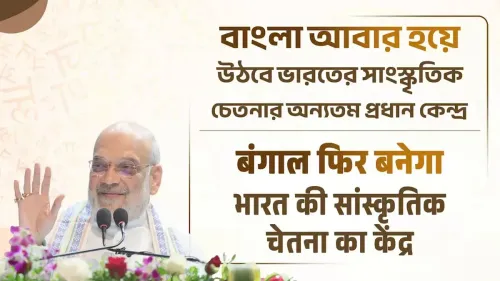
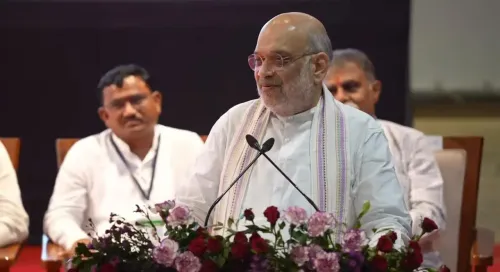
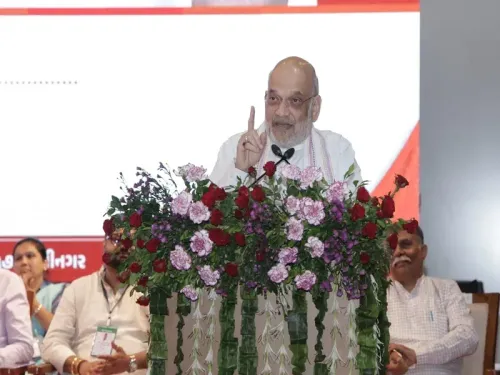
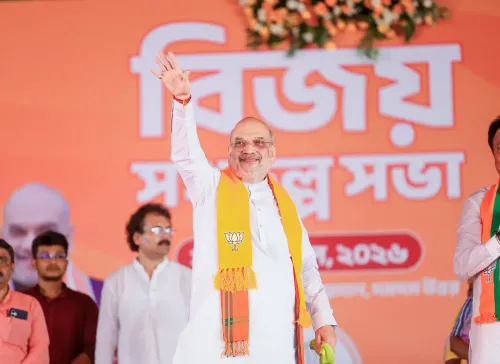
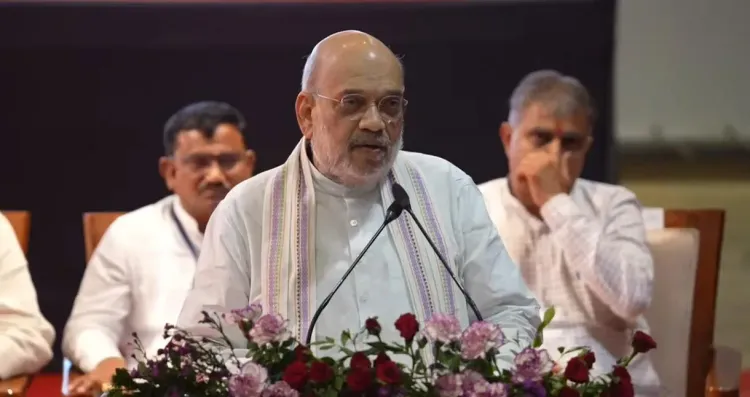
Union Home Minister Amit Shah on Sunday, 17 May launched a sharp attack on decades of governance in West Bengal, alleging that ordinary citizens had been forced to pay unofficial commissions to the ruling party even for routine purchases such as fans, bricks, and cement. Shah made the remarks at a public event in Gandhinagar, Gujarat, after inaugurating and laying foundation stones for civic development works worth ₹620 crore.
The Bengal Governance Critique
Shah alleged that for nearly 50 years, West Bengal had seen little meaningful developmental activity, with political commissions becoming embedded in everyday economic transactions. 'For buying a tubelight, fan, bricks or cement, commission of the ruling party had to be paid,' he said during his address.
He further claimed that the informal toll system extended even to inter-state commerce. 'If someone brought a cheaper fan by train from another state, people would be standing at railway stations to collect tax,' Shah alleged. He did not name any specific party or government in his remarks, though the comments were widely understood as directed at the current administration in West Bengal.
The Gujarat Comparison
To underscore his argument, Shah drew a pointed historical parallel. 'If someone made a film on Gujarat in 1964 and then made a film on today's Bengal, that time Gujarat would score higher,' he said, suggesting that Bengal's trajectory had diverged sharply from states that prioritised governance and infrastructure. He linked Bengal's public dissatisfaction to what he described as growing support for the Bharatiya Janata Party (BJP) in the state, arguing that citizens had backed Prime Minister Narendra Modi and the BJP in search of better governance.
BJP's Organisational Strength
Shah attributed the BJP's national rise to its grassroots infrastructure. 'Booth-level workers remained central to the BJP's political success. They maintained a direct contact with people across villages and cities. Party workers consistently worked to address local problems and maintain public trust,' he said. He also highlighted the party's sweep in Gujarat's recent local body elections, noting that the BJP had won all municipal corporations where polls were held and secured victories in a large majority of municipalities, district panchayats, and taluka panchayats.
Gandhinagar Development Projects
Alongside his political remarks, Shah outlined a range of civic projects being undertaken in Gandhinagar under the ₹620 crore package. These include sewage treatment plants, water supply systems, internal roads, lake beautification works, community halls, urban health centres, yoga studios, and sports infrastructure. Shah connected the BJP's electoral performance to its governance record, citing the party's outreach during the Covid-19 pandemic as an example of sustained ground-level work.
The speech comes at a time when the BJP is actively targeting West Bengal ahead of future electoral cycles, making Shah's Gandhinagar address as much a political signal as a local governance event.
Point of View
But the allegation lacks specific attribution or documented evidence in his remarks, making it a political charge rather than a verified finding. More notably, Gujarat itself was not without governance controversies during the decades Shah implicitly holds up as a model. The BJP's Bengal strategy has been consistent since 2019 — position the state as a governance failure to build contrast — but translating that narrative into electoral gains has proven harder than the rhetoric suggests.
NationPress
21 Sept 2026
Frequently Asked Questions
What did Amit Shah allege about West Bengal's governance?
Shah alleged that for nearly 50 years, West Bengal residents were forced to pay unofficial commissions to the ruling party for everyday purchases such as fans, bricks, and cement, and that informal levies were even collected at railway stations from people bringing cheaper goods from other states.
Where did Amit Shah make these remarks?
Shah made the remarks at a public event in Gandhinagar, Gujarat, on 17 May, after inaugurating and laying foundation stones for civic development projects worth ₹620 crore.
What development projects were announced at the Gandhinagar event?
The ₹620 crore package covers sewage treatment plants, water supply systems, internal roads, lake beautification, community halls, urban health centres, yoga studios, and sports infrastructure in Gandhinagar.
How did Shah explain the BJP's rise in West Bengal?
Shah attributed growing BJP support in Bengal to public dissatisfaction with governance and said citizens had backed Prime Minister Narendra Modi and the BJP in search of better development. He also credited the party's booth-level organisational structure and consistent grassroots outreach.
What did Shah say about BJP's performance in Gujarat local body elections?
Shah claimed the BJP had won all municipal corporations where elections were held in Gujarat and secured victories in a large majority of municipalities, district panchayats, and taluka panchayats.