Ramesh Sippy on Hema Malini: 'She could overshadow the leading men'
Synopsis
Ramesh Sippy says Hema Malini was simply 'so good she could overshadow' the leading men of her era — a quiet but pointed tribute at her 60-year career concert. Combined with her own account of dancing barefoot on scorching May rocks during Sholay, the picture that emerges is of a performer who earned every frame the hard way.
Key Takeaways
Filmmaker Ramesh Sippy praised Hema Malini at a Mumbai concert marking her 60-year career, saying her onscreen spark let her 'overshadow' leading men.
The concert raised funds donated to FWICE for film industry workers.
Hema Malini previously revealed she danced barefoot on scorching rocks during the filming of 'Sholay' in peak May heat.
Her mother suggested a thin sole for protection; Sippy asked her to remove it immediately, citing visibility on screen. 'Sholay' completed 50 years of its release last year; Hema Malini's career now spans 60 years .
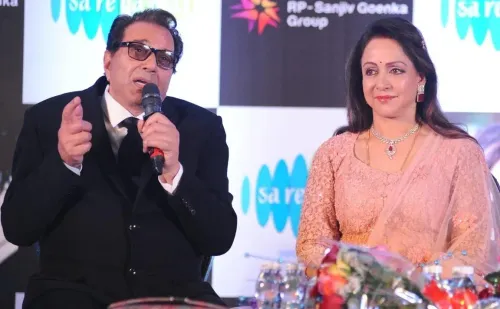
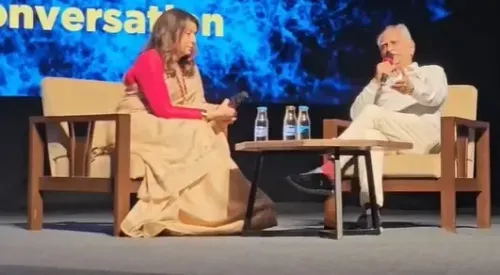
Veteran filmmaker Ramesh Sippy has credited Hema Malini's exceptional screen presence for making her women-centric roles in 'Seeta Aur Geeta' and 'Sholay' so enduring — even against the strongest male leads of Hindi cinema's golden era. Sippy made the remarks at a concert in Mumbai organised to mark 60 years of the actress celebrated as the 'Dream Girl' of Bollywood.
Sippy's Tribute to a Screen Legend
When asked how Hema Malini managed to hold her own — and often steal the scene — despite sharing the screen with towering male stars, Sippy was unequivocal. 'Why don't we say that she was so good that she was able to overshadow them,' he said. 'The spark inside an artist reflects on the screen. She did a phenomenal job.'
The concert, which celebrated six decades of Hema Malini's career, also served a philanthropic purpose: proceeds from the event were donated to the Federation of Western India Cine Employees (FWICE) for the welfare of film industry workers.
Women-Centric Roles in a Male-Dominated Era
At a time when Hindi cinema was largely structured around its male protagonists, Sippy's films carved out space for Hema Malini to lead narratives with energy and agency. 'Seeta Aur Geeta' (1972) cast her in a dual role that required physical comedy, drama, and emotional range — a demanding feat that critics and audiences embraced. 'Sholay' (1975), despite its ensemble of iconic male characters, gave her the role of Basanti, whose vivacity became one of the film's most quoted elements.
Notably, both films arrived before women-led stories became a recognised commercial category in mainstream Bollywood — making Sippy's casting choices ahead of their time, at least by the industry's own reckoning.
The Barefoot Dance and the Scorching Rocks
Hema Malini herself has previously spoken about the physical toll of filming 'Sholay' on location. Recalling the experience at a magazine cover launch marking 50 years of 'Sholay', she revealed that her mother had been deeply worried about her dancing barefoot on rocks during the peak of May's intense heat.
'My mother was so worried about me dancing on the rocks barefeet, especially considering the extreme heat,' she said. 'The sand, the mud and especially the rocks were unbearably hot. Even stepping barefoot on the stones was very painful.'
Her mother suggested placing a thin sole under her feet to ease the pain — a practical solution that lasted only briefly. 'Rameshji noticed it immediately and asked me to remove it. He explained that during the dance movements, it would be visible on screen, and that wouldn't look right,' Hema Malini recalled.
Sholay at 50 and a Career at 60
'Sholay' completed 50 years of its release last year, cementing its place as one of Indian cinema's most studied and celebrated films. The concurrent milestone of Hema Malini's 60-year career has prompted fresh retrospectives on her contribution — both as a performer who transcended the supporting-actress mould and as a cultural figure whose influence extended well beyond the screen.
As Bollywood continues its ongoing conversation about gender parity in storytelling, Sippy's remarks serve as a reminder that the architecture for powerful female roles existed long before the industry formally acknowledged it.
Point of View
But it quietly underscores a structural irony: the same industry that rarely built films around women was also producing, in Hema Malini, a performer capable of dominating them. The barefoot-on-rocks anecdote is more than nostalgia — it speaks to the physical and creative costs borne almost invisibly by actresses of that generation. As Bollywood now loudly celebrates women-led cinema, it is worth noting that the template existed 50 years ago, and it took a director willing to write the role and an actress willing to bleed for it.
NationPress
26 Oct 2026
Frequently Asked Questions
What did Ramesh Sippy say about Hema Malini's roles in Sholay and Seeta Aur Geeta?
Ramesh Sippy said Hema Malini was so talented that she was able to 'overshadow' even the strong male leads in both films. He credited the 'spark inside an artist' for making her performances so memorable.
What was the occasion for Ramesh Sippy's remarks about Hema Malini?
Sippy spoke at a concert in Mumbai organised to celebrate 60 years of Hema Malini's career as the 'Dream Girl' of Bollywood. Proceeds from the event were donated to FWICE for the welfare of film industry workers.
What did Hema Malini reveal about filming Sholay?
Hema Malini revealed that she danced barefoot on scorching rocks during the peak of May's heat while filming Sholay. Her mother suggested a thin sole for protection, but Sippy asked her to remove it immediately, saying it would be visible during dance movements on screen.
How significant are the milestones being celebrated around Sholay and Hema Malini's career?
Sholay completed 50 years of its release last year, marking a major milestone for one of Indian cinema's most iconic films. Separately, Hema Malini's career has now spanned 60 years, prompting fresh retrospectives on her contribution to Hindi cinema.
Why were Hema Malini's roles considered ahead of their time?
Films like Seeta Aur Geeta (1972) and Sholay (1975) gave Hema Malini lead-level agency and screen dominance at a time when Hindi cinema was largely structured around male protagonists. Women-centric storytelling was not yet a recognised commercial category in mainstream Bollywood.