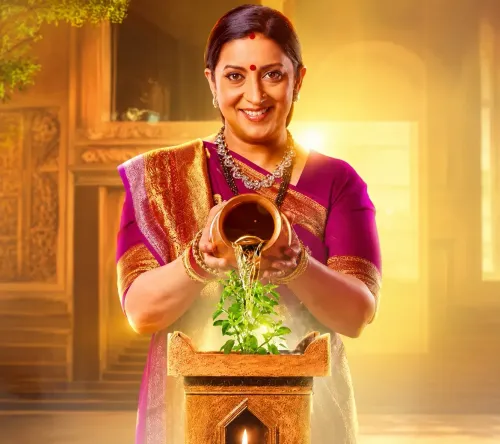
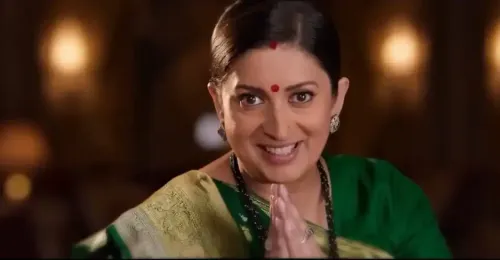
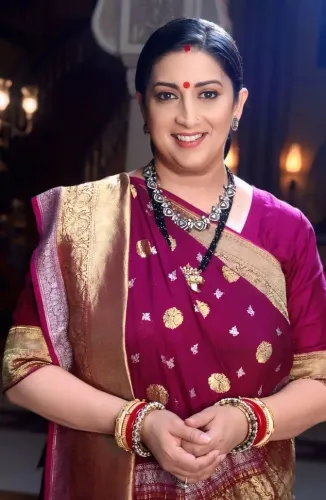
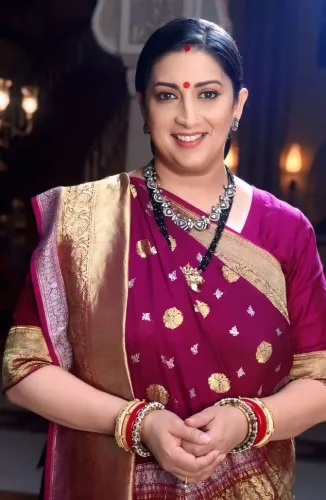
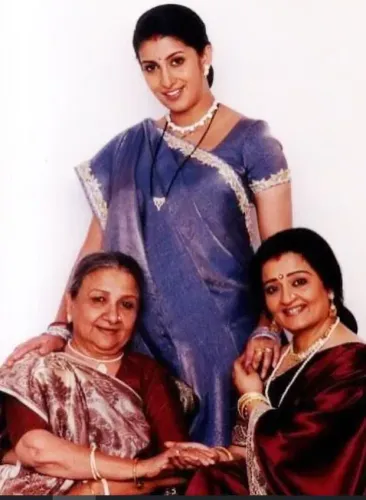
Smriti Irani on Tulsi Virani at 25: 'Stories expand what society believes is possible'
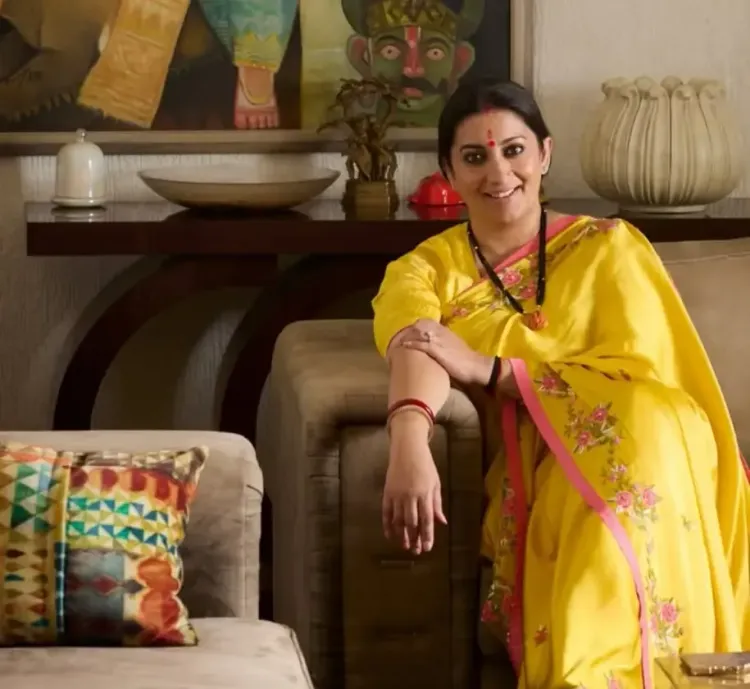
Synopsis
Twenty-five years after Tulsi Virani first appeared on Indian television, Smriti Irani has tied the character's legacy to hard academic data — a Harvard study finding that cable TV exposure shifted rural India's attitudes on women's autonomy and domestic violence. It's a rare moment where nostalgia and social-science evidence converge to make a pointed argument about storytelling's real-world power.
Key Takeaways
Smriti Irani marked 25 years of Tulsi Virani from Kyunki Saas Bhi Kabhi Bahu Thi with a reflective Instagram post on 2 October .
She credited producer Ekta Kapoor with placing women at the centre of prime-time television and changing the 'grammar of Indian entertainment'.
Irani cited Harvard University research showing that cable TV exposure in rural India was linked to improved attitudes on women's autonomy , education , and domestic violence .
She argued that 'stories don't just reflect society — sometimes, they quietly expand what society believes is possible.' Kyunki Saas Bhi Kabhi Bahu Thi first aired in 2000 and was produced by Kapoor's Balaji Telefilms .
Actress-politician Smriti Irani has reflected on the enduring cultural impact of her landmark television character Tulsi Virani from the iconic show Kyunki Saas Bhi Kabhi Bahu Thi, marking 25 years since the character first entered Indian living rooms. In an Instagram post on 2 October, Irani credited producer Ekta Kapoor with reshaping prime-time television and placing women at its centre.
The Instagram Post That Sparked the Conversation
Irani re-shared a video on Instagram highlighting academic research titled 'The Power of TV: Cable Television and Women's Status in India', conducted by economists at Harvard University. The research explored how Kapoor's television productions positively influenced women's lives in rural India — including attitudes towards women's autonomy, education, and domestic violence.
In her caption, Irani wrote: 'Twenty-five years ago, Tulsi Virani walked into India's living rooms. Neither of us knew how far she would travel. Behind her was another young woman breaking the mould — Ekta Kapoor, a young producer who trusted her instinct, put women at the heart of prime-time television and changed the grammar of Indian entertainment.'
What the Harvard Research Found
The Harvard University study referenced by Irani examined the spread of cable television in rural India and found that exposure to television was associated with shifting attitudes towards women — across markers such as autonomy, access to education, and domestic violence. Irani highlighted this research to underscore a broader argument about the social function of storytelling.
Notably, the research adds academic weight to a claim that practitioners in Indian television have long made informally: that mass-entertainment narratives can precede and enable social change, particularly in communities with limited access to formal education or advocacy.
Irani on the Role of Stories in Shifting Society
Irani articulated a clear philosophy in her post: 'Stories don't just reflect society. Sometimes, they quietly expand what society believes is possible. A character can question a boundary before someone finds the courage to question it in her own life. A young girl watching can discover a possibility she had never imagined for herself.'
She concluded with a generational note: 'Today, many of the young women who watched Tulsi are raising daughters of their own. Perhaps that is the true measure of a story. The episode ends. The years pass. A generation grows up. But somewhere, the story continues.'
Context: Ekta Kapoor's Legacy and the 25-Year Milestone
Kyunki Saas Bhi Kabhi Bahu Thi first aired in 2000 and ran for nearly a decade, becoming one of the most-watched Hindi television serials in history. Ekta Kapoor, who produced the show under Balaji Telefilms, is widely credited with reshaping Indian prime-time with female-led, family-drama narratives. The show's 25th anniversary has prompted renewed discussion about its cultural footprint — from the characters it popularised to the audiences it shaped.
Irani herself transitioned from the show to a prominent political career, serving as a Union Cabinet minister in multiple portfolios including Women and Child Development and Information and Broadcasting. Her reflections carry the dual register of an artist looking back and a policymaker who has worked on women's issues in a formal capacity.
What This Milestone Signals
The 25-year mark invites broader questions about the relationship between popular entertainment and social change in India — a country where television penetration, particularly through cable, outpaced institutional outreach in rural areas through much of the 2000s. As streaming platforms now command a growing share of Indian viewership, the conversation around representation and impact that Kyunki began is far from settled.
Point of View
She elevates a personal anniversary into a credible argument about media's social function. What's worth noting is the implicit claim: that entertainment television did for rural women's awareness what policy campaigns often could not. Whether that legacy is attributable to the show itself, the broader cable-penetration wave, or both is a question the Harvard study addresses only partially. As a former Women and Child Development minister invoking this research, Irani's framing also carries a quiet political valence — a reminder that cultural output and policy outcomes are not always as separate as institutional silos suggest.
NationPress
2 Oct 2026
Frequently Asked Questions
Why is Smriti Irani talking about Tulsi Virani now?
Irani's post marks the 25th anniversary of Kyunki Saas Bhi Kabhi Bahu Thi , which first aired in 2000. She used the occasion to reflect on the character's broader social impact, citing Harvard University research linking cable TV to changed attitudes on women's status in rural India.
What did the Harvard study on cable TV and Indian women find?
The study, titled 'The Power of TV: Cable Television and Women's Status in India', was conducted by Harvard University economists. It found that exposure to cable television in rural India was associated with shifting attitudes towards women's autonomy, education, and domestic violence.
What did Smriti Irani write about Ekta Kapoor?
Irani described Kapoor as 'a young producer who trusted her instinct, put women at the heart of prime-time television and changed the grammar of Indian entertainment.' She credited Kapoor with being the creative force behind the show's social reach.
What was Kyunki Saas Bhi Kabhi Bahu Thi and why was it significant?
Kyunki Saas Bhi Kabhi Bahu Thi was one of India's most-watched Hindi television serials, produced by Ekta Kapoor's Balaji Telefilms and first aired in 2000. It ran for nearly a decade and is widely credited with reshaping prime-time television around female-led, family-drama narratives.
What is Smriti Irani's broader argument about storytelling?
Irani argues that stories do not merely mirror society — they can 'quietly expand what society believes is possible.' She suggests that a fictional character questioning a social boundary can precede real individuals finding the courage to do the same in their own lives.