Suneeta Rao on 'Paree Hoon Main': How a 1991 album changed everything
Synopsis
Suneeta Rao's 1991 album Dhuan sat in near-obscurity for two years — until MTV arrived in India in 1993 and turned 'Paree Hoon Main' into a cultural phenomenon. Her Instagram post reveals that even the iconic bindi was an accident, and that a single Filmfare Awards performance was the moment that changed everything.
Key Takeaways
Suneeta Rao shared on Instagram how 'Paree Hoon Main' from her 1991 album Dhuan became a career-defining hit.
The song found its audience only after MTV India launched in 1993 , followed by high rotation on Channel V .
A performance at the Filmfare Awards is credited by Rao as the moment that took her to 'the world stage.' The album Dhuan , with music by Lesle Lewis , sold over 75,000 copies and earned Rao the title 'Paree of the Masses.' Rao's iconic bindi look, created by makeup artist Mickey Contractor , was reportedly an unplanned 'happy mistake.' She later collaborated with A.
Rahman on the 1994 Tamil film May Madham .
Singer Suneeta Rao has revisited the remarkable story of how her song 'Paree Hoon Main' — originally part of her 1991 album Dhuan — found its audience only after MTV arrived in India in 1993, eventually making her a household name. In a nostalgic post on Instagram, Rao shared a magazine cover from the Dhuan promo shoot and reflected on the chain of events that took her from relative obscurity to the world stage.
From Oblivion to Overnight Sensation
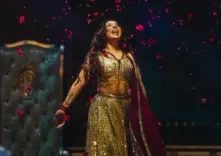
In her own words, Rao described the album's initial release as going 'into oblivion.' It was the launch of MTV India in 1993 that changed the equation. A music video for 'Paree Hoon Main' began receiving heavy airplay on MTV, followed by high rotation on rival channel Channel V. The turning point, she wrote, came with her performance of the song at the Filmfare Awards — an appearance that she credits with catapulting her 'onto the world stage.'
The Look Behind the Legend
Rao also shed light on the iconic visual identity that accompanied the song. The magazine cover she shared was shot by photographer Apu Sista, with makeup by Mickey Contractor. Rao revealed that the now-signature 'wild bindi' was, in fact, an unplanned detail — 'a happy mistake which became my style statement,' she noted. The resulting image, she said, managed to convey 'both the innocence and sensuality of the song.'
A Career Built on Indie Pop Milestones
Rao had debuted with the song 'Suneeta Senorita' in 1989. Her album Dhuan, released with Gramophone Company India and featuring music by Lesle Lewis, sold over 75,000 copies. The success of 'Paree Hoon Main' earned her the press-bestowed title 'Paree of the Masses.' Her career subsequently expanded to include collaborations with composer A. R. Rahman — notably the song 'Adi Paru Mangatha' from the 1994 Tamil film May Madham.
Staying on the Charts
Rao sustained her momentum with music videos for 'Dehka Dehka' and 'Kesariya', described as folksy, upbeat tracks that reinstated her at the top of the charts. She later released 'Chhoti Chhoti Baatein' as part of the Magnasound album A Reason To Smile, issued to mark 50 years of Indian Independence. She also featured in the group track 'Wajah Muskurane Ki' from the same album.
More than three decades on, 'Paree Hoon Main' endures as one of the defining tracks of India's indie pop era — and Rao's Instagram reflection suggests its story is still far from over.
Point of View
That live moment was the algorithm.
NationPress
29 Aug 2026
Frequently Asked Questions
What is the story behind Suneeta Rao's song 'Paree Hoon Main'?
'Paree Hoon Main' was part of Rao's 1991 album Dhuan, which initially sold modestly. The song became a massive hit after MTV India launched in 1993 and gave it heavy airplay, followed by Channel V rotation and a high-profile Filmfare Awards performance.
Why did Suneeta Rao's album Dhuan take two years to become popular?
Dhuan was released in 1991 before satellite music television had arrived in India. It was only with the launch of MTV in 1993 that the album's music video reached a wide audience, triggering its eventual success.
Who designed Suneeta Rao's iconic look in the 'Paree Hoon Main' video?
The look was created by makeup artist Mickey Contractor, with photography by Apu Sista. Rao has said the distinctive bindi was an unplanned 'happy mistake' that became her enduring style statement.
What other notable work has Suneeta Rao done?
Beyond 'Paree Hoon Main,' Rao collaborated with A. R. Rahman on 'Adi Paru Mangatha' from the 1994 Tamil film May Madham. She also charted with 'Dehka Dehka' and 'Kesariya,' and released 'Chhoti Chhoti Baatein' to mark 50 years of Indian Independence.
What title did the press give Suneeta Rao after 'Paree Hoon Main' became a hit?
The press affectionately dubbed her the 'Paree of the Masses' following the song's widespread popularity in the mid-1990s.