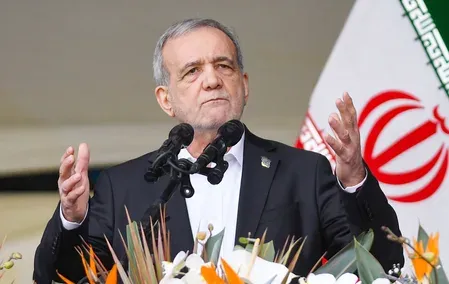
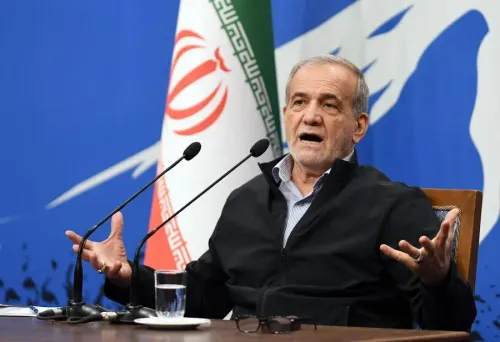
Iran's Pezeshkian open to US talks but warns of reciprocity condition
Synopsis
Iran's president says Tehran will talk — but only if Washington matches its commitments. With the June MoU's 60-day negotiation window already closed and Trump declaring 'Economic D-Day' against Iran, the gap between diplomatic rhetoric and ground reality has rarely looked wider.
Key Takeaways
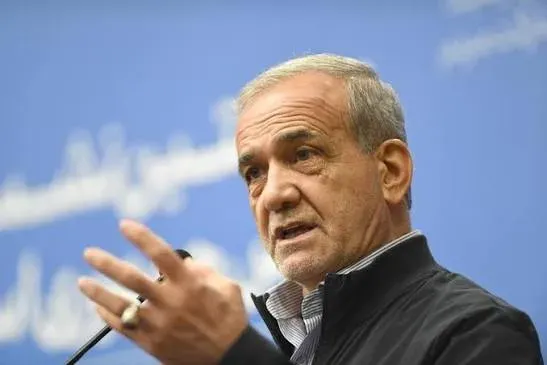
Iranian President Masoud Pezeshkian said Iran is willing to negotiate with the US but will honour commitments only if Washington does the same.
The remarks came in a televised interview on Friday night , referencing a peace MoU signed by the two countries on 18 June .
Under the MoU, the US was to lift a naval blockade, oil and petrochemical sanctions, and release Iranian frozen assets.
The 60-day window for follow-up negotiations closed on 17 August ; the fate of those talks remains unclear.
Iran exported nearly 90 million barrels of oil during the MoU implementation period, according to Pezeshkian.
US President Donald Trump announced 'the most crushing economic operation ever taken' against countries providing a lifeline to Iran, calling it 'an ECONOMIC D-DAY.'
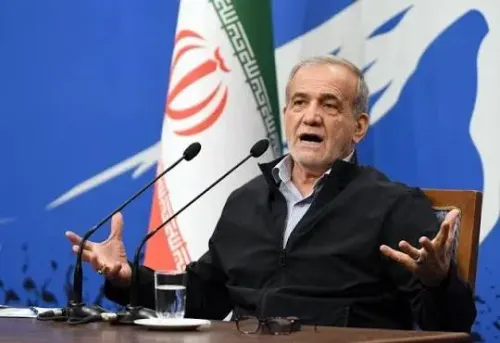
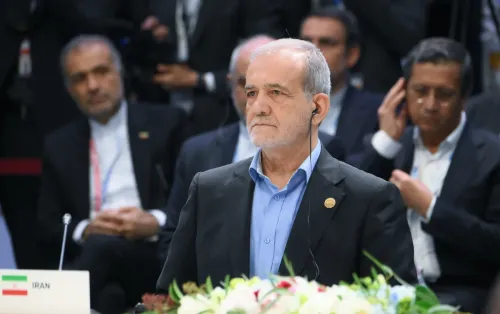
Iranian President Masoud Pezeshkian has signalled Tehran's willingness to negotiate with Washington, while making clear that Iran will honour its commitments only if the United States does the same — a cautious posture that reflects deepening mistrust between the two sides. Pezeshkian made the remarks in a televised interview broadcast on Friday night local time, responding to questions about whether ongoing diplomatic efforts could revive a peace memorandum of understanding signed by the two countries in June.
What Pezeshkian Said
'We can move forward,' the Iranian president said, acknowledging that neither side may achieve all its objectives. 'The main issue is that we must be committed to the MoU we have written. When we sit down at the negotiating table, we can talk to them,' he added. The conditional framing — progress only if matched by 'reciprocal and proportional actions' from the US — signals that Tehran is not prepared to make unilateral concessions.
The June MoU and What It Promised
Under the memorandum of understanding signed on 18 June, the United States was expected to lift a naval blockade and oil and petrochemical sanctions against Iran, and release Iranian frozen assets. The two sides were scheduled to hold follow-up negotiations within 60 days — a window that closed on 17 August — to reach a final agreement. The fate of those talks remains unclear following a reported escalation between the two countries last month. Pezeshkian noted that Iran had exported nearly 90 million barrels of oil during the period when the agreement was being implemented.
Economic Pressure Mounts at Home
Pezeshkian's diplomatic remarks came as Iran continues to grapple with serious economic pressures domestically. In a separate message on Friday marking Government Week, Iranian Supreme Leader Mojtaba Khamenei called for 'serious' attention to economic and livelihood challenges, including inflation, unemployment, and the management of prices and markets. Khamenei stressed the need for stronger economic growth, increased investment, and a production boost, describing greater reliance on domestic output as key to addressing the country's difficulties. Where domestic production cannot meet demand, imports should be used 'properly and wisely,' he said. Khamenei also warned against statements that 'lead to hopelessness and weaken national and public motivation.'
Trump's Escalating Economic Offensive
The backdrop to these remarks is an intensified US economic pressure campaign. Earlier this month, US President Donald Trump announced what he described as 'the most crushing economic operation ever taken' against any country providing a lifeline to Iran. 'This will be Economic Warfare and Isolation on an unprecedented scale,' Trump wrote in a social media post, calling the move 'an ECONOMIC D-DAY.' The announcement signals that Washington is pursuing maximum pressure even as diplomatic channels nominally remain open — a contradiction that complicates any revival of the June MoU.
What Comes Next
With the 60-day negotiation window already elapsed and both sides trading escalatory signals, the path to a final agreement appears narrow. Pezeshkian's public posture — open to dialogue but insisting on reciprocity — leaves the diplomatic door ajar without committing Tehran to any specific next step. Whether the MoU can be salvaged will likely depend on whether Washington moves to ease sanctions, a step that appears unlikely given Trump's latest economic offensive.
Point of View
Yet neither side has formally walked away. The 60-day window closing without a final agreement is a significant failure that mainstream coverage has underplayed. If the MoU collapses entirely, Iran's economic deterioration accelerates — and Khamenei's call for 'national unity' suggests the leadership is already managing that risk.
NationPress
13 Oct 2026
Frequently Asked Questions
What did Iranian President Pezeshkian say about negotiations with the US?
Pezeshkian said Iran is willing to negotiate with the United States but will honour its commitments only if the US does the same. He stated 'we can move forward' if actions are met with reciprocal and proportional responses from Washington.
What is the Iran-US MoU signed in June?
The memorandum of understanding, signed on 18 June, was a peace deal aimed at ending the war in the region on all fronts, including Lebanon. Under it, the US was to lift a naval blockade, oil and petrochemical sanctions, and release Iranian frozen assets, with follow-up negotiations to be completed within 60 days.
Has the 60-day negotiation deadline passed?
Yes. The 60-day window for follow-up talks under the June MoU closed on 17 August. The outcome of those negotiations remains unclear following reported escalation between the two sides last month.
What economic pressure is Iran facing?
Iran is dealing with inflation, unemployment, and market instability domestically. Externally, US President Donald Trump announced what he called 'the most crushing economic operation ever taken' against countries providing a lifeline to Iran, describing it as 'Economic Warfare and Isolation on an unprecedented scale.'
What did Supreme Leader Khamenei say about Iran's economy?
In a message marking Government Week on Friday, Supreme Leader Mojtaba Khamenei called for serious attention to inflation, unemployment, and price management. He emphasised stronger domestic production, greater investment, and warned against statements that weaken national motivation.