Iran-US MoU backed by Supreme Leader Khamenei, says President Pezeshkian
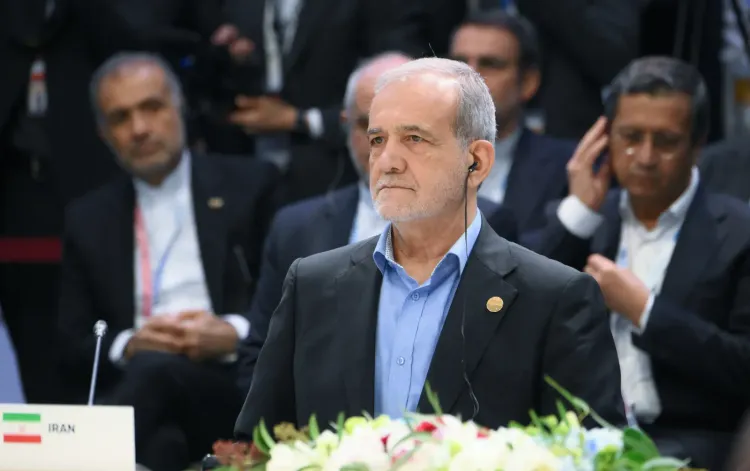
Synopsis
Iranian President Pezeshkian's confirmation that Supreme Leader Khamenei personally coordinated every stage of the Iran-US MoU removes the biggest domestic legitimacy question hanging over the deal — and signals that Tehran is entering final-status nuclear and sanctions talks with its full establishment aligned behind the process.
Key Takeaways
President Masoud Pezeshkian confirmed on 30 June that the Iran-US MoU was reached in full coordination with Supreme Leader Mojtaba Khamenei .
The Supreme National Security Council (SNSC) reviewed the final text and gave its 'decisive support.' The MoU, signed on 18 June , covers ending hostilities across the region, including Lebanon .
Formal negotiations on Iran's nuclear programme and sanctions relief have begun.
Iranian assets worth $6 billion held in Qatar are set to be released and returned to Iran.
Pezeshkian described the MoU as 'a great victory' and vowed Iran will not compromise on national interests in final talks.
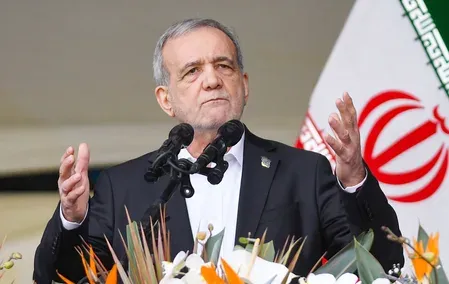
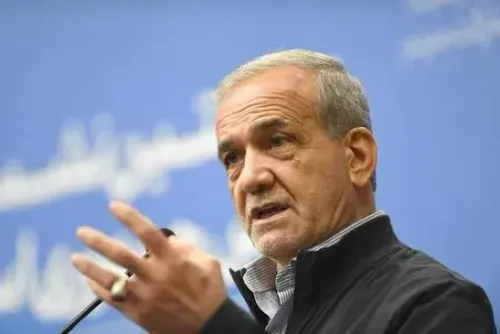
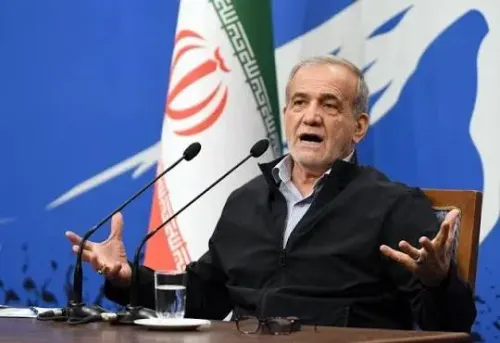
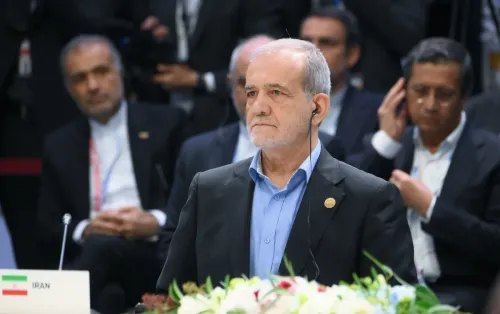
Iranian President Masoud Pezeshkian on Tuesday, 30 June confirmed that the recently signed peace Memorandum of Understanding (MoU) with the United States was reached in full coordination with Supreme Leader Mojtaba Khamenei and with the backing of the Supreme National Security Council (SNSC). The statement, made during a visit to the central Iranian province of Qom, is the most direct official confirmation yet that Iran's highest authority sanctioned the diplomatic agreement.
What Pezeshkian Said in Qom
Speaking to officials in Qom, Pezeshkian stated that 'all stages of negotiations with the United States were pursued within the framework of the establishment's macro policies, in full and continuous coordination with the supreme leader, and within the context of the country's legal mechanisms,' according to a statement published on his office's official website. He added that despite prevailing security restrictions, the agreement's final text was reviewed by relevant Iranian authorities and secured the decisive endorsement of SNSC members.
Iran's Red Lines in Final Agreement Talks
Pezeshkian was unequivocal that the MoU marks the beginning, not the end, of a diplomatic process. He stressed that Iran will 'under no circumstances back down' from its people's rights, fundamental principles, and national interests as both sides move toward a final agreement — negotiations that are expected to centre primarily on Iran's nuclear programme and sanctions relief.
Notably, he framed Iran's approach as one of rational self-determination, stating the country responds to 'unreasonable boasting and unfounded threats' with 'rational decision-making and decisive, fearless self-defence.'
The MoU and What It Covers
On 18 June, Iran and the United States signed the MoU on ending hostilities in the region across all fronts, including Lebanon. Formal negotiations toward a final agreement have since commenced. Pezeshkian described the MoU as 'a great victory' for the Iranian people.
In a separate development on Monday, Pezeshkian posted on social media platform X that reaching a mutual understanding is 'a bilateral matter,' adding that if the United States honours the MoU, Iran will 'also fulfil our obligations.' He also announced that Iranian assets worth $6 billion currently held in Qatar will be released and returned to Iran.
Significance and What Comes Next
The explicit endorsement from the Supreme Leader's office is diplomatically significant. In Iran's constitutional structure, the Supreme Leader holds ultimate authority over foreign and security policy, meaning any deal without his backing would have been unenforceable. Pezeshkian's Qom remarks serve to consolidate domestic legitimacy for the agreement ahead of what are expected to be complex and sensitive final-status negotiations. This comes amid longstanding international scrutiny of Iran's nuclear programme and years of crippling economic sanctions. The path to a final agreement remains uncertain, but both sides have now formally entered the negotiation phase.
Point of View
He insulates the deal from hardline critics who might otherwise frame it as a concession made without the Supreme Leader's consent. The real test, however, lies ahead: Iran's nuclear programme and sanctions relief are the two issues on which Washington and Tehran have historically been furthest apart. The MoU provides a framework, but frameworks have collapsed before — most notably the 2015 JCPOA, which unravelled after a unilateral US withdrawal. The $6 billion Qatar asset release adds a tangible early deliverable, but it also raises the stakes: if final talks stall, that figure becomes a political liability for both sides.
NationPress
29 Sept 2026
Frequently Asked Questions
What is the Iran-US MoU signed on 18 June?
It is a Memorandum of Understanding signed on 18 June between Iran and the United States aimed at ending hostilities across the region, including in Lebanon. The MoU sets the stage for formal negotiations on Iran's nuclear programme and sanctions relief.
Did Iran's Supreme Leader approve the MoU?
Yes. President Pezeshkian confirmed on 30 June that every stage of negotiations was conducted in full and continuous coordination with Supreme Leader Mojtaba Khamenei. The Supreme National Security Council also reviewed and endorsed the final text.
What happens to Iranian assets held in Qatar?
President Pezeshkian announced on Monday that Iranian assets worth $6 billion currently held in Qatar will be released and returned to Iran as part of the broader agreement process.
What are the next steps after the MoU?
Both sides have entered formal negotiations toward a final agreement, focusing primarily on Iran's nuclear programme and the lifting of sanctions. The MoU is a preliminary framework, not a final deal.
Why does the Supreme Leader's endorsement matter?
Under Iran's constitutional structure, the Supreme Leader holds ultimate authority over foreign and security policy. An agreement lacking his explicit backing would face serious domestic legal and political obstacles, making Pezeshkian's confirmation of Khamenei's coordination critical to the deal's durability.