Will the Health Ministry Achieve a 60% Survival Rate for Childhood Cancer by 2030?
Synopsis
Join us as we delve into the ambitious goals set by the Union government, aiming for a 60% survival rate for childhood cancer by 2030. Discover the innovative strategies and collaborations being put in place to ensure no child is left behind in this crucial fight against cancer.
Key Takeaways
Target of 60% survival rate for childhood cancer by 2030.
Innovative funding models will support cancer initiatives.
Access to care has doubled in recent years.
Collaboration among states is crucial.
Public awareness is growing through events like International Childhood Cancer Day .
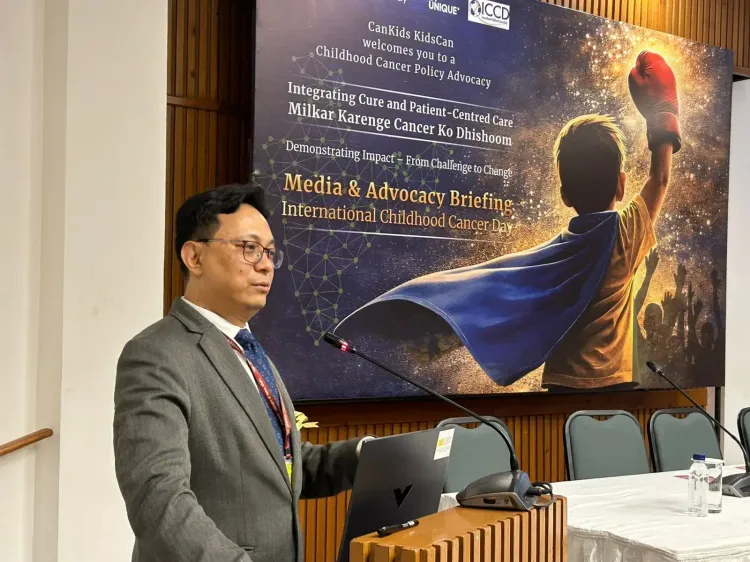
New Delhi, Feb 15 (NationPress) In a bid to enhance support for childhood cancer, Deputy Director General of Health Services L. Swasticharan announced on Sunday that the Union government has set a target of achieving a 60 percent survival rate for childhood cancer by the year 2030.
Speaking at an event commemorating International Childhood Cancer Day, observed globally on February 15, Swasticharan emphasized the government's dedication to preserving invaluable human resources, stating, “We must ensure that no child is overlooked. Every child should thrive and play a role in realizing the vision of Viksit Bharat 2047 that we aspire to.”
Swasticharan assured that the central government is committed to combating childhood cancer through innovative funding strategies. While there is currently no distinct National Policy for childhood cancer, he believes the existing framework allows for the integration of programs that provide access and financial aid under Universal Health Coverage for children battling cancer and their families.
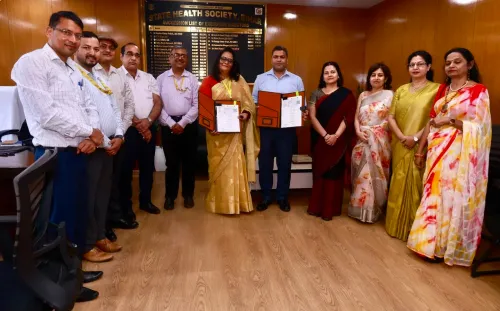
He commended the Memorandums of Understanding signed by nine states to prioritize childhood cancer and urged governments to collaborate closely with all stakeholders to ensure that no child is left behind.
Swasticharan called for stakeholders advocating for improved funding to present targeted solutions and data that could assist policymakers in enhancing diagnostics, treatment, and training focused on childhood cancers.
The event, organized by CanKids KidsCan, showcased the significant strides made in overcoming challenges. Notable progress includes a rise in access to care, which has increased from 27 percent in 2019–20 to over 54 percent in 2025, thanks to nine state governments prioritizing childhood cancer as a child health concern.
Looking ahead, the path is clear: aiming for 100 percent access, 100 percent financial protection, and a 60 percent survival rate by 2030, in alignment with national health objectives and the WHO Global Initiative for Childhood Cancer, an expert stated during a panel discussion.
Professor Sameer Bakshi, Medical Oncology at AIIMS, emphasized the importance of strengthening systems that save lives and improving survival rates among children with cancer.
He noted, “Capturing more children diagnosed with childhood cancer is a readily attainable goal as we strive to elevate the national survival rate from 50 percent to 60 percent by 2030.”
Professor Bakshi acknowledged the progression within the government system over the years, recognizing that even PM Ayushman Bharat is now involved in cancer initiatives. However, he stressed the necessity for a collective effort to amplify outcomes.
“There is a pressing need to address the disjointed nature of the system through enhanced coordination among stakeholders involved in childhood cancer and by sharing pertinent data,” he remarked.
Poonam Bagai, a member of the ICMR Central Ethics Committee on Human Research and the WHO South East Asia Region Representative for Childhood Cancer International, underscored the importance of dialogue, solutions, and policy integration, which the newly established Technical Expert Group for childhood cancer is poised to facilitate.
Bagai, who is also the Founder Chairman of CanKids KidsCan and Vice Chairman of Pallium India, stated, “We want society to understand that cancer is treatable. Despite being a low-income country, we have achieved much.”
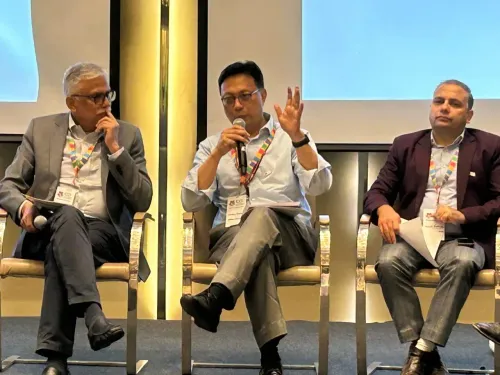
The event also featured strong endorsements for system and capital support from former IAS officer from Punjab, Karan Avtar Singh, CSR legislation advocate Nikhil Pant, and banker Piyush Gupta.
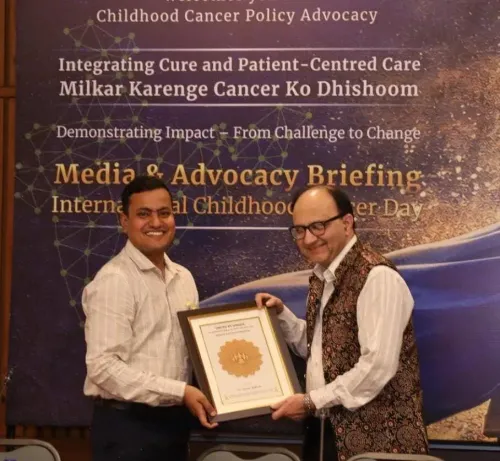
Additionally, Childhood Cancer Survivors Excellence Awards were presented to Dr. Tanveer Ahmed and Shivani Charak, an Asian Youth medalist in sports climbing.
Point of View
The emphasis on innovative funding and collaborative efforts among states signals a proactive approach to a pressing public health issue. NationPress stands by the importance of improving healthcare outcomes for all children.
NationPress
27 Sept 2026
Frequently Asked Questions
What is the survival rate goal for childhood cancer by 2030?
The Union government aims to achieve a survival rate of 60% for childhood cancer by 2030.
What initiatives are being taken to support childhood cancer?
The government is exploring innovative funding models and establishing collaborations among states to prioritize childhood cancer care.
How has access to childhood cancer care changed recently?
Access to care has significantly improved, rising from 27% in 2019–20 to over 54% in 2025.
What is the significance of International Childhood Cancer Day?
International Childhood Cancer Day, observed on February 15, aims to raise awareness and support for childhood cancer initiatives globally.
Who are some key figures advocating for childhood cancer initiatives?
Key advocates include L. Swasticharan, Professor Sameer Bakshi, and Poonam Bagai, among others.