Can AI-Based Eye Scans Revolutionize Diabetes Detection?

Synopsis
A groundbreaking AI technique developed by Indian and US researchers can detect diabetes through retinal photos, eliminating the need for blood tests. With over 100 million diabetics in India, this method could revolutionize early diagnosis and treatment, paving the way for a health care revolution.
Key Takeaways
AI technology can detect diabetes through retinal photos.
The method offers a non-invasive alternative to traditional blood tests.
It identifies both diabetes and prediabetes with high accuracy.
Over 100 million people in India live with diabetes.
Further research is needed for validation across larger populations.
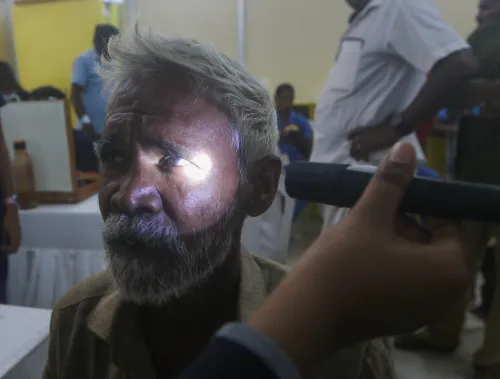
New Delhi, Jan 28 (NationPress) A collaborative team of researchers from India and the United States has introduced an innovative artificial intelligence (AI) technique that detects diabetes without needing conventional blood tests. This groundbreaking method utilizes a high-resolution photograph of the retina, the rear part of the eye, to determine if an individual has elevated blood sugar levels.
The findings, which appeared in the Diabetes Technology and Therapeutics journal, demonstrated that AI can identify subtle warning signs in the blood vessels of the eye that remain undetectable to the naked eye, enabling a distinction between those with and without diabetes, all without the need for a finger-prick blood sample.
Dr. V. Mohan, a renowned diabetologist based in Chennai and a recipient of the Padma Shri award, noted, "With over 100 million people in India living with diabetes, many remain unaware of their condition. If AI tools can facilitate early diabetes diagnosis using simple retinal photographs, they could be employed in real-time for screening in the future."
Dr. Sudeshna Sil Kar from Emory University in the United States explained that the researchers trained the AI to recognize specific shapes and patterns in veins by analyzing retinal images from individuals both with and without diabetes.
The team, which included members from Yenepoya University in Karnataka, evaluated 273 retinal images from 139 participants. They extracted 226 quantitative vessel tortuosity features separately for arteries and veins through machine vision techniques.
The AI method demonstrated a remarkable 95% sensitivity in accurately identifying diabetes through retinal photographs in the test group. It was even capable of detecting 'prediabetes', a critical stage where lifestyle changes can avert the onset of diabetes.
This non-invasive detection method could serve as an effective way to identify diabetes early, as it doesn't require costly laboratory equipment or fasting, merely a quick photo of the eye's back, according to the researchers.
However, experts have emphasized the necessity of validating these research findings across larger populations.
Point of View
I find this innovative AI-based approach to diabetes detection crucial for addressing the growing health crisis in India. The intersection of technology and healthcare can lead to significant advancements in early diagnosis and management, ultimately improving the quality of life for millions.
NationPress
3 Oct 2026
Frequently Asked Questions
How does the AI technique detect diabetes?
The AI analyzes high-resolution retinal images to identify subtle changes in blood vessels that indicate high blood sugar levels, offering a non-invasive alternative to traditional blood tests.
What is the sensitivity of the AI method?
The AI technique has shown a remarkable sensitivity of 95% in accurately identifying diabetes through retinal photographs.
Can this method detect prediabetes?
Yes, the AI technique is capable of spotting 'prediabetes', which is an important stage where lifestyle changes can help prevent diabetes.
Is this method suitable for large-scale screening?
Yes, the method is non-invasive and does not require expensive laboratory equipment, making it suitable for large-scale screening and early diagnosis.
What are the next steps for this research?
Further validation of the findings in larger populations is necessary to confirm the effectiveness and reliability of this AI-based diabetes detection method.