How is Artificial Intelligence Transforming TB and Diabetes Care in India?

Synopsis
Discover how India's government is utilizing artificial intelligence to revolutionize healthcare, particularly in the fight against tuberculosis and diabetes. The initiatives include advanced diagnostic tools that empower health workers and enhance patient care across the country.
Key Takeaways
AI is revolutionizing public health in India, particularly for TB and diabetes care.
The government has established Centers of Excellence to promote AI in healthcare.
Innovative solutions like MadhuNetrAI enable efficient screenings for Diabetic Retinopathy.
The CATB AI solution has increased TB case detection rates significantly.
Robust guidelines ensure the ethical use of AI in healthcare settings.
New Delhi, Dec 6 (NationPress) The government is harnessing artificial intelligence (AI) to instigate significant advancements in public health services, particularly in addressing the issues of tuberculosis and diabetes nationwide, according to the Union Minister of State for Health and Family Welfare, Prataprao Jadhav.
In a formal response in the Lok Sabha, Jadhav stated that the Ministry of Health has appointed AIIMS Delhi, PGIMER Chandigarh, and AIIMS Rishikesh as ‘Centre of Excellence (CoE) for Artificial Intelligence’ to foster the creation and implementation of AI-driven solutions in healthcare.
“The Ministry has introduced AI solutions such as the Clinical Decision Support System (CDSS) within e-Sanjeevani, a Diabetic Retinopathy (DR) identification tool, and the Abnormal Chest X-ray Classifier Model, among others,” he remarked.
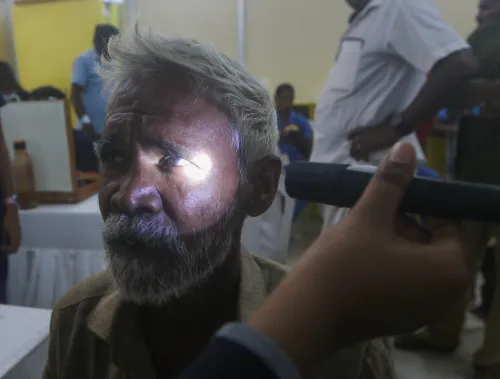
The MadhuNetrAI (DR identification solution) is an AI-based tool designed to empower non-specialist health workers to conduct screenings for Diabetic Retinopathy. It automates DR detection by analyzing retinal fundus images using AI, ensuring standardized, accessible, and efficient triage.
This solution categorizes DR into standard grades, facilitating optimal resource allocation by prioritizing urgent cases for referral to specialists.
“The solution has been deployed in 38 facilities across 11 states, assisting in the screening of over 14,000 retinal images and benefiting 7,100 patients,” Jadhav noted.
As part of the Tuberculosis elimination program, the ‘Cough against TB’ (CATB) AI solution is utilized for community screening of pulmonary TB. In areas where it has been implemented, the solution has demonstrated an additional yield of 12-16% in reported TB cases compared to traditional screening methods.
“From March 2023 to November 30, 2025, the CATB solution will have screened over 162,000 individuals,” the Minister added.
The 'Clinical Decision Support System' (CDSS) AI tool has been integrated into the national telemedicine platform, eSanjeevani, to enhance the quality of consultations by streamlining patient complaint entry and offering AI-based differential diagnosis recommendations.
“Since the CDSS integration in April 2023 until November 2025, 282 million eSanjeevani consultations have benefited from standardized data capture, ensuring uniformity across health and wellness centers,” Jadhav stated.
Strict adherence to applicable standards and government regulations, including AI Governance Guidelines by MeitY, Ethical Guidelines for Application of AI in Biomedical Research and Healthcare by ICMR, Information Technology Act 2000, Digital Personal Data Protection Act 2023, and associated rules, as well as Information Security Policy for Healthcare by the Department of Health and Family Welfare, is ensuring high operational reliability, the MoS affirmed.
Point of View
The integration of artificial intelligence in healthcare signifies a pivotal moment in addressing public health challenges. The government’s commitment to utilizing AI solutions for diseases such as tuberculosis and diabetes demonstrates a proactive approach towards enhancing healthcare accessibility and efficiency, ensuring that the nation moves towards a healthier future.
NationPress
11 Sept 2026
Frequently Asked Questions
What is the role of AI in tuberculosis screening?
AI solutions like the 'Cough against TB' (CATB) have been implemented to enhance community screening for pulmonary TB, showing a significant increase in reported cases compared to traditional methods.
How does MadhuNetrAI benefit diabetic patients?
MadhuNetrAI automates the detection of Diabetic Retinopathy, allowing non-specialist health workers to perform screenings efficiently and prioritize urgent cases for specialist referrals.
What measures are in place to ensure the reliability of AI solutions?
The government adheres to strict standards and policies, including AI Governance Guidelines, Ethical Guidelines, and data protection laws to ensure the operational reliability of AI in healthcare.
How many individuals have benefited from these AI solutions?
As of now, over 7,100 patients have benefited from AI-assisted screenings for Diabetic Retinopathy, and more than 162,000 individuals have been screened for TB using AI solutions.
What is the significance of the Clinical Decision Support System (CDSS)?
The CDSS integrated into eSanjeevani enhances consultation quality by streamlining patient data entry and providing AI-based differential diagnosis recommendations.