BBC Doc Exposes Pakistan's HIV Crisis: 331 Children Infected
Synopsis
A BBC investigative documentary has revealed that 331 children tested HIV-positive at a Punjab hospital — three times Pakistan's official count. Combined with a deadly mpox outbreak in Sindh traced to public hospitals, the findings expose a catastrophic, systemic collapse of infection control across Pakistan's healthcare system.
Key Takeaways
BBC Eye Investigations documented 331 HIV-positive children at THQ Taunsa, Punjab — more than three times the 106 cases officially reported by Pakistani authorities.
Investigators found contaminated syringes being reused , injections given through clothing, and untrained staff handling blood-contaminated vials at the hospital.
Pakistan's government response has been limited to suspending the THQ medical superintendent — criticised as a symbolic gesture without structural reform.
A concurrent mpox outbreak in Sindh has infected over 100 people , with 9 deaths and 30 lab-confirmed cases , majority traced to public healthcare facilities in Khairpur .
The Rato Dero HIV outbreak in Sindh — a near-identical crisis — preceded Taunsa and failed to trigger systemic healthcare reform, highlighting chronic institutional failure.
Pakistan allocates less than 1.5% of GDP to public health, among the lowest in South Asia, directly contributing to understaffed, under-equipped, and unaccountable public hospitals.
A damning BBC Eye Investigations documentary titled 'Who Gave Our Children HIV?' has laid bare the catastrophic collapse of Pakistan's public healthcare system, revealing that at least 331 children tested HIV-positive at the Tehsil Headquarters Hospital (THQ) in Taunsa, Punjab — more than three times the 106 infections officially acknowledged by Pakistani authorities. The findings, published in April 2025, have triggered a national debate about institutional accountability, transparency, and the chronic failure of infection control across the country's medical infrastructure.
What the BBC Investigation Uncovered
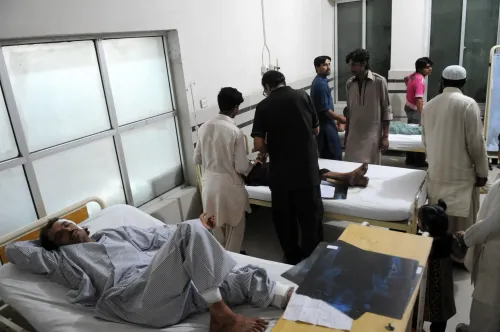
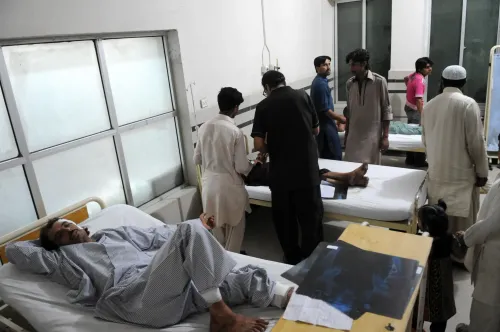
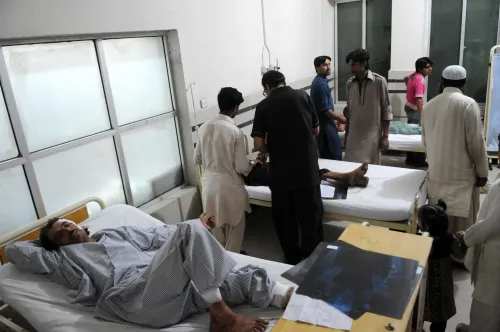
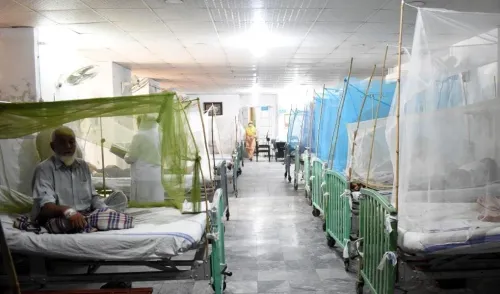
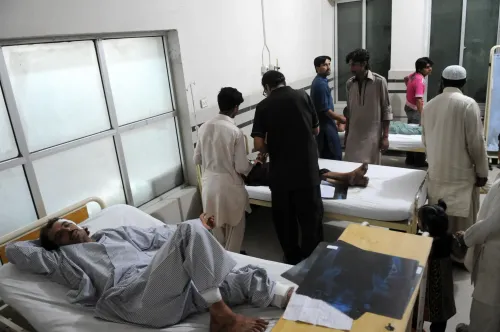
The BBC documentary catalogues a series of egregious violations at THQ Taunsa that go far beyond individual negligence. Investigators found evidence of contaminated syringes being reused, injections administered through clothing, and untrained individuals injecting children from blood-contaminated vials. Medical staff were observed handling hazardous waste with bare hands while used needles and syringes were left openly exposed.
Pakistan's Business Recorder editorial described the situation as "a picture of institutional failure in which the most basic principles of patient safety are ignored, and where children — the most vulnerable — are made to pay the price." These are not procedural lapses; they represent a wholesale abandonment of foundational medical protocols.
The gap between the official count of 106 infections and the BBC's documented 331 positive cases is particularly alarming. Experts and analysts argue that under-reporting of this scale is not accidental — it reflects a deliberate institutional tendency to minimise crises to protect reputations, even at the cost of effective public health response.
A Pattern of Systemic Failure — Not a One-Off Crisis
The Taunsa HIV outbreak is not Pakistan's first such catastrophe. The Rato Dero HIV outbreak in Sindh — which infected hundreds of children and was linked to a single doctor reusing syringes — should have served as a national wake-up call. Instead, as Business Recorder noted, it was "treated as an aberration rather than evidence of a deeper systemic malaise."
Reports of unsafe medical practices — including contaminated blood transfusions, absent sterilisation protocols, and unregulated injection practices — continue to emerge from hospitals across Punjab, Sindh, Khyber Pakhtunkhwa, and Balochistan. The recurring nature of these incidents points to chronic deficiencies in medical training, regulatory oversight, and enforcement.
Notably, the government's response to the Taunsa crisis has been limited to the suspension of the medical superintendent of THQ — a move widely criticised as symbolic. Without structural reforms, independent audits, and enforceable accountability mechanisms, such suspensions change little on the ground.
Mpox Outbreak in Sindh Compounds the Healthcare Emergency
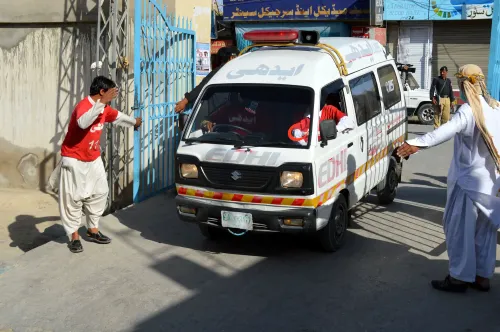
Compounding the HIV crisis, Sindh province is simultaneously grappling with a Monkeypox (mpox) outbreak that has infected over 100 people, predominantly children. Approximately 30 patients have been lab-confirmed, with nine deaths recorded. The majority of cases, concentrated in Khairpur district, have been traced back to public healthcare facilities — once again implicating hospital infection control failures as a primary transmission vector.
The Express Tribune quoted health experts stating: "The lack of infection control practices in our healthcare facilities has a major responsibility for this outbreak." The same report flagged that even qualified doctors and consultants routinely neglect proper equipment sterilisation — a culture of complacency that enables preventable disease transmission at scale.
Beyond mpox and HIV, the same systemic failures are driving annual outbreaks of Crimean Congo Hemorrhagic Fever (CCHF), Hepatitis B and C, and other blood-borne diseases. Injectable drug use and unsafe sexual practices further compound the transmission burden, but healthcare facility-linked infections remain the most preventable — and the most politically inconvenient — category.
The Accountability Gap: Who Is Responsible?
Pakistan's National Health Services Regulations and Coordination Ministry has faced sustained criticism for its inability to enforce basic infection control standards at district and tehsil-level hospitals. The devolution of health responsibilities to provinces post the 18th Constitutional Amendment has created jurisdictional ambiguity, with both federal and provincial governments deflecting accountability.
Critics argue that the political will to reform public healthcare is undermined by budgetary neglect — Pakistan allocates less than 1.5% of its GDP to public health, one of the lowest rates in South Asia. This chronic underfunding translates directly into understaffed hospitals, untrained paramedics, absent sterilisation equipment, and zero-consequence cultures where malpractice goes unpunished.
The contrast is stark: while Pakistan's military budget consistently absorbs a disproportionate share of national resources, its most vulnerable citizens — children in rural Punjab and Sindh — are being infected with HIV and mpox in facilities that lack basic syringes and sterilisation protocols.
What Needs to Happen Next
Health policy analysts and civil society organisations are calling for an independent judicial commission to investigate both the Taunsa HIV outbreak and the Sindh mpox crisis, with findings made public. They also demand mandatory infection control audits at all public hospitals, criminal accountability for malpractice, and a significant increase in provincial health budgets.
The BBC documentary's international reach has placed Pakistan's healthcare failures under global scrutiny — a reputational pressure that may, in the short term, compel more decisive government action than domestic advocacy has achieved. However, without institutional reform and sustained oversight, the next outbreak is not a question of if, but when.
Point of View
Suspends a single official as political theatre, and repeats the same failures that caused the Rato Dero catastrophe, it signals not incompetence but indifference. The real scandal is structural: a nation that spends less than 1.5% of GDP on public health while maintaining one of South Asia's largest military budgets has made a deliberate choice about whose lives matter. Until accountability is criminal, not ceremonial, Pakistan's most vulnerable children will continue to pay for that choice with their health — and their lives.
NationPress
24 Sept 2026
Frequently Asked Questions
How many children were infected with HIV at the Taunsa hospital in Pakistan?
According to the BBC Eye Investigations documentary, 331 children tested HIV-positive at the Tehsil Headquarters Hospital (THQ) in Taunsa, Punjab . Pakistani authorities had officially reported only 106 infections , raising serious concerns about under-reporting and transparency.
What unsafe practices were found at THQ Taunsa hospital?
BBC investigators documented the reuse of contaminated syringes , injections administered through clothing, untrained staff injecting children from blood-contaminated vials, and medical waste being handled with bare hands. These practices represent fundamental violations of patient safety protocols.
Is the Taunsa HIV outbreak the first such incident in Pakistan?
No. A similar HIV outbreak in Rato Dero, Sindh — linked to a doctor reusing syringes — preceded the Taunsa crisis and was widely reported. Health experts say the Rato Dero outbreak should have prompted systemic reform but was instead treated as an isolated incident.
What is the mpox situation in Sindh, Pakistan?
Over 100 people, mostly children , have been infected with Monkeypox (mpox) in Sindh, with 30 lab-confirmed cases and 9 deaths . The majority of cases in Khairpur district have been traced back to public healthcare facilities, again implicating poor infection control.
What action has Pakistan's government taken in response to the Taunsa HIV outbreak?
The government suspended the medical superintendent of THQ Taunsa , a move widely criticised as symbolic. Critics and health experts argue that without structural reforms, independent audits, and criminal accountability for malpractice, such suspensions will have no meaningful impact.