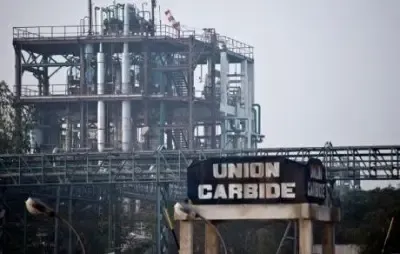
Madhya Pradesh High Court Orders Government to Formulate Remediation Plan for Union Carbide Contamination
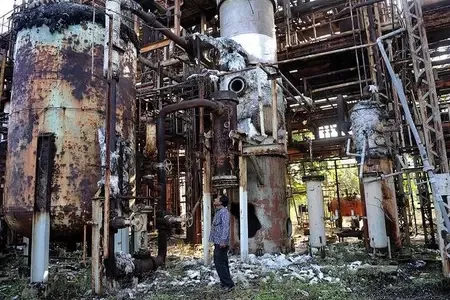
Synopsis
The Madhya Pradesh High Court has mandated the state government to devise a remediation strategy for the contaminated soil and groundwater surrounding the abandoned Union Carbide factory by March 23. This move aims to address the ongoing environmental issues stemming from the Bhopal Gas Tragedy.
Key Takeaways
Madhya Pradesh High Court orders a remediation plan for the Union Carbide site.
The state government is collaborating with specialized agencies for contamination studies.
Deadline for the submission of the remediation strategy is March 23 .
The site will be used for creating a memorial and other purposes.
Incineration of toxic waste was completed in June 2025.
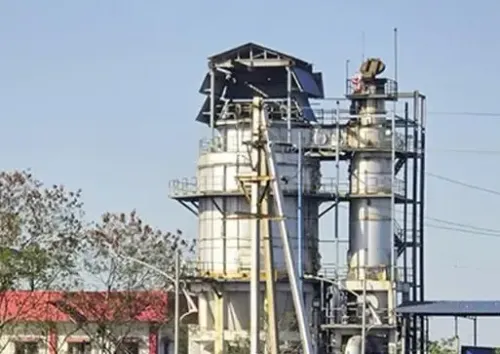
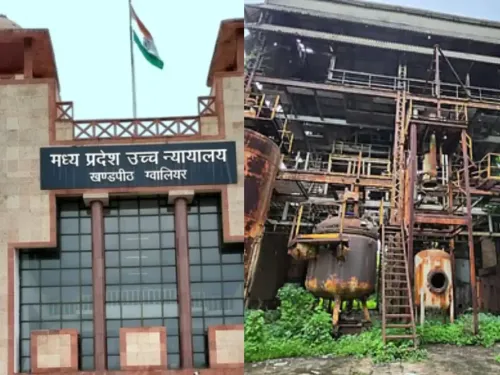
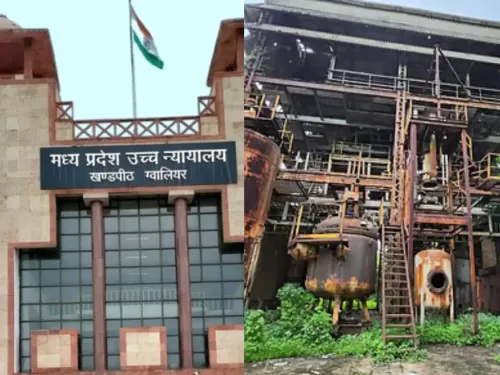
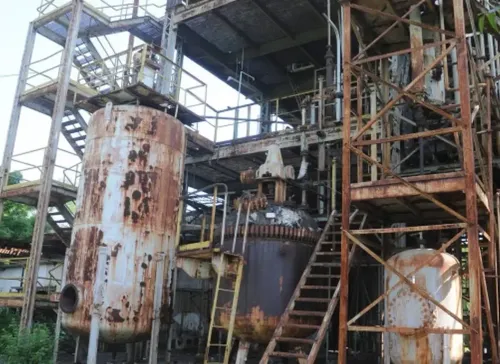
Bhopal, March 13 (NationPress) - The Madhya Pradesh High Court has instructed the state government to present a comprehensive strategy for evaluating and remedying the contaminated soil and groundwater at the abandoned Union Carbide factory site in Bhopal by March 23.
This directive was issued by a bench comprising Justices Vivek Kumar Singh and Ajay Kumar Nirankari while they were reviewing a petition from an NGO advocating for Bhopal Gas Tragedy victims, which called for the cleanup of polluted soil and groundwater surrounding the Union Carbide facility along with a structured detoxification plan.
In response to the petition, the state government submitted an affidavit indicating that plans for remediation, including the evaluation of contaminated soil and groundwater and the procurement process for cleanup efforts, were in progress but requested further time.
After considering arguments from both parties, the bench scheduled the next hearing for March 23.
The affidavit, approved by Deputy Secretary Krishna Kant Dube from the Bhopal Gas Tragedy Relief and Rehabilitation Department, stated that a meeting occurred on March 5 to comply with directives from the Oversight Committee/Task Force set up by the Supreme Court in 2023.
"During the meeting chaired by the Additional Chief Secretary, discussions included the assessment of soil and groundwater contamination in and around the former UCIL site, as well as plans for detoxification and time-sensitive remediation," it noted.
The Oversight Committee had recommended that the Madhya Pradesh government engage in new studies with the support of NEERI and NGRI to measure soil and groundwater contamination, including mercury leaks and groundwater disposal issues. The state has submitted an action plan involving the identification and selection of agencies to conduct this study.
Furthermore, the affidavit revealed that the state government intends to utilize 87.74 acres of the Union Carbide factory site for various initiatives, including the creation of a memorial, and will draft an action plan for this endeavor.
The hazardous waste from the now-defunct Union Carbide factory, amounting to 337 tonnes, was relocated from Bhopal to the Pithampur Industrial site on January 1, 2025, and was entirely incinerated at a private waste treatment facility by the end of June 2025.
This waste disposal took place over 40 years after the Bhopal Gas Tragedy on December 2-3, 1984, which resulted in the tragic loss of over 5,000 lives. However, the challenge of dealing with the contaminated soil at the factory site and three nearby ponds persists for the authorities.
Point of View
The directive from the Madhya Pradesh High Court signifies a critical step towards addressing the environmental ramifications of the Bhopal Gas Tragedy. The court's insistence on a structured remediation plan reflects a growing recognition of the need for accountability and action in restoring the affected areas.
NationPress
26 Sept 2026
Frequently Asked Questions
What is the deadline for the remediation plan?
The Madhya Pradesh High Court has set March 23 as the deadline for the state government to submit the detailed remediation plan.
What issues are being addressed around the Union Carbide factory?
The issues include the assessment and remediation of contaminated soil and groundwater in the vicinity of the former Union Carbide factory.
Who is involved in the remediation process?
The Madhya Pradesh government is collaborating with agencies like NEERI and NGRI for studies on contamination levels.
What was the outcome of the toxic waste disposal?
The toxic waste from the Union Carbide factory was successfully incinerated by June 2025, 40 years after the Bhopal Gas Tragedy.
What future plans exist for the factory site?
The state government plans to utilize 87.74 acres of the site for various purposes, including establishing a memorial.