DCCS 2026: Delhi Critical Care Symposium trains ICU doctors in ventilation amid rising pollution
Synopsis
As Delhi-NCR's AQI spikes and respiratory ICU admissions climb, the 21st Delhi Critical Care Symposium is running five specialist workshops — covering mechanical ventilation, bronchoscopy, ECMO, and hemodynamics — to rapidly upskill young intensivists who are on the front line of one of the region's worst seasonal health crises.
Key Takeaways
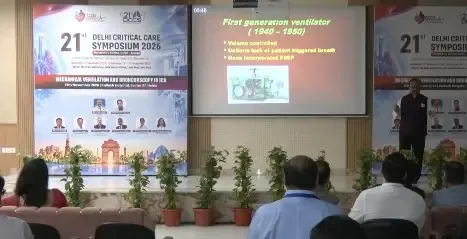
The 21st Delhi Critical Care Symposium (DCCS 2026) is being held from 13 to 15 November 2026 at Kailash Hospital, Noida .
The event is organised by the Society of Critical Care Medicine (SCCM) Delhi–Noida Chapter under the theme 'Critical Care Redefined: Evidence, Expertise, Excellence' .
Workshops cover mechanical ventilation , bronchoscopy , nursing excellence , ultrasound , hemodynamics , and ECMO .
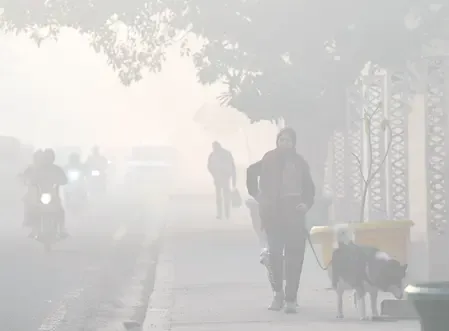
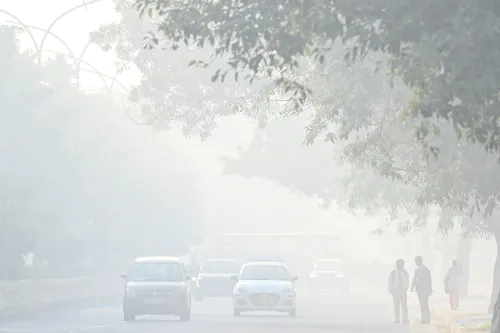
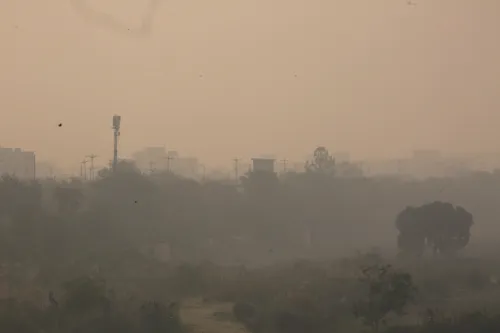
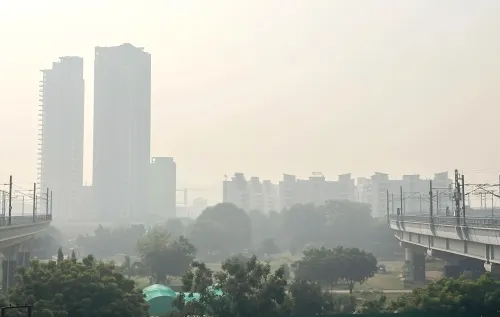
Organisers directly linked the symposium's urgency to the rising AQI in Delhi-NCR, which is driving increased respiratory ICU admissions.
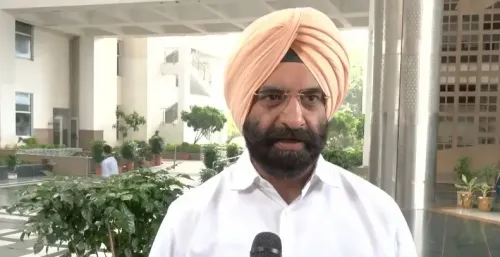
BJP MP and Kailash Hospital CMD Mahesh Sharma attended the event.
Target audience is young ICU doctors across Delhi-NCR who lack hands-on training in artificial respiratory support.
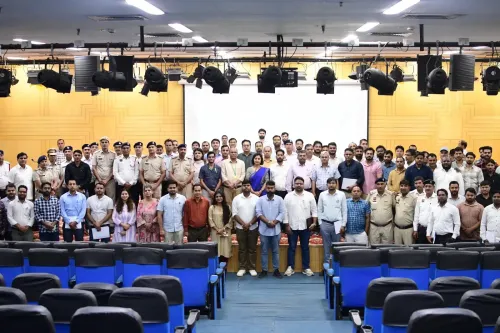
The 21st Delhi Critical Care Symposium (DCCS 2026), running from 13 to 15 November 2026 at Kailash Hospital, Noida, is bringing together intensivists and young medical professionals from across the Delhi-NCR region to build hands-on competency in mechanical ventilation and bronchoscopy — skills increasingly critical as worsening air quality drives a surge in respiratory admissions to intensive care units. The three-day event is organised by the Society of Critical Care Medicine (SCCM) Delhi–Noida Chapter under the theme 'Critical Care Redefined: Evidence, Expertise, Excellence'.
Focus on Mechanical Ventilation and Bronchoscopy
Dr. Nandani Gulati, Course Director, said the workshop is specifically designed for students and budding doctors working in ICUs across the region. 'Today's workshop focuses on mechanical ventilation and bronchoscopy. We have esteemed faculty members from all major hospitals in Delhi-NCR who are experts in these subjects,' she said. The format combines lectures with hands-on skill stations to give participants practical exposure, not just classroom theory.
Dr. Vineeta Goyal, also serving as Course Director, described one session as a one-day programme on 'integrating humans and machines,' in which participants from across Delhi-NCR learn how to synchronise ventilator settings with clinical decision-making. 'Hopefully, the students will gain from it,' she added.
Pollution Crisis Driving the Urgency
Dr. Anil Gurnani, Patron of the symposium, directly linked the event's timing to the deteriorating air quality index (AQI) across Delhi-NCR. 'The rising AQI across Delhi-NCR and surrounding areas is a major reason why people are facing respiratory diseases and breathing difficulties, and many patients are being admitted to hospitals and ICUs,' he said. 'Since AQI is high, people are facing more number of respiratory illnesses. We want to teach the participants how to deal with those by providing artificial respiratory support.'
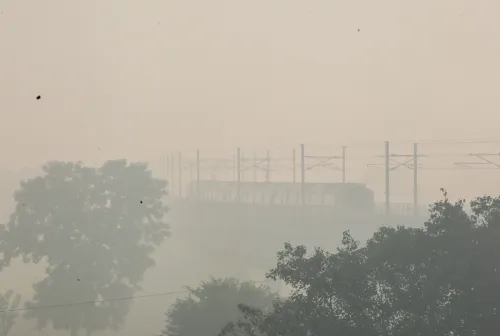
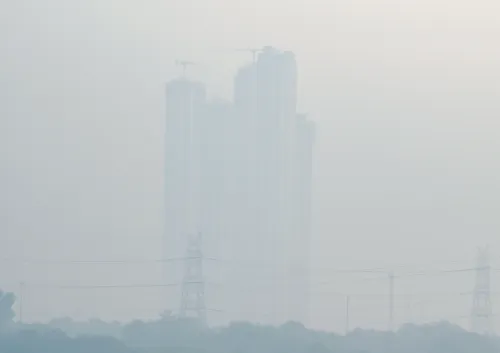
This context lends the symposium particular relevance: the Delhi-NCR region routinely records some of the worst air quality readings in the world during the winter months of October through January, placing sustained pressure on ICU infrastructure and staff capacity.
Five Parallel Workshops Across Three Days
Dr. Amit Goel, Organising Secretary, said the symposium runs five concurrent workshops covering nursing excellence, mechanical ventilation, ultrasound, hemodynamics, and ECMO (extracorporeal membrane oxygenation). 'This is a very well-thought-out strategy for all the doctors who are participating,' he said, adding that the design ensures participants acquire skills to manage critically ill patients across a range of scenarios.
Dr. Prashant Saxena, Mentor, emphasised that the primary target audience is young intensivists who have limited exposure to mechanical ventilation in their training. 'We have got all the esteemed teachers from across Delhi-NCR who are here to teach the students, and I am sure this is going to be a great success,' he said.
Notable Attendance and Institutional Backing
Bharatiya Janata Party (BJP) Member of Parliament and Kailash Hospital Chief Managing Director Mahesh Sharma also attended the symposium, underscoring the institutional profile of the host venue. The hospital's location in Noida, Uttar Pradesh places it at the heart of the NCR's secondary healthcare belt, which absorbs significant overflow from Delhi's overstretched public hospitals during high-pollution periods.
What Comes Next
With DCCS 2026 running through 15 November 2026, organising faculty expect the remaining sessions on hemodynamics and ECMO to draw the largest specialist interest. The symposium's annual format means findings and training protocols demonstrated this year are likely to inform ICU practices across NCR hospitals in the months ahead — a cycle that takes on added weight as pollution forecasts for the remainder of November remain grim.
Point of View
Not just a seasonal surge in patients. The pollution angle is real but risks overshadowing a deeper systemic question — why are ECMO and hemodynamics being taught at a three-day symposium rather than embedded in residency curricula? Until critical care training is institutionalised in medical education rather than left to annual workshops, Delhi's ICUs will remain perpetually under-prepared for the crises that come every winter without fail.
NationPress
14 Nov 2026
Frequently Asked Questions
What is the 21st Delhi Critical Care Symposium (DCCS 2026)?
DCCS 2026 is a three-day medical education event organised by the Society of Critical Care Medicine (SCCM) Delhi–Noida Chapter, running from 13 to 15 November 2026 at Kailash Hospital in Noida. It features lectures and hands-on workshops to train young ICU doctors in mechanical ventilation, bronchoscopy, hemodynamics, ECMO, and related skills.
Why is mechanical ventilation training the focus of DCCS 2026?
Organisers say many young intensive care doctors lack practical exposure to mechanical ventilation, which is a core skill for managing critically ill respiratory patients. With Delhi-NCR's air quality worsening each winter and ICU admissions rising, the need for trained intensivists has become more urgent.
How does Delhi-NCR pollution relate to this medical symposium?
Rising AQI levels across Delhi-NCR are directly increasing the number of patients admitted to hospitals and ICUs with respiratory diseases and breathing difficulties, many of whom require artificial respiratory support. Symposium patron Dr. Anil Gurnani cited this as a central reason for the event's focus on ventilation training.
What workshops are being conducted at DCCS 2026?
Five concurrent workshops are running across the three days: nursing excellence, mechanical ventilation, ultrasound, hemodynamics, and ECMO (extracorporeal membrane oxygenation). Each combines lectures with skill stations to give participants practical, not just theoretical, training.
Who is attending and organising DCCS 2026?
The event is organised by the SCCM Delhi–Noida Chapter at Kailash Hospital, Noida. Faculty are drawn from major hospitals across Delhi-NCR. BJP MP and Kailash Hospital Chief Managing Director Mahesh Sharma also attended the symposium.