Did Defence Secretary Visit the Surgical Eye Camp in Bhuj, Helping Over 200 People Regain Their Vision?
Synopsis
In a remarkable initiative, Defence Secretary Rajesh Kumar Singh visited the Surgical Eye Camp in Bhuj, where over 200 individuals regained their vision. This outreach program, part of the Indian Army’s commitment to healthcare, serves a crucial role in improving the lives of those in remote border areas.
Key Takeaways
Over 200 individuals regained vision through the initiative.
The camp was held from February 3 to 5 .
Collaboration between the Indian Army and Army Hospital (R&R) .
Comprehensive eye screenings were conducted.
Focus on providing care closer to patients' homes.
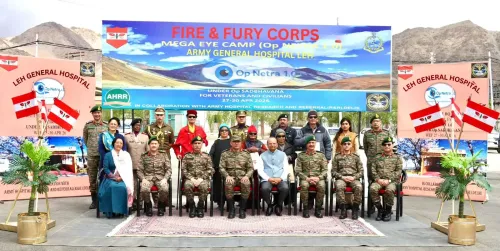
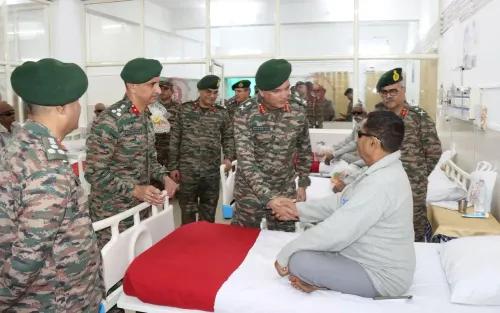
On February 5, Bhuj (NationPress) saw a significant event as Defence Secretary Rajesh Kumar Singh toured the Surgical Eye Camp at the Military Hospital, concluding a three-day outreach initiative that aided over 200 individuals from the border district of Kutch in reclaiming their vision.
This camp, held from February 3 to 5, was organized under the auspices of the Indian Army’s Southern Command in partnership with the Army Hospital (Research & Referral) in New Delhi.
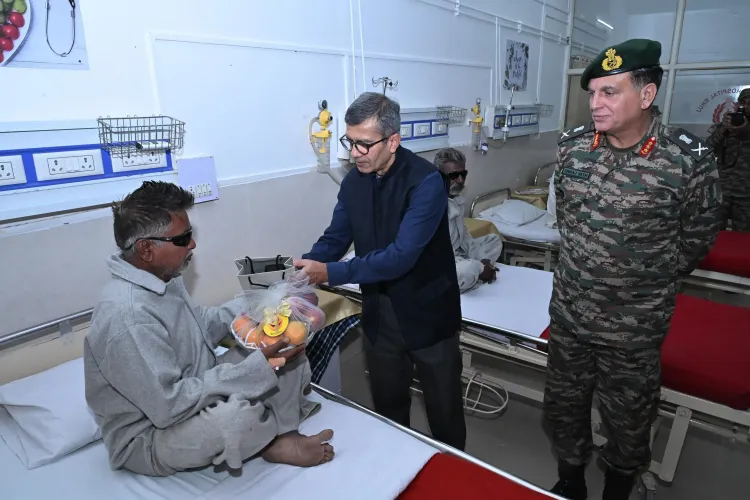
During his visit, Lt Gen Dhiraj Seth, General Officer Commanding-in-Chief of the Southern Command, accompanied the Defence Secretary.
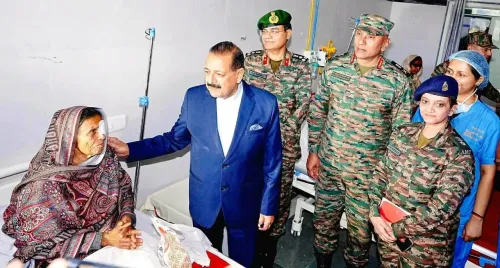
Singh took time to engage with patients in the post-operative wards, inquiring about their recovery and personally distributing medications and spectacles to various beneficiaries.
Recognizing the dedication of the medical staff, Singh honored Brigadier Sanjay Kumar Mishra, Consultant and Head of the Department of Ophthalmology at Army Hospital (R&R), along with the surgical team for their exceptional efforts in delivering advanced eye care under challenging conditions.
The Defence Secretary characterized the camp as “a remarkable demonstration of the Indian Army’s commitment to the welfare of veterans and military-civil collaboration,” emphasizing that such programs substantially enhance the quality of life for individuals residing in isolated and border areas.
The outreach program aimed to assist nearly 3,000 individuals across the Kutch district, including veterans, their families, and civilians from over 120 villages in the Bhuj taluka, notably from remote border areas like Lakhpat, Narayan Sarovar, and Dayapar.
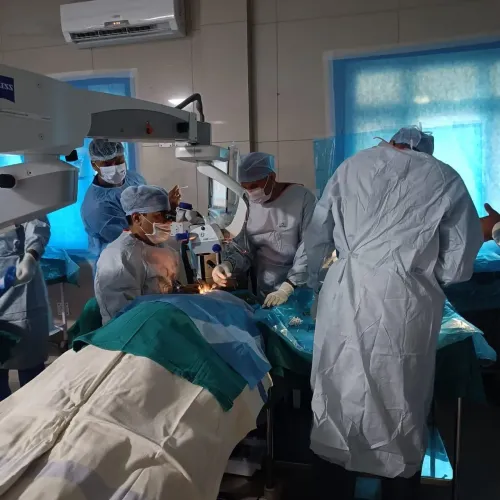
In addition to surgeries, thorough eye screenings were performed to identify and proactively address various ophthalmic conditions.
Officials confirmed that all surgical operations were executed with cutting-edge ophthalmic technology and high-quality intraocular lenses, maintaining strict compliance with clinical and safety protocols.
The primary aim was to offer specialized corrective care closer to patients' homes, minimizing the necessity for long journeys to receive treatment. Lt Gen Dhiraj Seth also visited the camp, interacting with patients and medical personnel, and praised the professionalism and commitment of the involved teams.
He remarked on the essential role such medical outreach programs play in bridging healthcare gaps in geographically isolated and strategically significant areas.
The Indian Army highlighted that this initiative is part of its ongoing mission to provide quality healthcare services to underserved communities in border regions.
By merging specialized medical knowledge with local outreach, the Army seeks to enhance access to essential health services while reinforcing its enduring relationship with veteran and civilian populations in frontier regions.
Point of View
The outreach conducted by the Indian Army exemplifies an essential commitment to public welfare, particularly in remote areas. The proactive measures taken to address healthcare disparities reflect a broader dedication to serving both veterans and civilians. Such initiatives are vital in ensuring equitable access to healthcare services across diverse regions.
NationPress
23 Sept 2026
Frequently Asked Questions
What was the purpose of the Surgical Eye Camp in Bhuj?
The Surgical Eye Camp aimed to provide advanced eye care and restore vision to individuals in the Kutch district, focusing on veterans, their dependents, and civilians from remote areas.
How many people benefited from the eye camp?
Over 200 individuals regained their vision as a result of the outreach program conducted at the Surgical Eye Camp.
Who organized the Surgical Eye Camp?
The camp was organized by the Indian Army's Southern Command in collaboration with the Army Hospital (Research & Referral), New Delhi.
What types of services were provided at the eye camp?
The camp offered surgical procedures, comprehensive eye screenings, and the distribution of medications and spectacles to beneficiaries.
What is the significance of this outreach program?
This outreach program underscores the Indian Army's commitment to veterans' welfare and addressing healthcare needs in geographically isolated regions.