Is the Delhi HC Right to Quash NMC Migration Ban for Visually Impaired Students?
Synopsis
The Delhi High Court's recent ruling challenges the NMC's strict migration ban on medical students, particularly benefiting those with disabilities. This landmark decision underscores the need for compassion in policy-making, ensuring that students facing exceptional circumstances have a fair chance at educational opportunities.
Key Takeaways
The Delhi High Court has quashed the NMC's migration ban for medical students.
The ruling emphasizes the importance of considering exceptional cases, particularly for those with disabilities.
The court highlighted that educational policies should not hinder legitimate rights.
It calls for the NMC to develop a new policy for migration in deserving cases.
The decision aligns with the Rights of Persons with Disabilities Act, 2016.
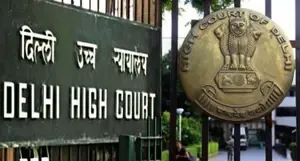
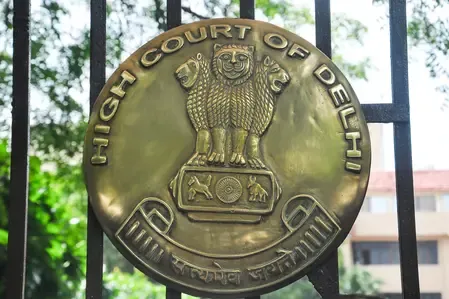
New Delhi, Feb 5 (NationPress) The Delhi High Court has overturned a clause in the Graduate Medical Education Regulations, 2023, that imposed a total ban on the migration of medical students from one institution to another. The court deemed this restriction manifestly unreasonable and arbitrary, thus violating Article 14 of the Indian Constitution.
A division bench comprising Chief Justice (CJ) Devendra Kumar Upadhyaya and Justice Tejas Karia stated that an absolute prohibition on migration does not consider exceptional and deserving cases, especially concerning individuals with disabilities. Such a ban cannot be defended merely on the basis of administrative convenience or concerns about potential misuse.
The CJ Upadhyaya-led bench was addressing a petition from a medical student suffering from 40 percent visual impairment, who requested to migrate to a medical college in Delhi due to worsening eye issues exacerbated by the harsh climatic conditions in Rajasthan’s Barmer.
The National Medical Commission (NMC) had previously denied his migration request from the Government Medical College, Barmer, invoking Regulation 18 of the Graduate Medical Education Regulations, 2023.
In nullifying the contested regulation, the Delhi High Court remarked that a complete ban on student transfers, which might be necessary in various situations—including the current case—cannot be considered reasonable.
The bench asserted, “This prohibition is manifestly unreasonable and arbitrary,” and highlighted that the regulation fails to allow even the most deserving students, such as those with disabilities, to seek transfers in alignment with the statutory requirements of the Rights of Persons with Disabilities Act, 2016.
The court noted the petitioner's claim that he was forced to enroll in Barmer under less favorable conditions after being denied a fair opportunity to participate in the initial counseling rounds designated for the PwD category.
Moreover, the harsh climate in Barmer had worsened his eye condition, necessitating treatment from AIIMS in New Delhi.
The court rejected the NMC’s argument that migration provisions were eliminated due to potential misuse, stating that “the mere possibility of abuse cannot be used to deny legitimate rights.”
Emphasizing the obligations under the Persons with Disabilities Act, 2016, the bench remarked that provisions like “reasonable accommodation” must not remain mere decor but must be actively enforced by all public authorities, including the Commission.
In declaring Regulation 18 of the Graduate Medical Education Regulations, 2023, as ultra vires and invalid, the Delhi High Court annulled the NMC’s December 30, 2024, order that rejected the migration request. The court mandated the NMC to reconsider the petitioner's request for transfer to the University College of Medical Sciences, New Delhi, within three weeks, and directed the Commission to develop a proper policy allowing migration in exceptional cases with necessary safeguards.
Point of View
Especially for students with disabilities. By quashing the NMC's stringent regulations, the court emphasizes a compassionate approach to policy-making, aligning with the principles of equality enshrined in the Constitution.
NationPress
24 Sept 2026
Frequently Asked Questions
What did the Delhi High Court rule regarding the NMC's migration ban?
The Delhi High Court ruled that the NMC's ban on migration for medical students was manifestly unreasonable and arbitrary , violating Article 14 of the Constitution.
Why was the migration request denied initially?
The migration request was denied based on Regulation 18 of the Graduate Medical Education Regulations, 2023, which imposed a blanket ban on student transfers.
What are the implications of this ruling for students with disabilities?
The ruling allows students with disabilities to seek transfers in cases of exceptional circumstances, ensuring their educational needs are met.
How does this decision align with the Rights of Persons with Disabilities Act?
The decision reinforces the statutory mandate under the Rights of Persons with Disabilities Act, 2016, emphasizing that reasonable accommodations must be provided.
What did the court say about potential misuse of migration provisions?
The court stated that the mere possibility of abuse cannot justify denying legitimate rights to students, affirming the need for fair policies.