Gujarat Malaria Cases Drop 92% in a Decade, Hits Historic Low
Synopsis
Gujarat has slashed malaria cases by 92% over 10 years, achieving a positivity rate below 1 per 1,000 population across all districts. The state has jumped to Category-1 elimination status — a public health victory built on free treatment, biological mosquito control, and mass surveillance that other high-burden Indian states should urgently replicate.
Key Takeaways
Gujarat recorded a 92 per cent decline in malaria cases over the past 10 years, confirmed by the Gujarat Health Department on April 25, 2025 .
The state's malaria positivity rate has dropped below 1 per 1,000 population across all districts and municipal corporations.
In 2025, more than 1.81 lakh fever patients were tested, with all positive cases receiving prompt, free treatment at government health centres.
Gujarat has been upgraded from Category-2 to Category-1 under India's National Framework for Malaria Elimination.
Key interventions included blood screening of migrant labourers, larvivorous fish deployment, anti-larval operations , and house-to-house surveillance.
Awareness campaigns were conducted via schools, colleges, social media, television, and FM radio to promote preventive practices among citizens.
Gujarat has achieved a landmark public health milestone, recording a 92 per cent decline in malaria cases over the past decade, the Gujarat State Health Department announced on Saturday, April 25, 2025 — coinciding with World Malaria Day. The dramatic fall, driven by relentless surveillance, community outreach, and free treatment at government centres, has pushed the state from Category-2 to Category-1 under India's national malaria elimination framework.
Gujarat's Malaria Elimination Journey
The World Health Organisation (WHO) observes World Malaria Day annually on April 25 to galvanise global action against one of humanity's oldest infectious diseases. This year's theme — Driven to End Malaria: Now We Can. Now We Must — underscores the urgency of pushing elimination efforts across endemic regions, including Indian states that have historically struggled with the disease.
Gujarat's achievement is particularly significant given its large migrant labour population and extensive construction activity — both traditionally high-risk factors for malaria transmission. The state's ability to contain the disease despite these structural challenges signals a robust and adaptive public health system.
Key Data and Ground-Level Interventions
In 2025 alone, more than 1.81 lakh fever patients were tested across the state. The malaria positivity rate has fallen below one per 1,000 population in every district and municipal corporation — a threshold that qualifies regions for elimination status under national guidelines.
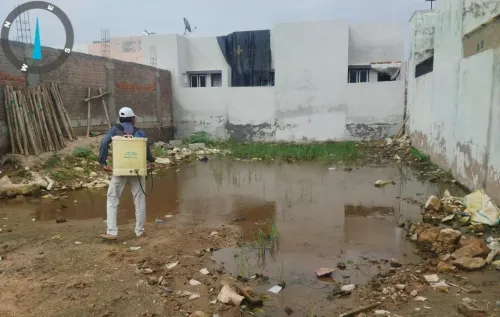
The Health Department deployed a multi-pronged strategy including house-to-house fever surveillance, anti-larval operations, inspection of construction sites, and blood screening of migrant labourers — a critical intervention given that labourers moving between states are among the most vulnerable to importing malaria cases.
Authorities also introduced larvivorous fish in stagnant water bodies — a biological, chemical-free method of mosquito control that has gained traction globally as an eco-friendly alternative to pesticide spraying.
Diagnosis and treatment of malaria remain entirely free of cost at all government health facilities across Gujarat, removing financial barriers that often delay care in rural and tribal belts.
What Is Malaria and Why It Still Matters
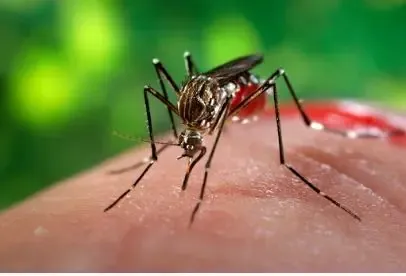
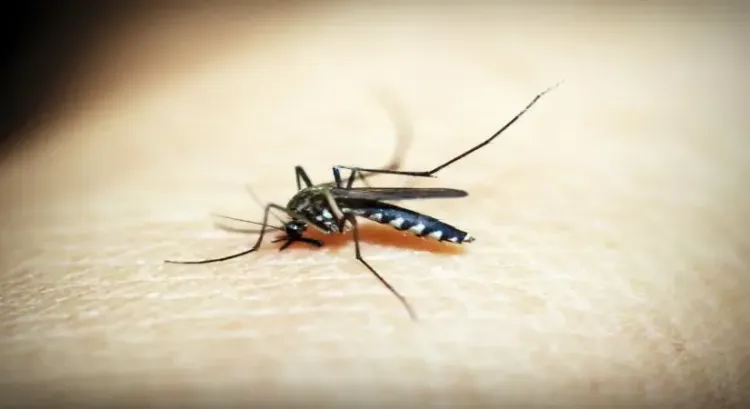
Malaria is caused by the Plasmodium parasite, transmitted through the bite of infected female Anopheles mosquitoes that breed in clean, stagnant water. Symptoms include severe chills, high fever with shivering, headache, body aches, nausea, vomiting, and profuse sweating once the fever breaks — a cyclical pattern that can be mistaken for other illnesses, delaying diagnosis.
Health officials emphasised that the only way to prevent malaria is early diagnosis and complete treatment. Incomplete treatment is a major driver of drug resistance, making adherence to full treatment courses a public health priority.
Awareness Campaigns and Community Mobilisation
Beyond clinical interventions, the Gujarat Health Department ran extensive awareness campaigns through public exhibitions, school and college programmes, rallies, social media, television, and FM radio. Citizens were urged to keep water containers covered, prevent water stagnation near homes, install window screens, use mosquito nets, and seek immediate blood testing at the onset of fever.
This demand-side behaviour change is crucial — supply-side interventions like spraying and surveillance can only succeed when communities actively participate in eliminating mosquito breeding grounds around their homes.
Broader Implications and What Comes Next
Gujarat's upgrade to Category-1 malaria elimination status positions it among India's better-performing states in the fight against vector-borne diseases. Nationally, India has set a target of malaria elimination by 2027, ahead of the global 2030 deadline. Gujarat's trajectory suggests the target is achievable — but sustaining gains requires continued investment, especially as climate change expands mosquito breeding seasons and migration patterns evolve.
Notably, this progress comes amid India's broader push under the National Framework for Malaria Elimination (NFME), which classifies states into categories based on annual parasite incidence. Moving from Category-2 to Category-1 means Gujarat now reports fewer than one malaria case per 1,000 population annually — a threshold that, if maintained for three consecutive years, could qualify it for zero indigenous case status.
With World Malaria Day 2025 shining a spotlight on elimination ambitions, Gujarat's decade-long data offers a replicable model for other high-burden states like Odisha, Jharkhand, and Chhattisgarh, where malaria continues to claim lives. The state's next challenge will be maintaining vigilance against imported cases — particularly from cross-border migrant workers — which remain the primary risk of resurgence even in near-elimination zones.
Point of View
The vectors through which urban malaria quietly spreads. What this data exposes is a tale of two Indias — states like Gujarat investing in preventive public health infrastructure versus high-burden states like Odisha and Jharkhand where malaria still kills with impunity, often in the same tribal belts that supply Gujarat's construction workforce. The Category-1 upgrade is a milestone, not a finish line — imported cases from endemic states remain a live threat, and climate change is quietly expanding the mosquito season. India's 2027 elimination target will be won or lost not in Gujarat, but in the states that haven't yet built this playbook.
NationPress
26 Sept 2026
Frequently Asked Questions
How much have malaria cases declined in Gujarat over the past 10 years?
Malaria cases in Gujarat have declined by approximately 92 per cent over the past decade, according to the state Health Department's announcement on World Malaria Day, April 25, 2025. The malaria positivity rate has fallen below one per 1,000 population across all districts and municipal corporations.
What is Gujarat's current malaria elimination category?
Gujarat has been upgraded from Category-2 to Category-1 under India's National Framework for Malaria Elimination. Category-1 indicates an annual parasite incidence of less than one case per 1,000 population, placing Gujarat among states close to achieving elimination.
What measures did Gujarat take to reduce malaria cases?
Gujarat implemented house-to-house fever surveillance, anti-larval operations, construction site inspections, blood screening of migrant labourers, and introduction of larvivorous fish in stagnant water. Free diagnosis and treatment at all government health centres were also key to the decline.
What is the theme of World Malaria Day 2025?
The theme for World Malaria Day 2025 is Driven to End Malaria: Now We Can. Now We Must. It focuses on accelerating global and national efforts toward complete malaria elimination, observed annually on April 25 by the World Health Organisation.
What are the symptoms of malaria and how is it transmitted?
Malaria is transmitted through the bite of infected female Anopheles mosquitoes that breed in clean, stagnant water. Symptoms include severe chills, high fever with shivering, headache, body aches, nausea, vomiting, and excessive sweating after the fever subsides.